
On Narada Bhakti Sutras – 12

Part – 11  

We will now take a brief look at the Stories of Narada appearing in different purANa-s. Some of the stories repeat themselves in different purANa-s with slight to significant alterations.
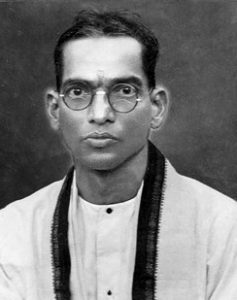
Shri Vemuri Srinivasa Rao

What I write in the next 3-4 Posts will be a copy paste type of job from the magnum opus in the Telugu language authored by my Father, late Shri Vemuri Srinivasa Rao, a Lawyer. The reference is:

pUrvagAthAlahari – An Anthology of the Stories of all People and Topics Arranged in an Alphabetical Order from the Eighteen purANa-s,” by Vemrui Srinivasa Rao, Venakatrama &Co, 1958.

1.  FROM BHAGAVATAM:

Narada was the son of Brahma. He originated from Brahma’s thigh. He had neither a family nor any offspring. He never stayed in one place. The reason for that was the curse he received from Daksha. He wandered through all the worlds playing devotional songs on Lord Vishnu on Mahati (Mahati is Narada’s vINa – a stringed musical instrument). Continue reading

On Narada Bhakti Sutras – 11

Part 10: 

In the last ten Posts, we have had a quick synoptic view of the contours of the subject matter that we will be discussing in the coming days.

We touched on the efficacy as well as the infirmities of the only tool we have, namely the mind, to explore the various nuances of Narada’s teaching. We found that we are easily deceived by our sensory apparatus which shows us what is needed to be known at the moment in the interest of the preservation and perpetuation of the body-organism but it goes only to hide the absolute reality that exists out there. In other words, the sensory apparatus has no capacity to know what actually exists.

We have come to know that a lot of processes go on within our mind-brain system beyond our conscious awareness of the activities that go on inside our brain to show a world that is projected for us to see. We have also discovered that ‘things’ out there in the world lack physicality and even the “me” who we think “I am” is only a ghostly imaginary entity.

We had a brief look into the way our mind fantasizes a “me,” an “other,” and how it conceptualizes a savior, a world etc. The mind imagines that its unhappiness in the world is due to some “lacks and limitations.”   It tries to compensate for these lacks by conceiving a protecting Godhead in which those “lacks” don’t exist. Devotion is the way by which it gets connected to the God of its conceptualization and it hopes to get its wants fulfilled by deference to him. Continue reading