Upadesa Sahasri (Part39)

Part 38

Chapter 19 Conversation between Atma and the Mind

19.19                                                                                                                            Owing to ignorance, people superimpose upon Atma such notions as relative existence, relative non-existence, qualified, unqualified, agent, non-agent, and so on. Yet Atma is birthless, imperishable, non-dual, and is never Itself superimposed upon anything.
The ignorant mind takes Atma and the world of duality to belong to the same order of reality. Consequently, it performs actions that produce punya and papa, which in turn become the cause of birth and death—that is, samsara. The cycle of samsara continues endlessly until the mind realizes that Atma and the world belong to different orders of reality. The mind is mithya, and all superimpositions are likewise mithya.
Continue reading →

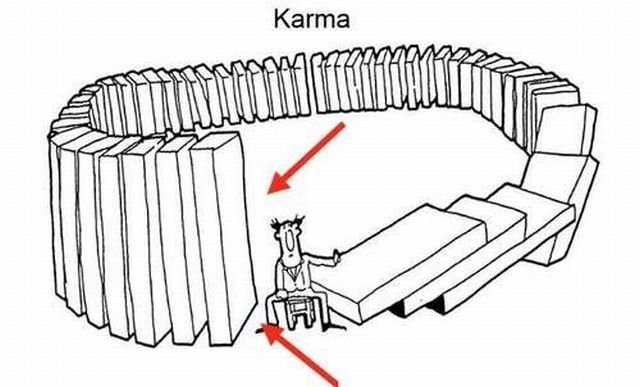
Karma Cubed – Three Views of Karma

Quoting from S.N. Sastri’s Terms and Concepts in Vedanta:

“The word ‘karma’ is used in two different senses in vedAnta:

(1) the results of actions performed, in the form of merit and demerit (puNya and pApa), which produce their effects later on, usually in another birth, and

(2) the action itself, whether secular or religious.”

After reading Swami Narayana Muni Prasad’s superb booklet “Karma and Reincarnation” I would like to point to a third sense in which the word karma can and needs to be understood, especially for advanced students of Advaita.

karmaKarma as puNya and pApa

At some point every seeker comes across the concept of karma in this sense. If he follows Western Advaita he may dismiss the concept as something altogether irrelevant or, if he is not yet an advaitin, he may subscribe to the Western version of karma as an assignment for this lifetime (see http://advaita-academy.org/blogs/Sitara.ashx?Y=2011&M=June) which, if successfully absolved, will produce the kind of life that everyone is wishing for: safe, pleasant and ethical. Continue reading →