saMskAra-s, svadharma and karma (Q. 320)

Q: I read about the above topics in your book and struggled with them, not only because there are a number of things to remember, but also because how exactly they function is complex.

 I thought about what you said regarding svadharma and how not going with it, with the example of Arjuna in the Bhagavad Gita, would have been bad for ones karma and thought about Hitler.

 You might say that it was Hitler’s svadharma to do as he did and that to go against that, in other words, to be an ordinary politician or something for example, would have given rise to bad karma for him, the same way as going against his duty would have caused Arjuna bad karma, as explained by Krishna: ‘slay thy foes’. But then that seems unfair to him (Hitler), since surely his ‘bad actions’ (genocide, etc.) that his svadharma would have had him following would have brought him bad karma any way, so either way, things, from that perspective, looked pretty bleak for him? Then one might say that what Hitler did was not really his svadharma, but this I personally would agree with, as a ‘person’ cannot act outside of Brahman, that is, everything we do, feel, think is Brahman, so even Hitler’s ‘evils’ were also Brahman? Continue reading
upadesha sAhasrI part 2

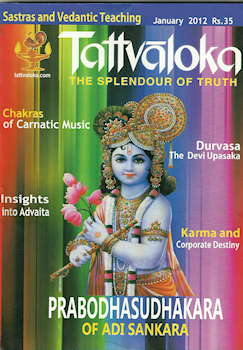
Part 2 of the serialization of the  presentation (compiled by R. B. Athreya from the lectures given by Swami Paramarthananda) of upadesha sAhasrI. This is the prakaraNa grantha which is agreed by most experts to have been written by Shankara himself and is an elaborate unfoldment of the essence of Advaita.

Subscribers to Advaita Vision are also offered special rates on the journal and on books published by Tattvaloka. See the full introduction and part 1 of the new series.

Inception: Dream or Not?

Here are two (related) book reviews which may be of particular interest to readers of our new serialization of ‘The Dream Problem’.

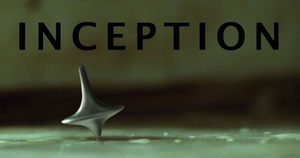
Nearly 2 years ago, the film of the moment was ‘Inception’, directed by Christopher Nolan. And this justifiably went on to win four Academy Awards. Friends told me how good this film was but, as is quite normal regarding films, I did not actually get to see it until some time after it came out on DVD. Since I have been a fan of science fiction ever since my childhood, I realized fairly quickly what this film was about in a general sense. Nevertheless, it was obvious that the story was quite complex and that all of the nuances could never be fully appreciated with one viewing. Accordingly, even at the time, I wondered whether anyone would write a book about it. (Of course, I realized that there would be a deluge of blogs on the subject but there is the slight problem of not having sufficient time to look, as well as not knowing which ones would be worth reading.) Continue reading

Apparent contradictions in Advaita (Q. 319)

Q: I read some serious critique of Advaita by a philosophy professor in a web page. If you have time, I`d like to know your thoughts about it.
 
Here it is:
 
. The View is Self-Contradictory: The first problem with the core of Sankara’s philosophy is that it seems to be self-contradictory. As advocates of the other Hindu schools of thought have pointed out, if the only reality is Brahman, and Brahman is pure, distinctionless consciousness, then there cannot exist any real distinctions in reality. But the claim that this world is an illusion already presupposes that there is an actual distinction between illusion and reality, just as the claim that something is a dream already presupposes the distinction between waking consciousness and dream consciousness. Moreover, Sankara’s idea of salvation–that is, enlightenment through recognition that all is Brahman–already presupposes a distinction between living in a state of unenlightenment (ignorance) and living in a state of enlightenment. So this view contradicts itself by, on the one hand, saying that reality (Brahman) is distinctionless, while on the other hand distinguishing between maya and the truth of Brahman, and by distinguishing between being enlightened and unenlightened. Continue reading

Panchadasi part 1

A series of posts, presenting a new translation and commentary by James Swartz on the Panchadasi. This was presented by James as a week-long course during July 2012 and was very well received. It will be posted in around 35 parts at the rate of one part every 2 – 3 weeks. I will be editing and commenting on the material as we go and James may provide additional commentary if time allows. So there may be scope for readers to provide feedback. Please email me via the ‘Contact Form’ if you do not understand anything and wish to seek clarification.

Read Part 1 of the Panchadasi.


Gunas and History (Q. 318)

Q: 1. If the triple gunas are the matrix of the “reality”, aren’t they immutable and therefore truly real? (I have asked this question a while ago in our personal correspondence but I can’t access my old email and it still bothers me…).

2. What is the ontological status of the course of human history? Is it objective, or just a sort of shared mass illusion that somewhat gets transferred from generation to generation? I am aware of the imprecision of my language but hopefully you will understand my meaning.

A to Q1 (Peter)Guṇas are the subtlest form of manifest matter and, being matter, are thus subject to change. So they are not immutable.

 Guṇas in their unmanifest and undifferentiated form are the triple śakti of māyā: jñạna, krīyā and dravya shakti, the undifferentiated and unmanifest powers of knowledge, action and materialisation. When these move into manifestation they get the names sattva, rajas and tamas. Continue reading

Tattvāloka at Advaita Vision

Advaita Vision is proud to announce a new collaboration with this prestigious journal from Sringeri Sharada Peetham, one of the four centres established by Sri Adi Shankara in the 9th century. Its principal objective is to spread the traditions and values taught in the scriptures. The journal is issued monthly and showcases Vedic knowledge and wisdom, with articles written in simple style by well-known authors from India and overseas. It has a readership of over 100,000.

Initially, we will be serializing a presentation of upadesha sAhasrI. This is the prakaraNa grantha which is agreed by most experts to have been written by Shankara himself and is an elaborate unfoldment of the essence of Advaita. This presentation is compiled by R. B. Athreya from the lectures given by Swami Paramarthananda in Chennai.

Subscribers to Advaita Vision are also offered special rates on the journal and on books published by Tattvaloka. See the full introduction and part 1 of the new series.