upadesha sAhasrI part 12

Part 12 of the serialization of the  presentation (compiled by R. B. Athreya from the lectures given by Swami Paramarthananda) of upadesha sAhasrI. This is the prakaraNa grantha which is agreed by most experts to have been written by Shankara himself and is an elaborate unfoldment of the essence of Advaita.

Subscribers to Advaita Vision are also offered special rates on the journal and on books published by Tattvaloka. See the full introduction

upadesha sAhasrI Part 11

Part 11 of the serialization of the  presentation (compiled by R. B. Athreya from the lectures given by Swami Paramarthananda) of upadesha sAhasrI. This is the prakaraNa grantha which is agreed by most experts to have been written by Shankara himself and is an elaborate unfoldment of the essence of Advaita.

Subscribers to Advaita Vision are also offered special rates on the journal and on books published by Tattvaloka. See the full introduction and part 1 of the new series.

Not the Doer – Q.338

Q: It seems like a contradiction to me to say that we are the observer and not the doer and, at the same time, suggest that we can do something such as paying attention. I encounter this “apparent contradiction” often when I read about Advaita. If there is no doer, why are there suggestions as to how to remove ignorance, for example? Who would remove the ignorance if there is no doer?

 – Is it that in the dualistic world it appears as if there is a doer and therefore we act “as if”, even though we might know that there is no doer?

– If we realize that there is no doer but we act “as if”, is it like playing our part in a “game”?

– If the ignorance is removed, “who” apperceives the truth? Continue reading

‘SELF-CONTROL’ AND THE BRAIN


We have Sankara exhorting us in Vivekachudamani:  “The first step to Liberation is the extreme aversion to all perishable things, then follow calmness, self-control, forbearance, and the utter relinquishment of all work enjoined in the Scriptures.” And a little later he added:  “He who is free from the terrible snare of the hankering after sense-objects, so very difficult to get rid of, is alone fit for Liberation, and none else even though he be versed in all the six Shastras.”

“Mind control is self-control,” said the highly revered Swami Krishnananda of Divine Life Society. And self-control is the way to awakening, he added.
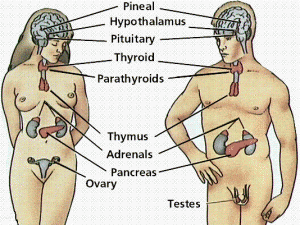
Fig 1. Endocrine Glands

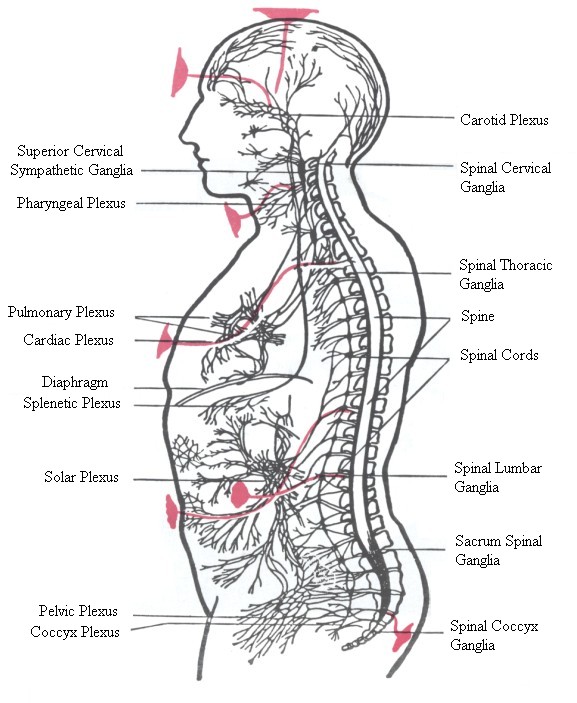
Six passions of the mind called Arishadvargas were depicted as the internal enemies of the man on the path to attaining moksha (liberation). These correspond to the hormones produced at the six major nerve plexuses as shown in the figures 1 and 2 and Table 1.
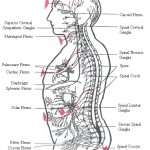
Fig 2. Nerve Plexuses

Psychologist Piercarlo Valdesolo writes “The power to resist temptation has been extolled by philosophers, psychologists, teachers, coaches, and mothers.” And then he adds, “Of course, this assumes that our natural urges are a thing to be resisted – that there is a devil inside, luring you to cheat, offend, err, and annoy. New research has begun to question this assumption.”

Continue reading

What is Moksha and what does Science say?

[A few friends asked me about Moksha to be explained in simple words without any mystifying scriptural references, quotations and citations. This is what I wrote to them.

The points are made accordingly with no hyperbole, no mystique but merely as barebones facts without any frills – bibliographic references, supporting evidence etc. for the sake of brevity. I thought of sharing it here so that it can be corrected / sharpened in expression and  improved in an overall way. ]

1. Moksha:

There is nothing mysterious about it. It goads the spirit of inquiry in us.

Our ancients’ inquiry was on:

i) Who am I? and ii) What is this world around?

Continue reading