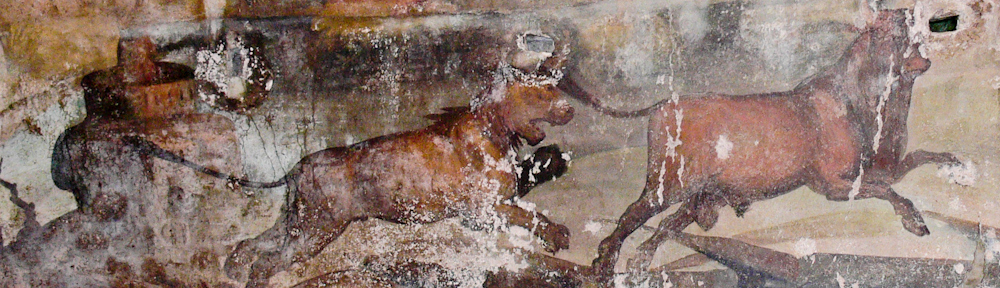
Saṃsāra

Unraveling the Wheel of Transmigration

In our day-to-day lives, many of us experience an underlying, persistent restlessness—a feeling of being inherently finite, vulnerable, and caught in an unpredictable universe. We chase happiness in relationships, careers, possessions, and worldly achievements, yet every gain seems shadowed by transience and the inevitability of change. In Indian philosophy, this perpetual roller-coaster of existence, characterized by the continual cycle of birth, death, and transmigration, is known as saṃsāra.

In the non-dual tradition of Advaita Vedānta, systematized by Ādi Śaṅkara, saṃsāra is not viewed as an external physical prison created by a distant deity, nor is it an inescapable cosmic trap. Rather, saṃsāra is an empirical plight rooted entirely in a fundamental cognitive error: Self-ignorance (avidyā). As Śaṅkara notes in his introduction to the Māṇḍūkya Kārikā Bhāṣya, the scriptures and teachings are undertaken specifically to reveal Brahman, because “by knowledge (vidyā), the illusion of duality caused by ignorance is destroyed”.

Continue reading →
Q.461 A jIvanmukta’s prArabdha

Q: I have the following doubt. I look forward to your comments.

     Having completed the study of Tattva Bodha, this mumukshu has a doubt with regard to karma – sanchita, prarabdha and agami.

     The doubt exists in a narrow compass and concerns karma and the Jivan Mukta. Tattva Bodha states that on realization, sanchita and agami karmas of a gyani come to an end. But the same logic is not extended to prarabdha which it states continues even after realization and that on its exhaustion the Jivan Mukta drops the body.

     Advaita Vedanta is recognized as a logical and rational system of thought and it is therefore difficult to accept this assumption regarding prarabdha for the following reasons: Continue reading →

Tattvabodha – Part 29

Part 29 of the commentary by Dr. VIshnu Bapat on Shankara’s Tattvabodha.This is a key work which introduces all of the key concepts of Advaita in a systematic manner.

The commentary is based upon those by several other authors, together with the audio lectures of Swami Paramarthananda. It includes word-by-word breakdown of the Sanskrit shloka-s so should be of interest to everyone, from complete beginners to advanced students.

Part 29 explains what happens to the j~nAnI and his accumualted karma on enlightenment.

There is a hyperlinked Contents List, which is updated as each new part is published.

Tattvabodha – Part 28

Part 28 of the commentary by Dr. VIshnu Bapat on Shankara’s Tattvabodha.This is a key work which introduces all of the key concepts of Advaita in a systematic manner.

The commentary is based upon those by several other authors, together with the audio lectures of Swami Paramarthananda. It includes word-by-word breakdown of the Sanskrit shloka-s so should be of interest to everyone, from complete beginners to advanced students.

Part 28 explains why saMchita and AgAmi karma are eradicated on the gaining of Self-knowledge.

There is a hyperlinked Contents List, which is updated as each new part is published.

Tattvabodha – Part 27

Part 27 of the commentary by Dr. VIshnu Bapat on Shankara’s Tattvabodha.This is a key work which introduces all of the key concepts of Advaita in a systematic manner.

The commentary is based upon those by several other authors, together with the audio lectures of Swami Paramarthananda. It includes word-by-word breakdown of the Sanskrit shloka-s so should be of interest to everyone, from complete beginners to advanced students.

Part 27 looks at saMchita and prArabdha karma.

There is a hyperlinked Contents List, which is updated as each new part is published.

Tattvabodha – Part 26

Part 26 of the commentary by Dr. VIshnu Bapat on Shankara’s Tattvabodha.This is a key work which introduces all of the key concepts of Advaita in a systematic manner.

The commentary is based upon those by several other authors, together with the audio lectures of Swami Paramarthananda. It includes word-by-word breakdown of the Sanskrit shloka-s so should be of interest to everyone, from complete beginners to advanced students.

Part 26 begins the description of the types of action and their fruit in the form of the three karmas.

There is a hyperlinked Contents List, which is updated as each new part is published.