Logical enquiry into ‘Who I am’ (4/4)

who am I 4We started this enquiry into identity by employing a simple piece of logic: you cannot be what you observe. From this point of view, the things we normally take ourselves to be, starting with the body, were systematically discounted because they turn out to be objects of perception, as covered in the first three parts of this series. Despite this reasoning, the tendency to believe our identity with the amalgam of body, senses and mind tends to remains very powerful: we continue to believe that we are these individuals bound by skin, with an experiential history and an instinctive, habitual mindset through which ‘I’ filter the world.

Identity with the body is evidenced by the vast cosmetic surgery industry today. People feel better with fewer wrinkles, larger breasts, drug-induced libido, less fat, etc. That’s the extreme end, but coming closer to the average person, we think of ourselves as too tall, too short, too hot or cold. If the body is in pain, we say: I am in pain. We really do mean ‘I’ when we say: I am hot, cold, ugly, beautiful, too short, too fat, too old. By employing the incontrovertible logic of ‘I cannot be what I can observe’, it does not take long for us to realise that the body is an object of perception: ‘I’ can experience my body using my five senses. We then ask: Who is observing the body? Continue reading


Logical enquiry into ‘Who I am’ (3/4)

Who I am 3When we analysed the world of objects in the waking state we came to the understanding that our experience of the variety of objects is due to the variety of corresponding mental impressions (covered in Part 2 of this series). If there isn’t a mental impression ‘this is a pot’ then, despite fully-functioning senses, the pot will be as good as non-existent. The perception of ‘is-ness’ is the single, unchanging common thread in all our worldly experiences. This perception is given the name, ‘consciousness’.

When we analysed our dream state experience we realised that the same observation holds true for the dream universe as for the universe we encounter when awake. This experience gives an added dimension to our understanding of consciousness: not only is it the one, unchanging basis of the varied, changing objects (gross and subtle), but now we see that it is also continuous through the changing states of experience. The ‘I’ that is awake is the same ‘I’ that dreamt: ‘I am awake, I had a dream’. Continue reading

Logical enquiry into ‘Who I am’ (2/4)

who am I 2In the first part of this enquiry we saw how, by discriminating between the seer and what’s seen, we arrive at the understanding that ‘I’, the seer, am not the body, not the sense powers, not the thinking faculty, not even a combination of all of them. They are all objects of my perception and I am the perceiving subject. And I, the subject, cannot be what I can perceive as an object. In this logical way we arrived, step-by-step, at a final ‘knower’, which is given the name ‘pure consciousness’. This pure consciousness is what remains after thoughts, (which are the subtlest objects of perception), have been dismissed as the ultimate ‘I’. We know there’s something there but it is still a bit hazy. We now need to test the robustness of our new working conclusion that this ‘pure consciousness’ is the ‘I’ we are searching for and sharpen the understanding.

For this we need to understand the nature of consciousness and its relationship, if any, with ‘I’. A question might arise at this point: If ‘I’ is the pure consciousness that remains in the absence of vtti-s (thoughts), and no cognition is possible without vtti-s, then how can I ever know what I am? How do we go further with this enquiry if there are no thoughts? Continue reading

Logical enquiry into ‘Who I am’ (1/4)

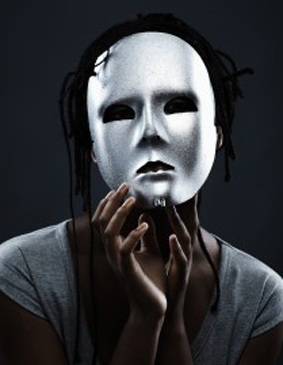
maskAt some time or other in every person’s life the question of identity arises in some form or other. For most people, the answer seems pretty obvious: I am a unique human being, a man/woman, in this body, with these parents, these siblings, and these ideas. I am defined by my wealth, my social class, my education, my tastes, my network of contacts, my race. I am shaped by my biology, my physiology, my psychology. Anything beyond this is ‘philosophy’, and one thing I am not is a philosopher!

If, however, people knew the life-changing value in finding the true answer to the question, ‘Who am I?’ they might be prepared to dig a bit deeper for that truth. Vedānta gives us a very good reason to pursue the question. It says that because we do not know the truth of who we are, we take ourselves to be an amalgam of the body and mind (thus pretty much confirming the majority view). The inevitable consequence of identifying with something that is as changeable, limited and vulnerable as the body and mind, is that ‘I’ is also taken to be changeable, limited and vulnerable. And it consumes a whole life of sweat and slog in trying to build up adequate self-protection. Continue reading

Discovering oneself: Part 2/2

creationSo how do we know how Brahman is? The teacher says that each object of experience has 5 aspects: asti, bhāti, priyam, rūpam, nāma. Asti = ‘is’. You know the meaning of the word ‘cat’, but not pay attention to the meaning of the word ‘is’, which means ‘isness’, which means ‘existence’. When you say ‘cat is’ you mean that the existence of the cat is. Any object of experience you can name is.

Existence is the intrinsic nature of Brahman, the Reality. In what form is Brahman? Continue reading

Can you accept that the world is mithyā? – 2/2

Read Part 1

It is extremely difficult to accept that what we see, what we experience, what we take to be real is not quite real. Even Swami Dayananda wrote of his utter shock on realising that the solid universe is made up of nothing but words and meanings. I personally remember the first time I saw his demonstration of close-up magic when he held up a clay tea cup in the meeting hall, one hot afternoon in his Gurukulam in Anaikatti. “What am I holding?” he asked and then answered for us: “You say cup, I say clay. Tell me which bit of this is cup? My fingers touch clay, the weight of what you call cup is the weight of clay. The feel of the cup is the feel of clay. The colour of the cup is the colour of clay. Where is the cup? Is it on the clay? If it is I can remove it. Maybe it is in the clay?” In this way, as we watched, the thing called ‘cup’ vanished in front of our very eyes. ‘Cup’ is nothing but the name given to a particular form of clay for the sake of distinguishing it from other things made of clay and all other things as well.

Now extend this to all objects that can be traced back to a common cause: even science supports this view. Then at each stage we just have names: Shirt is the name of a form of material, material is the name of yarn, yarn of cotton, cotton of fibres, fibres of atoms, atoms of sub-atomic particles, etc till we arrive at a single cause. (Vedānta śāstram goes one step further than science in stepping from the perceptible to the non-perceptible world.) Continue reading

Enjoying Being Brahman – Q. 324

Q1: When I was in the constant of awareness that I was Brahman I used to enjoy the Thoughts that all indeed was Brahman. Since I progressed to the simply I AM I am not enjoying the earlier feelings of thinking everything as Brahman. Is it that the state of being in simply I AM is absolute absence of any thought whatsoever? 

 Q2: How to overcome the sleep state to be in constant awareness of Who am I? Please some practical hints!

 Regarding my second point I intended to know more about the Fourth State in which the Saints wait to consume all their Prarabdha. How is this state practised and what are the skills of it?

Please shed some light on how do the realised but unpractised people live in their day to life while all the time immersed in their truest identity. My readings tell me just to let things happen without least botheration how they happen. Is it this way?

A (Peter): These questions make a strong case for why seeking proper guidance in this work is vital. Vedānta isn’t something that anyone can just pick up from a book, any more than anyone can dive straight into advanced mathematics from a book. If one doesn’t have a basic concept of numbers and the ways they combine through addition, multiplication, subtraction and division then how could one cope with the more esoteric realms of the subject? And compared to the science of self-knowledge, which is subtler than the subtlest, higher maths is crude. Self-knowledge needs appropriate prep work before the books make sense. Continue reading

Panchadasi part 1

A series of posts, presenting a new translation and commentary by James Swartz on the Panchadasi. This was presented by James as a week-long course during July 2012 and was very well received. It will be posted in around 35 parts at the rate of one part every 2 – 3 weeks. I will be editing and commenting on the material as we go and James may provide additional commentary if time allows. So there may be scope for readers to provide feedback. Please email me via the ‘Contact Form’ if you do not understand anything and wish to seek clarification.

Read Part 1 of the Panchadasi.


Clearing some myths about mithyā

Adi Shaṅkara’s vision of advaita is most succinctly expressed in the following pithy statement: Brahma satyam, jagan-mithyā; jīvo-brahmaiva nāpara. (Brahman is Absolute Reality, satyam; the universe is dependent reality, mithyā; the individual, jīva, is none other than Brahman itself).

In this statement there is one word that has caused great confusion by being wrongly understood – much of the critical rejection of advaita (as well as the fundamentalist stand on non-duality adopted by some Western advaitins) can be avoided if this word is understood correctly. The word is mithyā.

Traditional advaita vedānta postulates two orders of reality: absolute and relative. The name given to the relative order of reality is mithyā, commonly mis-translated as ‘illusion’. Whereas the neo-advaita teachers accept only one level as valid (i.e. satyam), vedānta accommodates both levels. In the Taittiriya Upaniṣad it talks about two birds on the same tree: one enjoys the fruit of the tree, the other just witnesses. The Īśa Upaniṣad says that one should see everything as the Lord, but if that’s not possible due to attachment to the body then one should live a life performing one’s duty. The very structure of the Vedas themselves reflects this acceptance of a two-fold reality and prescribe (in the karma kāṇḍa section) the best way to live the worldly life and in the vedānta section it reveals the vision of truth. Satyam is the absolute level of reality, mithyā is the ‘as though’ real. Continue reading

Self ‘knowing’ the Self (Q. 317)

Q: Nisargadatta Maharaj (especially in his later books) emphasises that the “I am” or Consciousness is not the final Reality which he calls Parabrahman or Awareness. He goes on to state that Awareness is “unaware of itself”. However, others such as Francis Lucille and Rupert Spira seem to disagree. Francis Lucille, for example, specifically states that Awareness (in the sense Nisargadatta means) is aware of itself as itself.

 I am not exactly clear what Nisargadatta was meaning. It could be interpreted as the Final Reality being essentially almost a nihilistic eternal stupor rather than the more appealing (at least to this body/mind) satchitananda. I rather suspect not, and that he was merely indicating the essential non duality of reality perhaps along the lines of Ramana Maharshi’s comment : “Although (the Self) is consciousness, since there is nothing for it to know or to make itself known to, it is said to be different from the sentient and the insentient.”

 Nevertheless, it perplexes me that if Awareness is not aware of itself as itself as Francis Lucille suggests then do we not have the situation whereby an enlightened sage such as Ramana Maharshi is before his “death” not only aware as the Self but conscious thereof and in a better position, so to speak, than Final Reality which is not so aware? Continue reading