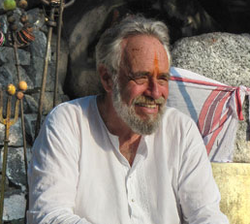
Advaita for Mothers (Q. 323)

We are honored to have input from Swamini Atmaprakashananda, a direct disciple of Pujya Swami Dayananda  for this week’s question!

Q: My question is, as a mother is it ever possible to not be very attached to my child, and be a mother only by Dharma and karma, and ease from the clutches of Moha for my child. How do I do that? I would greatly appreciate if anything here can help me because I truly am looking for it, and struggling with the issue for a long time.

A (Sitara): Advaita does not really make a distinction between different kinds of attachment. While it is true that the bond between a mother and her child is especially strong, it still needs to be dealt with like all other kinds of attachment.

 So how to deal with it?

 First of all: Trying to overcome attachment by dealing with it directly will only work to a limited degree. So I recommend to deal with it both ways, as described below. Continue reading

upadesha sAhasrI – Part 3

Part 3 of the serialization of the  presentation (compiled by R. B. Athreya from the lectures given by Swami Paramarthananda) of upadesha sAhasrI. This is the prakaraNa grantha which is agreed by most experts to have been written by Shankara himself and is an elaborate unfoldment of the essence of Advaita.

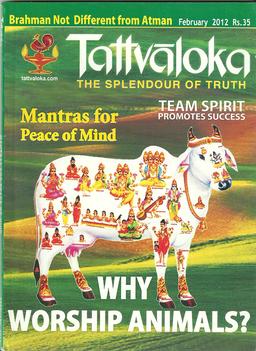
Subscribers to Advaita Vision are also offered special rates on the journal and on books published by Tattvaloka. See the full introduction and part 1 of the new series.

Seeking – giving up pleasures? (Q. 322)

Q: I can see I need to live more austerely, and I am prepared to sacrifice much to bring about a more lucid and disciplined spiritual practice, but if I am honest, sacrificing those pleasures will have their cost and I will miss them. I would give up nearly anything to find a way forward, but I have heard that unless giving up pleasures is seen as so necessary it isn’t actually a sacrifice, it won’t produce any progress, making it pointless. I am confused. Living austerely definitely means sacrifice, and I could do it, but what’s the point in doing it if it won’t work? I hope I have been clear. If you could tell me what you think, I would be most grateful.

A (Sitara): Your emphasis on austerities and sacrifice indicates that you are influenced by a tradition other than Advaita Vedanta. While following dharma (an ethical lifestyle) has its place in Advaita Vedanta, it does not require austerities. It just means “be fair”, i.e. treat others the way you yourself would like to be treated. Also following a spiritual practice of meditation and prayer is thought of as beneficial for the seeker; but there is no need for much sacrifice here either, except for remaining with it even if sometimes inconvenient – having to get up a little earlier for example. Continue reading

Experience and Knowledge (Q. 321)

Q: ‘Experiential’, seemingly, is becoming a stumbling block in current discussions within spirituality and non-duality. There are the ‘experiential’, usually ‘anti-intellectual’ types (who deprecate ‘merely intellectual’, or ‘conceptual’ approaches), and those who defend the proper use of mind and the intellect, without denying the validity of experience.

 Would it be possible, though, to dispense with either of the two concepts: ‘knowledge’ and ‘experience’?; they appear to overlap, practically being synonyms and, indeed, one can say “I know pain in the belly”, or, “I know such and such emotion”, “I know (I am acquainted with) life”, etc., without resorting to the word ‘experience’ – the word ‘acquaint’, conveniently, is derived from the Latin via old French: cognoscere, gnoscere. The other alternative would be to dispense with the word ‘knowledge’ and use instead ‘real’/’unreal’, ‘reality’, which is, precisely, sat/asat in sanskrit – and expressions using these terms are quite frequent, as everybody… realizes (‘is cognizant with’, then, would have to be ruled out). Just today I wrote in a comment that true understanding is an experience, but now I have my doubts. Ultimately, certainly, the only Experiencer/Knower is brahman/atman (though he remains ever unmoved). Continue reading

Panchadasi Part 2

A series of posts, presenting a new translation and commentary by James Swartz on the Panchadasi. This was presented by James as a week-long course during July 2012 and was very well received.

This is Part 2 and contains the teaching on the pa~nchikaraNa (‘quintuplication’ of the elements),  macrocosm and microcosm, pa~ncha kosha (five sheaths) and the ‘elimination’ of these.