
Q.499 Svadharma

Q: On your website ‘Advaita vision’” in the article ‘Consciousness, Ego and Self-knowledge’ is the axiom mentioned that the subject (observer) is different from the object (observed):  the Seer-Seen discrimination (dŗg dŗśya viveka). Are there other such fundamental axioms within Advaita Vedanta and if so, can you give an overview of the main ones?

A: I would say there are not really ‘axioms’ in Advaita. What there are is ‘prakriyā-s’. These are teaching ‘techniques’ to help you to an understanding. The end-point of the teaching – that there is only Brahman, the world is mithyā and you are Brahman – is not provable. It is ‘realized’ to be true when you have listened to the teaching and cleared any doubts. Hence ‘Self-realization’. Seer-seen discrimination is a practical exercise to bring you to the understanding that anything that you are aware of cannot be ‘you’; that you are the ‘ultimate subject’. Read any good book on the essentials of Advaita and other prakriyā-s will be given.

Q: Thank you for your almost instant reply and clear explanation. 

First I would like to complement you with your website, which carries a valuable treasure of information. I am exploring every part. Secondly I would like to ask your reflections on a question I have.

Background
In our daily western life I see many people unhappily following the path they are on, not having the strength to make a change. In my view this is mainly the result from the way they are (more fundamentally) conditioned: materialistic, externally and scientifically oriented, as well as having a strict dualistic paradigm. At the same time I see how difficult it is for most of the Westerners to switch to a (more spiritual oriented) approach of introspection, in finding a more profound meaning in life and happiness. As I am convinced the ‘internal way’ is ‘the only way out’ in finding real happiness, I have adopted a personal mission: the endorsing of the spiritual regeneration of people around me. The challenge I faced was finding an approach to make this successful, instead of annoying people with my convictions. 
Continue reading

Q.498 Brahman and Appearance

Q: How can we be sure that Brahman is transcendent of the level of appearance? How can we rule out the possibility that it is imperceptible due to the limitations of our mind? Could Brahman be similar to that of a higher dimensional being that is non accessible to human minds, but able to be perceived on higher levels of reality? And wouldn’t this then invalidate claims of it being infinite and eternal, given that these are constructs built on the idea that Brahman is non-phenomenal?

Also, how can we make the connection between ishvara (creator), and sakshi (awareful witness)? Are they both referring to the same being? I am confused.

Continue reading

Discussion of Advaita

I feel it would be valuable to remind ourselves of the way in which we should engage in discussions about the posts that are made to the site. For this, I have located several messages to the Advaitin List, dating back to 1994(!) from Ram Chandran and Dr. Sadanananda.

First of all, the dctionary definitions:
saMvAda – speaking together, conversation, colloquy with; assent, concurrence, agreement with

vAda – speech, proposition, discourse, argument, discussion, explanation or exposition (of scriptures etc.); dispute with the aim of reaching the right conclusion, irrespective of who ‘wins’. 

jalpa – talk, speech, discourse; disputation with ‘overbearing and disputed rejoinder’; arguing for the sake of winning, irrespective of who is right. 

vitaNDa – cavil, fallacious controversy, perverse or frivolous argument, criticism; argument purely for the sake of winning the point.  

kutarka – fallacious argument, sophistry

Now for the historical posts. Apologies for any repetition in these, which is bound to be present, since the same points are being made:

Continue reading

Q. 497 Knowledge and Understanding

Q: Knowledge, which is in or of the mind or intellect, must ultimately be given up. So really, is it knowledge or just ‘pointers’ to the truth of things? Like the pole vaulter letting go of the pole to get over the bar, the mind must be given up or let go of, which includes the knowledge. So really, knowledge isn’t the key or final secret. Simply abiding as Consciousness (what we really are), is the real point of all of this. 

And, witnessing seems to be of two ‘kinds’:
. Subject-object witnessing the normal person does all day
. The non-experiencing witness, which is the pure Consciousness that sees all within itself. I.e. like the analogy of the movie screen and movie. 

Really, it can be summed up by the fact that knowledge is not the key but only a pointer to ‘what really is’, which is the non-experiencing Witness. 

Continue reading

Q.496 Karma and subtle body

Q:

1. If upon the death of a jivan-mukta person, the subtle body dissolves and the person does not have go through the cycle of birth and death, this would imply that my sole motivation for attaining enlightenment should be the liberation of the subtle body that resides inside this gross body (since that is what suffers from one birth to another). Does this not in some way refute the idea of realising myself as the supreme consciousness bliss?

2. How is it that law of karma stops to act only on an enlightened being when in essence we are all liberated from the beginning?

3. On living while following the path of karma yoga, how do I decide what actually is the right thing to do in one’s life assuming I don’t have any desires? What Arjuna did in those days was the traditional work assigned to kshatriyas but in present day, since there is no acceptance of the traditional caste system, how do I come to decide what I should do? As a karma yogi has no desires, does all for the Lord, but the problem is coming to know what is to be done and that too, without any desire or attachment. What occupation should be taken or should one retire as a monk?

Continue reading

Q.458 Taoism

Q: I am just back from a vacation in Greece where I enjoyed a few days of reading Taoism: living in the spirit of Tao is the easy way of just floating with the stream of life. This means just living from our intuition instead of using our intellect performing the mental acrobatics of Advaita Vedanta. Indeed, as Wittgenstein pointed out correctly, one should remain silent instead of speaking (words are merely hindering tautologies) the unspeakable.

We lost our so-called enlightenment through our education/conditioning which did not happen where people still live (or lived) in harmony with the ‘natural flow of life’. This also means that, for us to recover enlightenment, life (Tao) is the only teacher and no so-called person should be considered a teacher.

A: It is certainly true that silence avoids the ambiguity of words! But since our problem is one of Self-ignorance, clearly knowledge is needed. I don’t believe that life can bring you that knowledge. My own experience is that life tends to increase identification and sense of separation. I suggest that most people leave life with greater Self-ignorance than they had to begin with. The words of Advaita do not, in any case, speak the truth; they merely point to it.

It is not the case that we begin our life in an enlightened state. ‘Enlightenment’ means Self-knowledge, not innocence. Innocence has much more in common with ignorance! In any case, are not education and conditioning an inevitable part of life? In which case, if life brought us to this condition, how should more life now remove it?

Living a life of tranquility, away from the trials of modern life at one with nature might well be very nice (though not very practicable for most people). But it would not bring about Self-knowledge!

Q.457 Using meditation to ‘find the self’

Q: Undaunted by my belief that meditation to find the self (soul) is difficult, I would like to try, but there are no teachers in my area. Therefore, in the first instance, I would really appreciate your advice regarding a book to follow for this type of meditation that is suitable for a beginner.

A: The purpose of meditation is to help gain control of the mind and senses so that you can cultivate dispassion and discrimination and still the mind when listening to the teacher.

Meditation cannot enable you to ‘find the self’. You are already the Self – you just have not realized this. What has to happen is for the mind to receive knowledge about the Self, clear any misunderstandings, resolve any doubts etc. Ideally, you need a qualified teacher for this – someone who knows the truth and is able to convey the relevant steps (via story, metaphor etc.) to help someone else come to the same understanding.

As an introduction to Advaita, there are three books I would recommend:

1. ‘Introduction to Vedanta’ by K. Sadananda – see https://www.advaita-vision.org/vedanta-introduction-sadananda/;

2. ‘Book of One’ (2nd edition) by myself – http://www.advaita.org.uk/discourses/thebook/thebook.htm;

3. ‘VEDĀNTA the solution to our fundamental problem’ by D. Venugopal (This is serialized at the website (https://www.advaita-vision.org/vedanta-the-solution-part-1/).

Q.456 The ‘hard’ problem

Q: Could you say something about the relationship between the ‘hard problem’ of consciousness in modern science and Advaita’s māyā?

A: Science’s problem is trying to explain how consciousness can ‘emerge’ from inert matter. Advaita’s problem is trying to explain how the world can emerge from Consciousness.

The concept of māyā is an interim explanation only. If it satisfies the listener and moves them forward towards accepting non-duality, then it has served its purpose. Ultimately, it is rejected by Advaita. There is only Consciousness. There cannot be Consciousness and a force called māyā.

Every(seeming)thing is non-dual Consciousness. There only seems to be separate things because our mind differentiates forms and gives them names. Just as in the clay-pot metaphor.

The concept of mithyā is better for ‘explaining’ the nature of the world. The world is not real ‘in itself’; it depends upon Consciousness for its existence just as the pot depends upon clay.

There is an essay – ‘Consciousness – not such a hard problem’ – on precisely this topic in my book ‘Western Philosophy Made Easy: A Personal Search for Meaning’.

Q.455 Physical changes on enlightenment

Q: In his book of talks called ‘The New Freedom’, Rajneesh (Osho) has stated that awakening disturbs the body and brain so much that a majority of people leave the body. Those who survive may suffer some severe physical deformity or inability to speak etc.

In the Gospel of Ramakrishna, Mahendranath Gupta relates how the Paramahamsa suffered on awakening. One of the changes that occurred was an enormous release of energy in the body which was unbearable. Adyashanti also states that the disturbance of the nervous system takes years to settle down. In ‘The Mystique of Enlightenment’, U. G. Krishnamurti has described at length the many drastic changes that took place in his body on account of awakening. In ‘Nothing is Everything’, a book on talks given by Nisargadatta Maharaj, the Sage is quoted as saying: “This body is on fire. Self-knowledge has a strange quality. Sometimes it is unbearable”.

What I want you to throw some light on, if possible, is the following:

Does awakening lead to drastic physical changes? Are they the same for all individuals or do these changes vary from person to person? Should one be deterred from attempting self-realization?

Steven Norquist, who claims to have awakened, told his audience in a 2010 talk available on the internet, that they should not seek awakening but should be ‘spiritual’. One of the reasons he mentioned was the bodily changes I have referred to.

I would also be obliged if you could suggest some literature on the subject, if it exists.

Continue reading

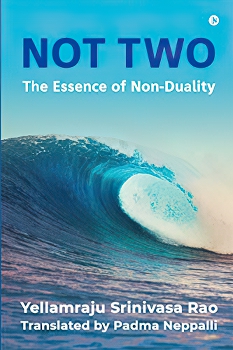
‘Not Two’ – a Critical Review

On the face of it, this is a well-written and readable book, ideally suited for a new seeker. E.g. the sections on ‘The Illusory Nature of the Separate Self’ and ‘Knowledge Dispels Ignorance’ are excellent.

Unfortunately, should any reader accept everything that is written at its face value, they will come away with some serious confusions. In what follows, I apologize in advance for some of what may seem to be harsh criticisms, but my own perception of these points is heightened as a result of spending the last year writing my own work on ‘confusions’ of precisely this sort.

The author uses the traditional teaching method of adhyāropa-apavāda but it is not made clear when what is being said is only provisional. Also, there are very few references to the source of what is being presented. (And one of those that is provided doesn’t exist!) There are many places where the author writes ‘as Shankara said’ but scarcely a single pointer to where he said it. There are numerous places where I, as an informed reader, need those references before I will even consider what is being said to be credible!

Continue reading