
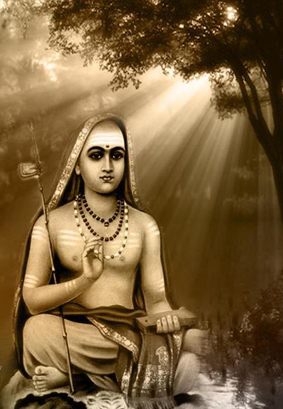
 There has been much healthy debate recently on the Advaita Vision Blog about Liberation, who or what is a jnani or jivanmukta, and what it means to follow traditional Advaita. The theme of this post is that we cannot resolve such questions without first gaining a clear understanding of the body-mind and its role in the context of Liberation. What follows are some reflections inspired by a spirited discussion with Ramesam, with due credit to him for stimulating many of the thoughts below. Any errors or possible misunderstandings are entirely my fault. Or perhaps not, since “Words fall back from it.” Continue reading
Tag Archives: reality
‘ego’, self, and metaphysics – Part lV
In the Buddhist perspective, the ego or self as ordinarily considered in Western traditions (i.e., as soul or person), is a non-self, actually a non-entity (anatta). Hence the suffering, which stems from an experience -ultimately illusory- of separation and vulnerability.
Here we have to consider two things. First, according to Mahayana Buddhism, Adi-Buddha, equivalent to Dharmakaya – the highest metaphysical, or divine, level – represents that unique Being or Divine ‘State’, pervading all manifestation as Buddha-nature; and second, the notion of the Self (Atman, derived from the Hindu Vedanta) is not only compatible with that view, but also with that of the Spirit in Christianity and in Islam.
As to the soul (metaphysics and theology), though intrinsically perfect or whole in itself (one could add: in ‘primordial man’ –the purusha or Hiranyagarbha of Hinduism)- it experiences imperfection, self-limitation, anxiety and doubt in its state of (aparent) separation -the ‘fallen state’. Being, not just potentially, a ‘focal point of the Universe’, yet it becomes, through ignorance and self-will, the subject of illusions, attachments, and passions which lead to that predicament. Its condition is thus ambivalent; it can orient itself upwards (or towards the centre) – to ‘holiness’ and integration – or downwards, pulled by its ‘lower nature’ (nafs in its lower stages, according to Sufism). The end result will be either self-denial, or self-assertion; self-giving, or ego-centeredness. Inevitably, this latter tendency, based on ignorance, can only lead to an unwanted result: dispersal, disintegration, and suffering. Alas!, on the whole, if not in principle, psychiatry is not interested in this distinction or dichotomy; but let not anything else be said about this at this point.
From the viewpoint of advaita vedanta, all of what is described in this paragraph – and what follows – pertains to the empirical, relative (ontological and epistemological) level: mithya (or vyavahara), in other words. Continue reading
The ontological status of concepts in Plato and Shankara
Concerning the theory of Forms or Ideas in Plato – and by extension that of perception – we can find an interesting parallel in the account given by Shankara’s Advaita Vedanta. The Idea of ‘the Good’ (the supreme Idea in Platonic metaphysics) would correspond to the highest ontological principle in advaita: Atman-Brahma; in fact, there is only one ontological principle, one primary, or ultimate, reality, in both philosophers.* Objects of external perception are illusory in both accounts. In Plato they are only images (ikones) of Ideas, which alone are real, whereas in Shankara these objects are also just representations in the mind, phenomena, and described as ‘names and forms’. For example, ‘pot’ is just a name, its underlying ‘substance’ being only clay (this is only an analogy or illustration, since there is no talk of substance in Shankara’s philosophy). There are no objects, and no world, having a separate (objective!) existence, the only reality being Atman-Brahman.
* This makes of Plato a non-dualist, which is contrary to the commonly-held idea that he was a dualist, due to the emphasis given throughout the ages to his doctrine of the two Worlds, Intelligible and Phenomenal (or ‘World of Appearances’).
Tom McFarlane (writing in Quora): ‘What concepts really are is a philosophical question about their ontological status. The answer will depend upon the philosophy you adopt. A materialist would regard concepts as ultimately reducible to the functioning of the material brain, while an idealist would regard concepts (and matter) as ultimately reducible to mind or consciousness.
The most famous idealist account of concepts was given by Plato in his theory of forms. According to Plato, a concept (or form) is a general abstract pattern that has various sensory objects as specific instantiations. The concept of a tree, for example, is an abstract idea that makes it possible for us to experience trees, as such. Without the concept of a tree, we may have experiences of images but they are not recognized as being an experience of a tree without the concept of a tree. In Plato’s view, the concept of the tree is more fundamental than any particular tree because the concept is a necessary precondition for trees to exist as objects of experience. Plato called the experiences of trees as instantiations of the concept of a tree. For more discussion, see What is a form in Plato’s metaphysical theory?’
Q. 378 – Existence and Experience
Q: Without hot, cold doesn’t exist. Without up there is no down, without in there is no out etc. The basic nature of duality. However if you apply this to the non-dual Brahman…
In the absence of that which is not (Brahman), that which is (Brahman), is not (doesn’t exist.)
My idea is that the Relative Reality is not only dependent on the Absolute (Brahman) but that actually both are interdependent on each other. I know this is counter to Advaita and forgive me and my lack of knowledge, especially of the Sanskrit terms, and I’m sure it makes your skin crawl to continually refer to things such as relativity as a reality.
Why do I say something can’t exist without it’s opposite? I will do my best to explain my ideas.
A thing cannot exist without it’s opposite because it cannot be experienced without it’s opposite, or rather awareness of it’s opposite. If a thing cannot be experienced then it does not exist, to the one experiencing it.
Ultimately, everything exists in one of two ways, either as a potential or possibility, or as a realized form. Continue reading
A-U-M Awakening to Reality – Review of book
‘Lucid and exhaustive of most important book in Advaita Vedanta’
The Mandukya Upanishad, the shortest (it has just 12 verses) and , according to a general opinion, the most important of the 12 main Upanishads, has the added interest in being associated with the authoritative karikas of Gaudapada, grand-mentor of Shankaracharia, the initiator of Advaita Vedanta. Of the former it has been said that his is ‘a rational analysis of the totality of our experience in all three states: waking, dreaming, and deep sleep. Incomplete and insufficient will be any philosophy that is based on the waking state alone’ (Swami Brahmananda).
‘When everything has been said, the fact remains that Vedanta is the only way of thinking that claims to study life in all its aspects in a scientific manner. It treats of truth, wisdom, and happiness, subjects of eternal interest to mankind. The credit of having brought to the notice of thinkers the value of its all-comprehensive method revealed in the Upanishads, and of having successfully built an impregnable system on that solid basis, will ever belong to Gaudapada.’ (Swami Satchidanandendra Saraswati).
This new book, authored by the well-known (and, one could say, prolific writer in the field of Advaita Vedanta – this is his 7th book), Dennis Waite, has several features that make of it an important addition to the literature in this specialized area, one that is becoming much better known than it was some 10-20 years ago.
Beginning with a few general remarks, something that strikes the reader is the clarity of the writing and the logic of the exposition of its contents which, at first sight, appears to be an introductory text for the un-initiated. Far from it! – and it is not a question of its length (420 pages) or even of the exhaustive coverage of everything that is relevant to the Upanishad itself and Gaudapada’s running commentary in the karikas. Clear and didactic it is, but the tools (armamentarium), organization of the work, and employment of many important Sanskrit words together with their English translation, plus a long Glossary (41 pp.), make of this book an indispensable reference for the modern reader of both this important Upanishad and Gaudapada’s contribution.
An important feature of the book consists in the numerous references (81 in all!) – most of them with short-to-medium length descriptions of the tenets or arguments of the, mostly modern, authors consulted when DW was in the process of preparing this work (Annotated Bibliography – 33 pp.)
Apart from the illuminating Introduction (36 pp.) and ‘What the Mandukya Upanishad is About’ at the beginning, the following 7 sections are: The World Appearance, Causality, Creation, Nature of Reality, Self-Knowledge, Practical Aspects, and Conclusion. They are all important, certainly, but I found ‘Nature of Reality’ to be like a centre-piece.
There are 7 Appendices at the end, comprising altogether 95 pp. To give one an idea of the completeness of the work, one of the Appendices (No. 5) deals with pronunciation and transliteration, using a recently proposed method: ITRANS. Lastly, a full Index, containing also a list of all the karikas mentioned in the book. AM
How could we merge absurdist and Buddhist philosophies?
www.quora.com/How-could-we-merge-absurdist-and-Buddhist-philosophies
M. Provisionally we could put side by side ‘absurd’ (or illogical) and ‘unprovable’, even if they are not synonymous; and the main tenets of all religions are such. They are not ‘rational’. On the other hand, neither science, ‘common sense’, or rationality are the ‘end all’. There are many things that escape explanation with the current state of our knowledge and understanding.
Paradox is a term related, one way or another, to the above. Just consider the following:
i) “How wonderful that we have met with a paradox. Now we have some hope of making progress”. Niels Bohr (famous physicist)
ii) Is there anything more absurd to ordinary understanding of the world and us than the following (taken from my blog): “That truth, put into words, is paradoxical: you are all (as Consciousness) and ‘you’ (as perceived individual) are nothing, or a phantom; you are the final witness, but ‘you’ are not a witness; the world is illusory (as appearance), but in essence is reality itself. That revelatory, transcendental experience is non-transferable, not provable to another.”
GL. If by absurdism you mean acknowledging that there is no absolute truth, then zen buddhism when asked what is enlightenment, answers “6 pounds of flax”, which is, I believe, trying to point out that absolute truth is impossible.
M. You probably mean ‘impossible to demonstrate, or to know, with the ordinary mind’, but ask a zen buddhist if it (absolute reality or truth) is impossible to grasp, to grok.
GL. I think the point of the flax koan is that you can’t know satori with certainty.
M. Is it not rather that the experience cannot be explained – or transmitted – with words, being ineffable? Such is a transcendental experience, where there is no individual per se present.
GL. Isn’t “ineffable” the same as saying we can’t know with certainty?
M. No, it means ‘inexpressible’, the experience being overwhelming (rather than being too sacred – another meaning).
GL. If you can’t describe it, then it isn’t knowable.
If it is purely a matter of experience, then there is no way for me to know you are experiencing something the same way I am. Color is ineffable. You experience red and green the way you do, and I experience it the way I do. And unless we have an objective test for color blindness, there is no way to know if you see what I see. Some people see color when they hear sound. And as long as that experience is ineffable, there is no way to know if we see color the same way. Only when we establish some objective explanation and some objective testing can we know with certainty if we are experiencing similar things.
M. You refer to what are called qualia, but I am not sure how far you want to go (can nothing be known? In what sense?) Most empiricists/scientists tend to disregard this question or deny that it presents any problem for their physicalist stance. In non-duality, which is what interests me, there are not, cannot be, any objective tests referable to either external or internal experiences of what generally is understood as reality (the world and oneself) except, perhaps, in one’s facial expression and/or demeanor. That agrees with what you say about qualia but, aside from non-duality (or as a preliminary to it), it doesn’t mean that there cannot be agreement, concurrence, in the realm of thought, sensations, and feelings. Two people reading the same book or page – if they are on the same wave length (let’s say interest in non-duality, or in a particular modality of art, like Baroque or modern) – will have similar thoughts and feelings. Language is for communication – even about the understanding of non-duality (like zen) – but certain experiences cannot be communicated, such as particular intuitions or epiphanies, regardless of what we understand as qualia, though related to it.
Consciousness/Awareness, the brain, and memories
(Q&A published recently in QUORA)
Q. ‘Why wasn’t my consciousness generated by another brain? Why am I linked with this brain?’
I heard that everybody experiences consciousness, but then why am I my consciousness and not another person’s consciousness? It’s hard to explain.
Paul Bush. Yes, it’s hard to explain. Basically it’s because the most important part of consciousness, which is awareness*, is the same for everybody. There is only one awareness, and in fact nothing else. All the other aspects of consciousness, the contents, are projections of awareness as it identifies with small parts of reality such as bodies and minds. Such misidentification creates a perspective. From each perspective the part of reality not identified with is seen as the external world. The observer with a particular perspective and the world observed as a consequence of that perspective are both inferences created at the moment of identification.
So, there is only one awareness that is continually pulled into the illusion of being this or that observer. The ongoing personal identity that we think of as ourselves maintains coherence through the construction of the concepts of time and space; memory and an apparent (though not total) physical separation from the rest of reality. Awareness has no personal identity, it is exactly the same for you and everyone else, because it is singular awareness that creates each experience depending on the perspective of the entity that it is identifying with.
*(AM Awareness and Consciousness are generally taken as equivalent in Advaita Vedanta – no distinction being made) Continue reading
Creation According to Reason
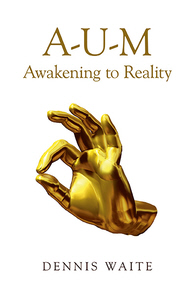 Although not scheduled for publication until the 25th of this month, both Amazon UK and Amazon US claim to have only a few copies left! So, to remind you of the sort of content you can expect, here is another extract from the book on the topic of ‘Creation according to Reason’.
Having spent some time showing how key passages from the scriptures claim that there is no creation (and explaining how there can be apparently contradictory passages elesewhere), Gaudapada turns to reason – his principal tool in this work.
Read the extract here.
Q. 375 – Conditions affecting next life
Q: I agree that Reincarnation, the next life, isn’t real. But it’s as real as this life…and, for most of us, this life seems pretty real, even if we know better.
And, as we all know, very, very few people are going to achieve Enlightenment (Liberation, Realization, Moksha) in this lifetime.
For the above 2 reasons, I suggest that Reincarnation is a reasonable thing to be concerned about and to ask a question about. That’s what this question is about. I’ll speak of Reincarnation as if it’s as real as this life seems.
It’s been said that one’s next incarnation depends greatly on one’s thoughts and state in their last moments of this life. I hope that isn’t true, because no one can know what condition they’ll be in when they’re dying. I mean, we aren’t always in the best of condition when we die, are we.
A person, at death, might be delirious, or heavily sedated at a hospital. What then? How does that affect that person’s next life?
Has there been discussion, from theory, regarding how this life—and, in particular, a person’s condition in the last moments of this life–affect that person’s next life?
Responses from , Sitara, Venkat and Dennis Continue reading
Modern knowledge and the Vedas
Do the Vedas really contain any advanced knowledge as so many people claim they do? QUORA
15.3.15 – I’d say the Vedas contain the most fundamental and ‘advanced’ knowledge there is, though mostly portrayed in the form of paradox (analogy, metaphor, story, etc.), so that one has to crack the code in order to find the wealth hidden in them. That knowledge is not like empirical science, which is cumulative and provisional, and which could be said to be somehow contained in it, even if in embryonic or potential form. That knowledge or perspective is metaphysical rather than mystical. According to the Vedas there is one and only one reality: consciousness (brahman, the Absolute, etc.), which pervades the whole universe; it is immanent in it as well as transcendent… “the smallest of the small, the largest of the large”. It cannot be measured out or understood by the mind, for which it is ineffable, but it is that by which the mind comprehends… it cannot be expressed in words but by which the tongue speaks… it is eye of the eye, ear of the ear, mind of the mind, as expressed in the Upanishads.
Modern physics is having a hard time trying to explain away what consciousness is in terms of physical phenomena (neuronal activity in the brain), but consciousness is not just an irreducible phenomenon or datum; it is reality itself, everything being comprehended in it (theories, doubts, projections, emotions, things, thoughts, intelligence, observer and observed, you and I). The part (for instance, an ‘external’ observer) cannot understand the whole into which he/she is enclosed. For the Vedas, to repeat, reality is one, and contemporary physics is trying to find out in which way it is so (‘theory of everything’, ‘unified field’…). Not all physicists are reductionist, some of them having seemingly mutated into philosophers with a workable understanding of the core of Vedic teachings.