Consciousness/Awareness, the brain, and memories

(Q&A published recently in QUORA)

Q. ‘Why wasn’t my consciousness generated by another brain? Why am I linked with this brain?’

I heard that everybody experiences consciousness, but then why am I my consciousness and not another person’s consciousness? It’s hard to explain.

Paul Bush. Yes, it’s hard to explain. Basically it’s because the most important part of consciousness, which is awareness*, is the same for everybody. There is only one awareness, and in fact nothing else. All the other aspects of consciousness, the contents, are projections of awareness as it identifies with small parts of reality such as bodies and minds. Such misidentification creates a perspective. From each perspective the part of reality not identified with is seen as the external world. The observer with a particular perspective and the world observed as a consequence of that perspective are both inferences created at the moment of identification.

So, there is only one awareness that is continually pulled into the illusion of being this or that observer. The ongoing personal identity that we think of as ourselves maintains coherence through the construction of the concepts of time and space; memory and an apparent (though not total) physical separation from the rest of reality. Awareness has no personal identity, it is exactly the same for you and everyone else, because it is singular awareness that creates each experience depending on the perspective of the entity that it is identifying with.

*(AM Awareness and Consciousness are generally taken as equivalent in Advaita Vedanta – no distinction being made) Continue reading →
Creation According to Reason

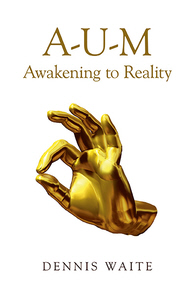
small_A-U-MAlthough not scheduled for publication until the 25th of this month, both Amazon UK and Amazon US claim to have only a few copies left! So, to remind you of the sort of content you can expect, here is another extract from the book on the topic of ‘Creation according to Reason’.

Having spent some time showing how key passages from the scriptures claim that there is no creation (and explaining how there can be apparently contradictory passages elesewhere), Gaudapada turns to reason – his principal tool in this work.

Read the extract here.

Q. 375 – Conditions affecting next life

Q: I agree that Reincarnation, the next life, isn’t real. But it’s as real as this life…and, for most of us, this life seems pretty real, even if we know better.

And, as we all know, very, very few people are going to achieve Enlightenment (Liberation, Realization, Moksha) in this lifetime.

For the above 2 reasons, I suggest that Reincarnation is a reasonable thing to be concerned about and to ask a question about. That’s what this question is about. I’ll speak of Reincarnation as if it’s as real as this life seems.

 It’s been said that one’s next incarnation depends greatly on one’s thoughts and state in their last moments of this life. I hope that isn’t true, because no one can know what condition they’ll be in when they’re dying. I mean, we aren’t always in the best of condition when we die, are we.

 A person, at death, might be delirious, or heavily sedated at a hospital. What then? How does that affect that person’s next life?

 Has there been discussion, from theory, regarding how this life—and, in particular, a person’s condition in the last moments of this life–affect that person’s next life?

Responses from , Sitara, Venkat and Dennis Continue reading →

Modern knowledge and the Vedas

Do the Vedas really contain any advanced knowledge as so many people claim they do?    QUORA

15.3.15 – I’d say the Vedas contain the most fundamental and ‘advanced’ knowledge there is, though mostly portrayed  in the form of paradox (analogy, metaphor, story, etc.), so that one has to crack the code in order to find the wealth hidden in them. That knowledge is not like empirical science, which is cumulative and provisional, and which could be said to be somehow contained in it, even if in embryonic or potential form. That knowledge or perspective is metaphysical rather than mystical. According to the Vedas there is one and only one reality: consciousness (brahman, the Absolute, etc.), which pervades the whole universe; it is immanent in it as well as transcendent… “the smallest of the small, the largest of the large”. It cannot be measured out or understood by the mind, for which it is ineffable, but it is that by which the mind comprehends… it cannot be expressed in words but by which the tongue speaks… it is eye of the eye, ear of the ear, mind of the mind, as expressed in the Upanishads.

Modern physics is having a hard time trying to explain away what consciousness is in terms of physical phenomena (neuronal activity in the brain), but consciousness is not just an irreducible phenomenon or datum; it is reality itself, everything being comprehended in it (theories, doubts, projections, emotions, things, thoughts, intelligence, observer and observed, you and I). The part (for instance, an ‘external’ observer) cannot understand the whole into which he/she is enclosed. For the Vedas, to repeat, reality is one, and contemporary physics is trying to find out in which way it is so (‘theory of everything’, ‘unified field’…). Not all physicists are reductionist, some of them having seemingly mutated into philosophers with a workable understanding of the core of Vedic teachings.


Q. 370 – nirvikalpa samAdhi

Q: Should a person have compulsorily experienced nirvikalpa-samādhi in order to know that he has a mind which is prepared for jñāna? In other words, is experience of nirvikalpa-samādhi a must as a sādhana?

Responses from Venkat, Martin, Ted, Shuka and Dennis

A (Venkat): Nirvikalpa-samAdhi is an experience of the absence of objects, for a finite period of time, which the experiencer eventually exits to re-perceive the world.  As it is not permanent, it is not real.  Any temporary experience that is witnessed cannot be a pre-requisite for j~nAna – since j~nAna is the permanent dissolution of the illusory I-thought.

“Abiding permanently in any of these samadhis, either savikalpa or nirvikalpa, is sahaja. What is body consciousness? It is the insentient body plus consciousness. Both of these must lie in another consciousness which is absolute and unaffected and which remains as it always is, with or without the body consciousness. What does it matter whether the body consciousness is lost or retained, provided one is holding on to that pure consciousness? Total absence of body consciousness has the advantage of making the samadhi more intense, although it makes no difference to the knowledge of the supreme.” – Sri Ramana Maharshi Continue reading →

Science and Philosophy – Part III  

“The intellectual life of the whole of western society is increasingly being split into two polar groups…literary intellectuals at one pole – at the other scientists, and as the most representative, the physical scientists. Between the two a gulf of incomprehension.”

“A good many times I have been present at gatherings of people who, by the standards of the traditional culture, are thought highly educated and who have with considerable gusto been expressing their incredulity at the illiteracy of scientists. Once or twice I have been provoked and have asked the company how many of them could describe the Second Law of Thermodynamics. The response was cold: it was also negative. Yet I was asking something which is about the scientific equivalent of: Have you read a work of Shakespeare’s? “- C.P. Snow (in the 1960s)

Continue reading →

Life is a dream – The world is real

DIALOGUE in Quora

A. Of course, if everything is like a dream (mithyA), then the sages and their scriptures are a part of that dream. But that doesn’t necessarily mean that the teachings and the scriptures are not useful for awakening from the dream.

B. That is true, in my understanding. ‘Life is a Dream’ (Calderón de la Barca’s play), ‘All the world’s a stage’ (Shakespeare). As to Vedanta, here is what a sage (among so many others) has said: “Vedanta plays the role of the dream lion in this world. Vedantic knowledge itself is part of the illusory world. But then it dissolves the entire illusion of this world, revealing reality as it is.” Sw. Parthsarathy.

A. If no one dies, then no one is enlightened either, and yet we still talk as if people really do die and really do become enlightened.

B. True also. That modifier, ‘as if’, is crucial.

In the next para. you write: “…an individual who appears to exist while not really existing (AS AN INDIVIDUAL) has appeared to become enlightened while not really being enlightened (AS THE PURPORTED INDIVIDUAL).” I have taken the liberty of adding the capital letters, for advaitic sense. Further, while ‘everybody is enlightened’, as Neo advaitins claim, ‘no one is enlightened’, as the sage Gaudapada declared. Are these two seemingly contradictory statements true – and in what sense? *

A. I think the problem with brain damage is the possibility that a j~nAnI [sage] would lose most or all of the knowledge (including Self-knowledge) that he gained through his studies.

B. This is as seen from the vyavaharika (empirical) perspective, which cannot be denied (only understood). Jñani/s (sages) also experience thoughts and emotions. With them, these either quickly disappear, or are transmuted or resolved into consciousness; in fact, they are only consciousness, as mind is also a projection of consciousness.

Something more for pondering: “People forget the reality of the illusory world”. Huang Po.

(*) Gaudapada (Shankara, and the whole tradition of advaita Vedanta) deny multiplicity as being real. In essence ‘all is One’. The Neo-advaitin’s dictum (’everybody is enlightened’) is thus true and false at the same time.


Science vs. Philosophy – Part II

Y – I can not parse your meaning, i.e. I have no idea what you are trying to say.

Still have no idea what you are trying to say.

X – What I’m trying to say is to point at core insights within Eastern philosophy (Hinduism, Buddhism, Taoism), particularly in advaita Vedanta – but also in Christianity and Islam in their highest metaphysical conceptions. If you are not interested in any of this, that’s alright.

Actually, whatever science – and its highfaluting ‘scientific method’ – is is shot through with difficulties and controversies, including the sacrosanct falsifiability principle (or dogma). Just read the Wickipedia article on this (and on rationality, etc.) and the respective positions of Khun, I. Lakatos, and P. Feyerabend among others. You must know something about all this already if you are scientifically inclined.

Y – What “core insights”?  There is nothing insightful about making up unevidenced tosh, anyone can do it and each piece of tosh has exactly equal validity, none.

And with regard to your ludicrous and unfounded “criticism” of the scientific method, I have one response, yea shall know them by their fruits.

Continue reading →

The Carpenters Story

OLYMPUS DIGITAL CAMERACarpenter’s Malady and Cognitive Consonance –
Rajarajeswari Srinivasan

I would like to start this discussion,with a Tamil verse ascribed to an ancient scripture called ‘Thirumanthiram’ attributed to ‘Thirumular’, considered a yogi who came from the north of India to the south. It is said that this work, consisting of more than 3000 verses formed the basis for the Saiva Siddhantha that developed in Tamilnadu. Only the verse has been taken from the text. A story has been added by me, for explanation.

There was a carpenter in a village, who specialized in making wooden toys. He had a son aged four. One day, the carpenter took his son to the temple. The little boy took a strong liking to the temple elephant and wanted to take it home. The carpenter convinced the adamant boy that it was not possible. But over the next few days he made a wooden elephant of reasonable size using a high quality wood and gifted it to his son. By this time, the child had forgotten his passion for the live elephant, and was very happy to possess a toy elephant and started playing with it, imagining it to be a real one. The carpenter’s father who was watching everything, said in Tamil, “marathai marraithathu maamadha yaanai” (“மரத்தை மறைத்தது மாமத யானை”), meaning, ‘the elephant (image) masks the wood’, i.e., “the elephant is perceived and not the wood”. Continue reading →

Science and Vedanta (Part 3)

P1030147_hdr_OnonePart 3 of a 3-part essay by Dr. K. Sadananda, AchArya at Chinmaya Mission, Washington.

(read part 2)

What is Absolute Reality?

Vedanta defines the absolute reality as that which can never be negated at any time, trikAla abhAditam satyam. As an example, let us analyze a chair made of wood. Is that chair really real (satyasya satyam) or only transactionally real? When I dismantle the chair or break it into pieces, it is no more a chair. What was there before and what is there now is only wood. Hence wood is more real than chair. Chair is only a name for a form of wood arranged in some fashion to serve some purpose, and gets negated when the form is destroyed. I can do this without breaking the chair into pieces. I can cognitively say that there is really no chair there but what is there is only wood currently in the form of a chair. Chair is only transactionally real but not really real; and what is more real than chair is wood, the material cause for the chair. Continue reading →