
The final (fourth) part of my interview with John LeKay has now been posted.
Author Archives: Dennis
Ecosystems
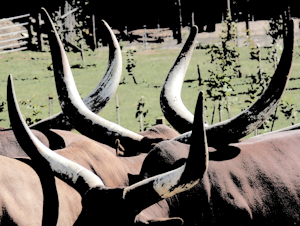 If you enjoy wildlife television programs, and you live in the UK, then you’re probably watching ‘Secrets of our living planet’ presented by Chris Packham. If, on the other hand, you’re not particularly interested in wildlife programs, you really ought to give this one a look because it is not the run-of-the-mill type. (And if you live outside the UK, watch out for it because it is almost certain to be in your area soon.) In fact, it is actually about ecosystems and some novel connections are highlighted, which you will almost certainly not have heard of. These have something of the ‘wow’ factor of those books by Lyall Watson, such as ‘Supernature’, although this series seems to be grounded in genuine scientific observation. Continue reading
Being a bhakta (Q. 314)
Q: I take no great pleasure in what the Buddhists call samsaric existence, and, over a long number of years, by intellectual hard work, have extricated myself from sectarian Christianity. However, I have come to realise that my progress has been not so much spiritual as intellectual. In practice, I find that I seem to be incapable of devotion, or any emotional attitude to any avatar or guru. For me, Bhakti seems to be impossible even though I really try to avoid obvious “sins”, and try to be altruistic in my outlook. It seems as if I am damned to be merely a seeking, learning intellect, with very little emotion in what I do, except in times of crisis. For instance, in desperation at what I see as my condition, I have prayed to Ramana Maharshi, asking him to open my heart, and to allow me to feel more emotion/devotion than I do. Sometimes, on such occasions I have shed tears, but they pass, and soon, I am back to my usual practical self, doing the usual, practical things, and taking an “intelligent interest” in things.
Years ago, I used to attend a Buddhist meditation group under a very able teacher who, it was obvious, had seen through the ego and was beyond it. (It would be too complex a matter, and would take too long, to tell you how I knew this, but know it I did. He was a very powerful being, and his aura could be felt even after leaving him.) After a number of years’ attendance, this teacher made it clear to me (I must say, very skilfully, by implication and not directly) that I was not a suitable attendee. This was even though there had been many of what I would call transcendental experiences, and insights (all, I think, thanks to the darshan of this teacher) that have now been lost. For many years, since leaving the group, I have been a loner, living a very quiet and studious life, mainly. I try to do all the good for others that I can, by being helpful to others, and as generous as I can afford to be (I think) with money. Yet, I feel as if I am damned, having lost my chance to practice with a realised teacher. And all because (it seems) I was not able to forswear sex within marriage at that time of life. Even now, in old age, when such an obstacle cannot exist, there is still the problem of a lack of a capacity for devotion — only a capacity for intellectual understanding.
What can be done? I am afraid of being re-born in unpropitious states because of my condition. Continue reading
shrutisAra samuddharaNam (Part 4, final)
 The shrutisAra samuddharaNam
of
shri toTakAchArya
An Overview by C.S.Baskaran
(Part 4 – final)
Refutation of the claim by the Dvaitin that “A Principal statement like tat tvam asi is neither acceptable nor can be rejected. It does not serve any purpose”
A Principal sentence negates the identification with the three gross, subtle and causal bodies for the seriously inclined student of Vedanta and such identification is the cause of the birth and death cycle. It generates the knowledge of the self (which equates to liberation) instantaneously. If one can accept the God and Creation through the Veda pUrva (karma kANDa) texts, why not accept the same Vedas’ Principal statement “tat tvam asi” as equally valid? When a sincere seeker is taught a Principal statement like “tat tvam asi”, “aham brahmAsmi”, “ayam Atma brahman” etc, his or her own attachment to the body certainly goes away. But, in the case of ordinary people, the false notion continues, in spite of repeated hearing of the above texts. Without the removal of false identity with the body-mind-intellect complex the transmigratory existence through cycles of birth and death cannot end. Continue reading
Under Anaesthesia (Q. 313)
Q: I recently had an experience that leaves me baffled. I have read your books, the sections on deep sleep consciousness, and it does not seem to match. The incident occurred when I will was given anaesthesia for hip replacement surgery. I went from eyes open in the operating room to who eyes open in the recovery room without any sensation in between at all. The experience was seamless and continuous from one consciousness to another. Time was absolutely absent. There was no reflection possible on the three-hour interlude. There was no interlude. There was no feeling of having slept well or otherwise.
This experience has left me with a problem. This was the nonexistence of any kind of consciousness, even in retrospect It seems neither the small self or the real self existed at all. Please comment. Continue reading
manonAsha – not the literal death of the mind
Most seekers who have investigated the teaching of Ramana to even a small extent will be aware of the concept of manonAsha. This is often presented as the idea that enlightenment is synonymous with the ‘death of the mind’. And indeed this is its literal meaning. Consequently, some writers claim that, following enlightenment, the j~nAnI literally no longer has a mind. This goes along with similar ideas such as that, for the j~nAnI, the world literally no longer exists.
This way of thinking is unfortunate. Shankara himself emphasised that we should not discount either our experience or reason, when it comes to interpreting the scriptures. And, speaking for myself, whenever I have encountered writings on Advaita which significantly contradicted my perception of what seemed to be ‘reasonable’, they have always proved to be misguided or incomplete, if not plain wrong. Continue reading
Book Extract – 108 Sonnets
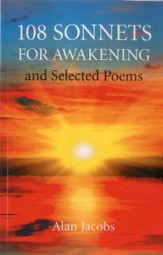 3 poems, on Appearance and Reality, Truth and End of Seeking from the new book by Alan Jacobs, President of the Ramana Maharshi Foundation UK.
Continuing Interview
The third part of my interview with John LeKay has now been posted.
New Book Extract
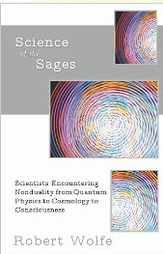
New Book Extract
– Wayne Liquorman