
Akhandakara vritti is, in psychological terms, the certainty that ends all doubts, the moment of realization which happens in timeless time. Ontologically, reality irrupts, as it were, into unreality, whereby the mind is transformed, or re absorbed, into consciousness unalloyed. Prior to that atemporal moment there may have been momentary sparks or instances of awakening or clear vision, anubhavas. But the realization that akhandakara writti consists of is definitive, irrecusable. Three aspects of reality combine in that ‘moment’: power-will-fearlessness (sat), Knowledge (chit), and liberation, freedom (ananda). A symbol of it would be spacelessness (or wide space).
upadesha sAhasrI – Part 19
Part 19 of the serialization of the presentation (compiled by R. B. Athreya from the lectures given by Swami Paramarthananda) of upadesha sAhasrI. This is the prakaraNa grantha which is agreed by most experts to have been written by Shankara himself and is an elaborate unfoldment of the essence of Advaita.
Subscribers to Advaita Vision are also offered special rates on the journal and on books published by Tattvaloka. See the full introduction
akhaNDAkAra vRRitti – Tension
Quote
In some characters there is perhaps a sudden recognition of the true nature as oneness, and then – maybe, but not invariably – there might be a blissfullness associated with that, a kind of exaggerated relief at the release of tension. More commonly, because the seeing through of the ‘someone’ in the play has been gradual, there has been a gradual release of the tension associated with being a ‘someone’. And so there isn’t much tension hanging around anyway – therefore there isn’t necessarily any kind of great blissful release.
Already Awake, Nathan Gill, Non-Duality Press, 2004, ISBN: 0954779223. Buy from Amazon US, Buy from Amazon UK. Read Extract.
Topic of the Month – akhaNDAkAra vRRitti
 The topic for May is akhaNDAkAra vRRitti.
This is the mental ‘occurrence’ which supposedly causes enlightenment. It is the vRRitti (thought modification) in the form of (AkAra) the formless or undivided (akhaNDa). (Personally, I no longer favor this view and will endeavor to find some quotations which show that it is not quite like this for most people!)
Please submit your quotes, short extracts or personal blogs on this topic!
Revision of ‘Review of article on Shankara’ – Part 5
A tarka (reasoning, argumentation) is required for the analysis of anubhava, as both SSS and RB (the author) agree – consistent with Shankara’s position. That is, language and thought, needless to say, have a role to play, chiefly for exposition and analysis.
However, after two long, dense paragraphs RB contends: “If the tarka required to examine anubhava is itself completely dependent on ´sruti, then by no means is anubhava the ‘kingpin’ of pram¯an.as.”
Prior to this, SSS was quoted as maintaining that “for this unique tarka all universal anubhavas or experiences (intuitive experiences) themselves are the support.” The author states that this affirmation involves circular argumentation, and that to say that Shankara interprets the Vedas as being consistent with anubhava is wrong, the truth being the other way around, anubhava is consistent with the Vedas: “it should be clear that according to Sure´svar¯ac¯arya, the direct realization is directly from just ´sruti itself, thus satisfying the criteria for it to be a pram¯an.a…. The direct realization of the self is from ´sruti alone.” Continue reading
The Focus of Attention…
Quote
I find that somehow, by shifting the focus of attention,
I become the very thing I look at,
and experience the kind of consciousness it has;
I become the inner witness of the thing.
I call this capacity of entering other focal points of consciousness, love;
you may give it any name you like.
Love says “I am everything”. Wisdom says “I am nothing”.
Between the two, my life flows.
Since at any point of time and space I can be both
the subject and the object of experience,
I express it by saying that I am
both, and neither, and beyond both.
Nisargadatta Maharaj
http://mysticson.blogspot.de/2010/04/focus-of-attention.html
Revision of ‘Review of article on Shankara’ – part 4
Under the section ‘Tarka vs Sruti’ the more or less unconscious devise (upadhi) of removing the subject from the ‘picture’ aimed at understanding the world is broached, and the author (RB) quotes E. Schrödinger in that connection: “It became inherent in any attempt to form a picture of the objective world such as the Ionians made”. And so, “…the desire for understanding the world through our imperfect sensory knowledge invariably leads to certain, frequently overlooked, assumptions”.
It is curious that the first sleight of hand – by ‘primordial man’, the demiurge of mythology and Platonic philosophy – consisted in carrying out a scission within reality so that subject and object would emerge in opposition to each other: God and man (the Garden of Eden), the One and the many. A second scission was done by philosophical, or ‘thinking’, man, by removing the human subject altogether – provisionally, for the Ionian ‘physiologoi’ knew what they were doing, though, it is related, Thales of Miletus fell once into a ditch while absorbed looking at the firmament’s stars in utter wonder. Certainly, this device – or both combined – made possible all the empirical sciences, literature, art, and everything we know about the world. If there were no division or separation (no adhyasa and it’s attending ‘names and forms’), there would be no ‘world’. Allusion was made to this parallel mythological account previously, as well as to the kind of ignorance that became knowledge (with small case). Continue reading
Attending to the work
Quote
“Attending to the Self means attending to the work. Because you identify yourself with the body, you think that work is done by you. But the body and its activities, including that work, are not apart from the Self. What does it matter whether you attend to the work or not? When you walk from one place to another you do not attend to the steps you take and yet you find yourself after a time at your goal. You see how the business of walking goes on without your attending to it. So also with other kinds of work.” Ramana Maharshi
Be As You Are: The Teachings of Sri Ramana Maharshi, David Godman, Arkana,
ISBN: 0140190627. Buy from Amazon US, Buy from Amazon UK
Effort of attention.
Eskimo story — In the eternal darkness, the crow, unable to find any food, longed for light, and the earth was illumined.If there is a real desire, if the thing desired is really light , the desire for light produces it. There is a real desire when there is an effort of attention.
Simone Weil – Reflections on the Right Use of School Studies with a View to the Love of God.
Sharpness of Attention
Quote
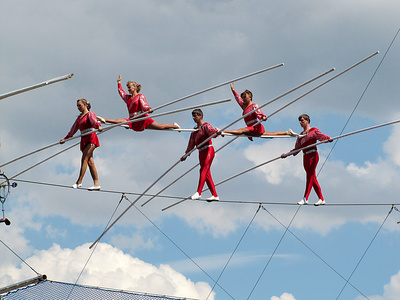
Arise, awake, and learn by approaching the excellent ones. The wise ones describe that path to be as impassable as a razor’s edge, which, when sharpened, is difficult to tread on.
Katha Upanishad 1,2,15
photo credits: Karl-Heinz Laube@pixelio.de