Tattvabodha – Part 23

Part 23 of the commentary by Dr. VIshnu Bapat on Shankara’s Tattvabodha.This is a key work which introduces all of the key concepts of Advaita in a systematic manner.

The commentary is based upon those by several other authors, together with the audio lectures of Swami Paramarthananda. It includes word-by-word breakdown of the Sanskrit shloka-s so should be of interest to everyone, from complete beginners to advanced students.

Part 23 continues the enquiry into the statement ‘you are That’ (tat tvam asi) and looks at the meaning of ‘you’ and ‘That’.

There is a hyperlinked Contents List, which is updated as each new part is published.

Tattvabodha – Part 22

Part 22 of the commentary by Dr. VIshnu Bapat on Shankara’s Tattvabodha.This is a key work which introduces all of the key concepts of Advaita in a systematic manner.

The commentary is based upon those by several other authors, together with the audio lectures of Swami Paramarthananda. It includes word-by-word breakdown of the Sanskrit shloka-s so should be of interest to everyone, from complete beginners to advanced students.

Part 22 begins the enquiry into the statement ‘That thou art’ (tat tvam asi) and looks at the differences between AtmA and jIva.

There is a hyperlinked Contents List, which is updated as each new part is published.

Vedanta the Solution – Part 36


VEDĀNTA the solution to our fundamental problem by D. Venugopal

Part 36 describes the manifestation of the jIva into parts and the nature of the five koSha-s as ‘functional parts’.

There is a complete Contents List, to which links are added as each new part appears.

Tattvabodha – Part 21

Part 21 of the commentary by Dr. VIshnu Bapat on Shankara’s Tattvabodha.This is a key work which introduces all of the key concepts of Advaita in a systematic manner.

The commentary is based upon those by several other authors, together with the audio lectures of Swami Paramarthananda. It includes word-by-word breakdown of the Sanskrit shloka-s so should be of interest to everyone, from complete beginners to advanced students.

Part 21 begins the chapter on micro and macrocosm with a look at the jIva and its distinction from Ishvara.

There is a hyperlinked Contents List, which is updated as each new part is published.

Wave and Ocean

The ‘ocean-wave’ metaphor is a potentially powerful one but is often misunderstood. Here are a few quotes pulled off the Internet from a Google search:

 “The waves emerge briefly as a separate entity; however, just as quickly merge back into the ocean of which it is a part. Us, as human beings, are very much like the waves of the ocean. We briefly surface and display a uniqueness that cannot be duplicated; however, in the end, we reunite with the Whole.”

 “Actually our existence is just like an ocean. You are a wave of the ocean. You may be the most powerful, most thunderous, most beautiful and most inspiring wave of this ocean. But in the ultimate analysis you are just a wave. And the destiny of a wave is to merge again into the ocean. One day your little wave will also merge in the ocean of existence. Contemplate on this and understand the reality. We all are simple and ordinary in front of this huge cosmic play that is going on.”

 “To explain this further, Babaji gave beautiful example of wave – the wave by itself has no identity, it has identity of wave only for a certain time.  When it rises it is known as wave, but once it merges back into the ocean the wave no longer remains the wave, it becomes the ocean.  We have the karmic illusion of different and separate identity.  When we go in, there is no difference, we are particles of that One.” Continue reading

Q. 385 – Is enlightenment meaningless?

Q: If Brahman is perfect, not ignorant, and the sole subject, what is the purpose of enlightenment as proposed by Advaita as the perfect one needs none?

If the ignorant jIva-s are nonexistent and Brahman is perfect, ignorance is nonexistent, therefore perception of separation is nonexistent.  It appears that Advaita, while advocating non dualism and a perfect sole subject, in fact is dualist, reaching out to a nonexistent audience to fix a nonexistent issue, to provide realization that the absolute already witnesses.   Can you shed some light on this?

A (Dennis): Coincidentally, an answer I gave recently to a different question effectively answers yours also:

<<< You have to decide whether you are talking form the empirical viewpoint or the absolute. If you don’t do this, you just get confused because the ‘explanations’ differ.

You are brahman, whether or not you know this. There is ONLY brahman from the absolute standpoint. No one has ever been born so there is no one to be reborn. Continue reading

Ignorance is Also Brahman

Rama:  Maharishi Vasishta!  Revered Teacher!  Kundadanta whom I met  on that day is here in this assembly.  He has been listening to your instructions for all these days.  That is why I have asked you if he has attained Self-Knowledge and if all his doubts have been clarified.

Sage Vasishta:  Where is the need for me to say anything?  Let us ask him directly.

(Addressing now Kundadanta):  What do you say, Kundadanta?  Could you understand the essence of Truth? Have you gained Self-Knowledge?  Have your doubts been cleared? 

Kundadanta:  Oh, Greatest of the Sages!  Maharishi!  My Salutations.  Yes, now I am totally free of doubt.  I have learnt what all has to be learnt.  I understood fully the nature of Consciousness.  I realize that even a tiny mustard seed can contain infinite universes within it.  I could also understand experientially that there are no worlds at all from an Absolute point of view.  I can see clearly that a question on how a large earth can fit into a small room has no locus.

What every creature experiences in the world is only The Supreme Brahman.  The ignorance they experience is also Brahman.  There is nothing whatsoever anywhere anytime beyond Supreme Brahman.  That is the last word!

Vasishta:  He is a Great Man Indeed!  Congratulations to you, Kundadanta!   Continue reading

chin mudrA

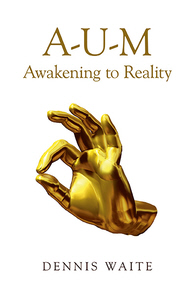
small_A-U-MHere is the second extract from my forthcoming book on the Mandukya Upanishad and Gaudapada’s kArikA-s. It explains the symbolism associated with the cover image. This explanation occurs near the end of the book, since it utilizes concepts with which the reader might be unfamiliar (until he or she has read the book). But since readers of this site should certainly be familiar with the terms, there is no harm in presenting it here!

chin mudrA

Now that we have almost concluded the unfolding of the kArikA-s, we can return to that cover image! The ‘hand-sign’ is not actually mentioned in the Mandukya Upanishad, nor by Gaudapada, though it is highly relevant. As I mentioned in the introduction, it is a gesture associated with the Sage who is said to be the first teacher of Vedanta – Dakshinamurti. As such, he was the head of the teaching sampradAya and did not himself have a teacher – i.e. he was already fully enlightened. He is also identified with the God Shiva. It is called chin mudrA or j~nAna mudrA (more usually chin), where chin means Consciousness and mudrA means sign.

It is often said that Dakshinamurti taught through silence. Of course, this would not make any sense. Silence can be interpreted in innumerable ways, few of which are likely to convey useful knowledge! But, once we have the knowledge, a symbol can convey a world of information, reminding us through memory of what we have previously learned. Witness the vast amount of knowledge which is now conveyed to you through the word OM.

The hand position shown on the cover of this book is another symbol of this sort. And it is highly relevant to the same knowledge.

Here is the symbolism:

  • The thumb represents paramAtman. There is some reasoning behind this. The scriptures speak of paramAtman as residing in the space in the heart (hRRidaya). By this, we were expected to understand ‘mind’, since it used to be thought that the mind was contained in the physical organ of the heart. Since the heart is about the size of a fist, it was reasonable to think that the space inside was about the size of a thumb.
  • The forefinger represents the individual or jIva. It could also be thought of as the ego or sense of myself. It is common in many cultures to use the forefinger to point out personal opinions and also to threaten or criticize others whose views differ from ‘mine’.
  • The second finger represents the gross body, sthUla sharIra or waker.
  • The third finger represents the subtle body, sUkShma sharIra or dreamer.
  • The fourth finger represents the causal body, kAraNa sharIra or deep-sleeper.
  • The first finger is normally held in association with the other three, indicating our identification with the body and mind.
  • All four fingers depend upon the thumb for their strength and ability to do practically anything. It is this feature which distinguishes us from other animals and gave humanity its great advantage in manipulating objects.
  • When the index finger is moved to touch the tip of the thumb, it separates from the other three, indicating realization that I am not in fact these bodies at all. In forming an unbroken circle with the thumb, it is recognizing that jIvAtman and paramAtman are one, unaffected by the three mithyA states of consciousness.

I now have a firm publication date for the book, incidentally – it is September 25th. It is now available for pre-order. It is quite expensive, but then it also quite thick (431 pages).

The paperback details are: ISBN 978-1-78279-996-2 UK: £20.99 US: $36.95
and the EBook: ISBN 978-1-78279-997-9 UK: £12.99 US: $21.99

Buy from Amazon US; Buy from Amazon UK

The first extract from the book may be read here.