Q: Do the Vedas really contain any advanced knowledge as so many people claim they do?
A (Martin): I’d say the Vedas contain the most fundamental and ‘advanced’ knowledge there is, though usually portrayed in the form of paradox (analogy, metaphor, story, etc.), so that one has to crack the code in order to find the wealth hidden in them. That knowledge is not like empirical science, which is cumulative and provisional, and which could be said to be somehow contained in it, even if in embryonic or potential form.
The knowledge inherent in the Vedas is metaphysical rather than mystical. According to it there is one and only reality: consciousness (Brahman, or the Absolute), which pervades the whole universe; it is immanent in it as well as transcendent… “the smallest of the small, the largest of the large”. It cannot be measured or understood by the mind, for which it is ineffable, but it is that by which the mind comprehends… it cannot be expressed in words but by which the tongue speaks… it is eye of the eye, ear of the ear, mind of the mind, as expressed in the Upanishads.
Modern physics is having a hard time trying to explain away what consciousness is in terms of physical phenomena (neuronal activity in the brain), but consciousness is not an irreducible phenomenon or datum; it is reality itself or a name or symbol for reality – since the referent of the symbol is unfathomable – everything being comprehended in it (theories, doubts, projections, emotions, things, thoughts, intelligence, observer and observed, you and I). For the Vedas reality is one, and present physics is trying to find out in which way it is so (‘theory of everything’, ‘unifying theory…’). Not all physicists are reductionist, some of them having seemingly mutated into philosophers with an understanding of the core of Vedic teachings.
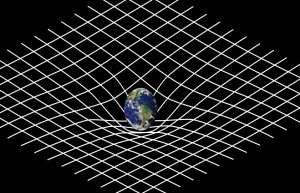 Hardly does a minute go by when a student of Advaita does not hear an analogy. The subject being so abstruse and abstract, the teacher ostensibly to make things easy to understand (सुख बोधाय), resorts to the method of using an “analogy.” Much like in Theoretical Physics and Quantum Physics, the concepts in Advaita too are usually counterintuitive and metaphor is a powerful tool to help drive home a difficult idea. The danger in using the metaphor is that it, more often than not, lulls the student with a sense as though s/he “got” it (the Oneness of All That-IS). Perhaps because of that, it is not seldom that we find even an advanced student of Advaita being tempted to extend a metaphor beyond the intended point and make his/her own inferences from such a wrong projection. (I am frequently asked questions on ‘reflected Consciousness,’ ‘Witness-Consciousness’ etc. based on such improper extensions).