Q. 368 – vAsanA-s

Q: Do vAsanA-s belong to the causal body or the subtle body?  

In the subtle body camp I got a response from one of Swami Dayananda’s senior students saying that the causal body is pure ignorance with no attributes and that vAsanA-s “definitely belong to the subtle body”.   In addition, from my own quick review of some of Shankara’s basic works I can find no passage that says the causal body is anything but “avidyA” and find no mention of the term “ vAsanA-s ” anywhere.

In the causal body camp I have James Schwartz and multiple pieces of Chinmayananda literature.   In fact I have seen them equate vAsanA-s to avidyA by pointing out that avidyA and vAsanA-s are both caused by the guNa-s.

Can you help with this one?   What is going on here?  Btw, as an interesting side note, in Swami Dayananda’s extensive Gita course-books the word “ vAsanA-s ” does not appear once.

Answers from Ramesam, Ted, Martin and Dennis. Continue reading
Brahma Sutras

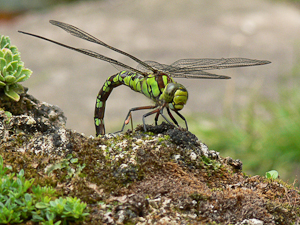
Southern Aeschna(Originally posted to Advaita Academy Oct. 2010)

Most readers of this site will certainly have heard of this text- the third branch, nyAya prasthAna, of the source for the teaching of advaita. (The other two branches of the so-called prasthAna traya are the Upanishads or shruti, and smRRiti, of which the most important is the bhagavadgItA.) But few have probably read it. You may have attempted to do so but been quickly put off by its seeming complexity. This is not surprising!

The basic text was written by vyAsa and otherwise known as bAdarAyaNa. And ‘text’ is not really the right word. It is actually written in short, numbered sutras whose meaning is often obscure, to say the least. The practice of the time required that writers of such works used as few words as possible – and vyAsa must have been one of the most proficient! The reader is expected to remember what has gone before and fill in the appropriate words as necessary. He is also expected to know the Upanishads and other works off by heart so that the relevant references do not have to be spelled out. Continue reading

Waking World is also Unreal

small_A-U-MDreams are a powerful metaphor in Advaita. The Yoga Vasishtha is perhaps the best known book to utilize them extensively but probably the earliest teacher to do so was Gaudapada in his kArikA-s on the mANDUkya upaniShad.

He effectively says that the waking state is unreal, like dreams, ‘because we experience it’. This is anvAya-vyatireka logic: we experience objects in dreams, and they turn out to be unreal; therefore the objects we experience in waking are also unreal.

This does not sound very convincing and there are various arguments that we can raise to object to the analogy. Gaudapada raises them for us, in case we can’t think of them all! Here is the third argument he puts forward. It is an extract from my forthcoming book, which will be published 25th September 2015.

Third objection to world being unreal

And this leads on to the third objection namely that, whereas the dream world is subjective, the waking world has objective reality. It is experienced as external to ourselves, whereas the dream takes place in our mind (K2.9 – 10). But this notion suffers from the same confusion as before. We only recognize that the dream world is ‘in our mind’ when we are awake; at the time of the dream, it is just as much ‘external’ as is the waking world when we are awake. We might as well say that the waking world is really non-existent since it disappears when we are in the dream or deep sleep states. At the time of the dream, I experience external objects and events in just the same manner. Their illogicality or even impossibility only becomes apparent on awakening. Continue reading

Q. 367 – shraddhA – Is it necessary?

Q. I come from an atheistic upbringing, and in addition I have studied a good chunk of modern Western philosophy and science, and such a position has become my “default mode”. A day came a couple years back where I found myself in a deep existential crisis (one that is most certainly still ongoing), and so I looked for a spiritual path that could reconcile what I knew of philosophy/science with spirituality. Advaita seemed to be the one that not only fit the bill the best, but also resonated with me the most. But on this path, I find myself constantly slipping into the habits of thought that I am used to. I try to cling to the pieces that don’t fit neatly into the materialist story, but I’m very much aware that I’m hanging on to them because I’m worried, not because I have a strong belief in their truth. If there is a teaching that goes against the grain of most scientific thought, even slightly, I tell myself I must discard it – “otherwise you’re just fooling yourself”, I say.

I notice this thought process, and it’s disturbing to me. I want to be open to what Advaita has to offer, but it’s incredibly tough – I worry often that a spiritual path of any kind is not possible for someone like me. I have a good deal of mumukshutva, but no shraddha. Can someone without shraddha somehow gain it? How necessary is it? And how can I break through my old habits of thinking, and gain that faith that there’s something more than just this body? Continue reading

Topic of the Month – Dreams

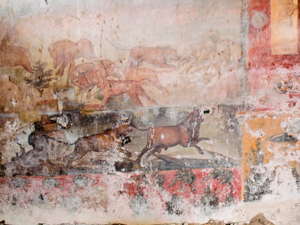
frescoThe topic for the month of February is Dreams and Dreaming

Here also is an opportunity to ask questions on this topic and receive answers from the bloggers.

We always assume the present to be the waking state and, by contrast with it, the previous state sublated by the present to be dream. It is impossible to distinguish them otherwise by any subtle definition. (Loose translation of Gaudapada kArikA 2.5) (Please, no reference to EEG to refute this!)

Astavakra – dharma

OLYMPUS DIGITAL CAMERAkartavya-taiva saMsAra na tAM pashyanti sUrayaH |
shUnyA-kArA nirA-kArA nir-vikArA nirA-mayAH || .. XVIII.57 ..

The sense of duty, indeed is the mundane world. This is not acknowledged by the Wise-one, who has realized himself as the All-pervading formless, Immutable, Untainted Self.

Of course I have a sacred duty to look after, protect, serve and help my wife and children, and also my community, that I see around me in my dream!

The dream-I while dreaming believes that the dream-world is real. In this, sense-of-Reality, are born all my duties and responsibilities. When I have awakened to the waker-I, what duties are there towards my dream-family and dream-community? The Wise-one, Liberated-in-life, is the Awakened-one. He has ‘awakened’ to the Infinite Consciousness. He cannot be touched by the laws of duties and responsibilities projected and maintained by the mind-in-disturbance. No sense-of-duty can arise without attachments; attachments cannot be unless we permit a sense-of-reality to the world-of-plurality. To the awakened, the illusory world of objects and beings are no more and therefore, he, living as the ‘All-pervading’, Formless, Immutable and untainted’ Self, has no more any sense-of-duty towards anyone.

Astavakra GitaSwami Chinmayananda, Central Chinmaya Mission Trust
Buy from Amazon US, Buy from Amazon UK

Seven Stages of Chidabhasa

chidAbhAsaGuest Author – Vijay Pargaonkar
Seven Stages of Chidabhasa

Based on Panchadasi by Vidyaranya Swami

Chapter 7.0 “Trupti Deepa”(marathi translation by Pundit Vishnu Shastry Bapat (1908) and hindi translation by Pundit Ramavatar Vidyapati (1912))

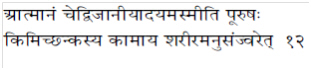
Brihadaranyaka Upanishad 4-4-12
br4-4-12


“If a man knows the Self as “I am This” then desiring what and for whose sake will he suffer in the wake of the body.”
(The entire Trupti Deepa chapter of Panchadasi is based on this shruti mantra)

Kutastha, the pure Consciousness, is asanga (without any association) and avikari (immutable). This Kutastha is also the adhisthana (substratum) of “bhrama” (illusions- not to be confused with Brahman) of indriya-sharira (body- mind complex). When it gets associated (the association is only vyavaharic/transactional and not real) with mind through anyonya-adhyasa (mutual superimposition) it is known as Jiva. Kutastha’s reflection in mind “chidabhasa” alone cannot be the Jiva since it has no existence of its own without Kutastha – image in a mirror is not possible unless there is a face behind it. The mixture/combination of chidabhasa and Kutastha is also referred to as purusha in the the shruti above. Continue reading