Tattvabodha – Part 7

OLYMPUS DIGITAL CAMERAPart 7 of the commentary by Dr. VIshnu Bapat on Shankara’s Tattvabodha.This is a key work which introduces all of the key concepts of Advaita in a systematic manner.

The commentary is based upon those by several other authors, together with the audio lectures of Swami Paramarthananda. It includes word-by-word breakdown of the Sanskrit shloka-s so should be of interest to everyone, from complete beginners to advanced students.

Part 7 begins the section on Atma vichAra – investigation into the nature of Atma – and in this part specifically asks the questions ‘What is true knowledge?’ and ‘Who is Self?’. There is also a hyperlinked Contents List, which is updated as each new part is published.

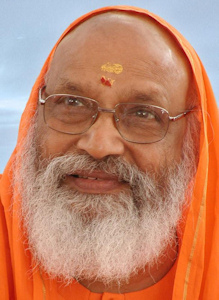
Swami Dayananda

dayanandaIn case anyone has not yet heard, Swami Dayananda passed away yesterday, the 23rd September, at 22.18 IST in Rishikesh. Unquestionably the greatest teacher of Advaita in our lifetimes, he must certainly rank as one of the most important ever. Fortunately the legacy of his own writings and transcriptions, and that of the institutions he founded and the teachers he taught, will live on to the benefit of future seekers.

As a topical example of his teaching, I would like to reproduce the following pieces on the subject of manonAsha. These are extracted from the excellent book already recommended in these pages: ‘Pujya Swami Dayananda Saraswati – his uniqueness in the vedanta sampradaya’ by D. Venugopal.

manonaSha or Thought-free-mind Confusion

There is also a widespread contention among the adherents of aShTANga-yoga that the truth of the self is covered by vRRittis (thought-forms) and it has to be uncovered by stoppage of thoughts (citta-vRRitti-nirodha). Pujya Swamiji clarifies that thought is not the problem. He says:

“The confusion comes from the statement that AtmA is undivided (nirvikalpa). The vision of the ShAstra is that while the knower, known, and knowledge are not separate from AtmA, AtmA is independent of all of them. In MANDukya UpaniShad and in the kArikA, the dreamer is cited as proof that there is no real division (vikalpa) such as dreamer, dream and dreamt, even though during the dream, the division was taken to be real. Continue reading

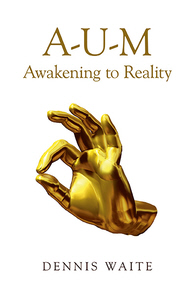
A-U-M Awakening to Reality – Review of book

‘Lucid and exhaustive of most important book in Advaita Vedanta’

The Mandukya Upanishad, the shortest (it has just 12 verses) and , according to a general opinion, the most important of the 12 main Upanishads, has the added interest in being associated with the authoritative karikas of Gaudapada, grand-mentor of Shankaracharia, the initiator of Advaita Vedanta. Of the former it has been said that his is ‘a rational analysis of the totality of our experience in all three states: waking, dreaming, and deep sleep. Incomplete and insufficient will be any philosophy that is based on the waking state alone’ (Swami Brahmananda).

‘When everything has been said, the fact remains that Vedanta is the only way of thinking that claims to study life in all its aspects in a scientific manner. It treats of truth, wisdom, and happiness, subjects of eternal interest to mankind. The credit of having brought to the notice of thinkers the value of its all-comprehensive method revealed in the Upanishads, and of having successfully built an impregnable system on that solid basis, will ever belong to Gaudapada.’ (Swami Satchidanandendra Saraswati).

This new book, authored by the well-known (and, one could say, prolific writer in the field of Advaita Vedanta – this is his 7th book), Dennis Waite, has several features that make of it an important addition to the literature in this specialized area, one that is becoming much better known than it was some 10-20 years ago.

Beginning with a few general remarks, something that strikes the reader is the clarity of the writing and the logic of the exposition of its contents which, at first sight, appears to be an introductory text for the un-initiated. Far from it! – and it is not a question of its length (420 pages) or even of the exhaustive coverage of everything that is relevant to the Upanishad itself and Gaudapada’s running commentary in the karikas. Clear and didactic it is, but the tools (armamentarium), organization of the work, and employment of many important Sanskrit words together with their English translation, plus a long Glossary (41 pp.), make of this book an indispensable reference for the modern reader of both this important Upanishad and Gaudapada’s contribution.

An important feature of the book consists in the numerous references (81 in all!) – most of them with short-to-medium length descriptions of the tenets or arguments of the, mostly modern, authors consulted when DW was in the process of preparing this work (Annotated Bibliography – 33 pp.)

Apart from the illuminating Introduction (36 pp.) and ‘What the Mandukya Upanishad is About’ at the beginning, the following 7 sections are: The World Appearance, Causality, Creation, Nature of Reality, Self-Knowledge, Practical Aspects, and Conclusion. They are all important, certainly, but I found ‘Nature of Reality’ to be like a centre-piece.

There are 7 Appendices at the end, comprising altogether 95 pp. To give one an idea of the completeness of the work, one of the Appendices (No. 5) deals with pronunciation and transliteration, using a recently proposed method: ITRANS. Lastly, a full Index, containing also a list of all the karikas mentioned in the book. AM

Yogavaasishta – A Review

Image

Excellent new modern translation of Yoga Vasishta, September 9, 2015
By
Amazon Customer (AM)

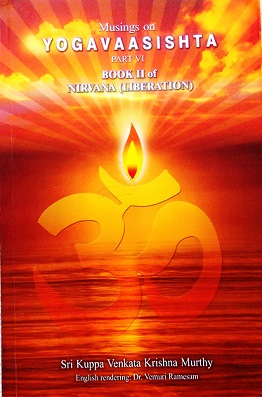
DSCN7289This review is from: Musings on Yogavaasishta Part VI – Book II of Nirvana (out of the Set of 6 Volumes) by K. V, Krishna Murthy, Avadhoota Datta Peetham, Ooty Road, Mysore 570025, India , English rendering by Ramesam Vemuri, 2013 (Paperback)

The Yogavasishta is a work attributed to the ancient Indian sage Valmiki, in which the sage Vasishta teaches his pupil Prince Rama and others how one may come to the immutable reality that is veiled by the fleeting world of sensory impressions. It has a pride of place in the tradition of Advaita Vedanta comparable to the Bhagavad Gita (the Indian gospel) and the Mandukya Upanishad. The reading of this monumental work on the rigorous advaitist (non-dual) doctrine and its profound philosophical thought is quite pleasurable as it is punctuated by entertaining and imaginative stories or tales that sound like real-life examples. One can dip into the narrative repeatedly and at leisure in order to regain that pleasure and edification – nay, real wisdom that it is.

The present new translation into English uses a modern idiom which, when the text permits, is consistent with present cultural (Western as well as Eastern) ideas and experiences, but without detracting from the overall intent and even style of the work. The actual flavour comes from the exchanges between the master and the disciple, and also from the stories themselves. I highly recommend this excellent translation of the classic that the Yogavasishta, by its own merits, is.

(Sample):

Rama: Agreeing that the world is nothing but a phantasmagoria, can’t we help a person to avoid the troubles in the world using some clues from the world itself?

Vasishta: No, that is not possible. Will any amount of hammering by us here break the mountains in the dream of another? Any clue, any method, is a part of your imagination. Misery is part of his imagination. The two imaginations cannot meet in the same place. Hence each man has to get rid of his sorrow on his own through Self-Knowledge.’

How could we merge absurdist and Buddhist philosophies?

www.quora.com/How-could-we-merge-absurdist-and-Buddhist-philosophies

M. Provisionally we could put side by side ‘absurd’ (or illogical) and ‘unprovable’, even if they are not synonymous; and the main tenets of all religions are such. They are not ‘rational’. On the other hand, neither science, ‘common sense’, or rationality are the ‘end all’. There are many things that escape explanation with the current state of our knowledge and understanding.

Paradox is a term related, one way or another, to the above. Just consider the following:

i) “How wonderful that we have met with a paradox. Now we have some hope of making progress”. Niels Bohr (famous physicist)

ii) Is there anything more absurd to ordinary understanding of the world and us than the following (taken from my blog): “That truth, put into words, is paradoxical: you are all (as Consciousness) and ‘you’ (as perceived individual) are nothing, or a phantom; you are the final witness, but ‘you’ are not a witness; the world is illusory (as appearance), but in essence is reality itself. That revelatory, transcendental experience is non-transferable, not provable to another.”

GL. If by absurdism you mean acknowledging that there is no absolute truth, then zen buddhism when asked what is enlightenment, answers “6 pounds of flax”, which is, I believe, trying to point out that absolute truth is impossible.

M. You probably mean ‘impossible to demonstrate, or to know, with the ordinary mind’, but ask a zen buddhist if it (absolute reality or truth) is impossible to grasp, to grok.

GL. I think the point of the flax koan is that you can’t know satori with certainty.

M. Is it not rather that the experience cannot be explained – or transmitted – with words, being ineffable? Such is a transcendental experience, where there is no individual per se present.

GL. Isn’t “ineffable” the same as saying we can’t know with certainty?

M. No, it means ‘inexpressible’, the experience being overwhelming (rather than being too sacred – another meaning).

GL. If you can’t describe it, then it isn’t knowable.

If it is purely a matter of experience, then there is no way for me to know you are experiencing something the same way I am. Color is ineffable. You experience red and green the way you do, and I experience it the way I do. And unless we have an objective test for color blindness, there is no way to know if you see what I see. Some people see color when they hear sound. And as long as that experience is ineffable, there is no way to know if we see color the same way. Only when we establish some objective explanation and some objective testing can we know with certainty if we are experiencing similar things.

M. You refer to what are called qualia, but I am not sure how far you want to go (can nothing be known? In what sense?) Most empiricists/scientists tend to disregard this question or deny that it presents any problem for their physicalist stance. In non-duality, which is what interests me, there are not, cannot be, any objective tests referable to either external or internal experiences of what generally is understood as reality (the world and oneself) except, perhaps, in one’s facial expression and/or demeanor. That agrees with what you say about qualia but, aside from non-duality (or as a preliminary to it), it doesn’t mean that there cannot be agreement, concurrence, in the realm of thought, sensations, and feelings. Two people reading the same book or page – if they are on the same wave length (let’s say interest in non-duality, or in a particular modality of art, like Baroque or modern) – will have similar thoughts and feelings. Language is for communication – even about the understanding of non-duality (like zen) – but certain experiences cannot be communicated, such as particular intuitions or epiphanies, regardless of what we understand as qualia, though related to it.

Consciousness/Awareness, the brain, and memories

(Q&A published recently in QUORA)

Q. ‘Why wasn’t my consciousness generated by another brain? Why am I linked with this brain?’

I heard that everybody experiences consciousness, but then why am I my consciousness and not another person’s consciousness? It’s hard to explain.

Paul Bush. Yes, it’s hard to explain. Basically it’s because the most important part of consciousness, which is awareness*, is the same for everybody. There is only one awareness, and in fact nothing else. All the other aspects of consciousness, the contents, are projections of awareness as it identifies with small parts of reality such as bodies and minds. Such misidentification creates a perspective. From each perspective the part of reality not identified with is seen as the external world. The observer with a particular perspective and the world observed as a consequence of that perspective are both inferences created at the moment of identification.

So, there is only one awareness that is continually pulled into the illusion of being this or that observer. The ongoing personal identity that we think of as ourselves maintains coherence through the construction of the concepts of time and space; memory and an apparent (though not total) physical separation from the rest of reality. Awareness has no personal identity, it is exactly the same for you and everyone else, because it is singular awareness that creates each experience depending on the perspective of the entity that it is identifying with.

*(AM Awareness and Consciousness are generally taken as equivalent in Advaita Vedanta – no distinction being made) Continue reading

Bhagavan’s mouna upadesa

Neo-traditional Vedantins are fond of claiming Bhagavan Ramana as their own, and acknowledge him as a great saint.  However they are conflicted because his teaching is diametrically opposite to what they say.

He says scriptures are fine, but need to be left behind, and self-abidance / enquiry should be pursued in order to permanently dissolve the ego.  This cannot be done by simply adding scriptural concepts, such as “I am Brahman”

The neo-traditionalists say scriptural knowledge is the only means to jnana, that teaching cannot be done in silence, and that “who am I”, self-enquiry can in no way be a means to jnana.  And they do not accept that the mind / ego can die.  Some also go on to say that Bhagavan’s primary teaching was not who am I, and that he has been mis-interpreted; and also that we was not interested in teaching, and that was why he remained in silence.

So lets consolidate what Bhagavan himself said about these issues.

Continue reading

Creation According to Reason

small_A-U-MAlthough not scheduled for publication until the 25th of this month, both Amazon UK and Amazon US claim to have only a few copies left! So, to remind you of the sort of content you can expect, here is another extract from the book on the topic of ‘Creation according to Reason’.

Having spent some time showing how key passages from the scriptures claim that there is no creation (and explaining how there can be apparently contradictory passages elesewhere), Gaudapada turns to reason – his principal tool in this work.

Read the extract here.

Q. 377 – Desire and suffering

(Also discusses Buddhism versus Advaita; analysis versus experience; need for practice)

Q: Your work is both beautiful and rigorous, and I’ve appreciated your continuous efforts to continue the much-beloved tradition of Advaita Vedanta.

As I consider devoting myself to the path of Advaita Vedanta, I find that I keep coming up against a few constant, nagging protests:

First, it seems that the tradition and methodology (although I also assume that there is quite a lot of variety of how Vedanta is taught and realized) is overly academic and scholastic, at least as I view it from the information that I’ve gleaned during my research.  The unfolding of the teaching of Vedanta seems to leave the student engaging in a lot of analysis, rather than a deep exploration of how they genuinely experience the world, which lacks transformative power because it remains something objective.

Second, according to some of the sources that I’ve gleaned, it seems to place Vedanta on an extremely high pedestal, as something engaged in only following years of other preparatory practices.  But modern practice appears to demonstrate that such preparation, while helpful, is not necessary.  I cite websites like “Liberation Unleashed” and Scott Kiloby’s excellent work which show that directly exploring and inquiring into the truth of statements like, “All there is is pure awareness,” etc., can still be highly transformative outside of the context of a more robust regime of spiritual purification and development.

My fear is that if I follow the traditional route, I will end up entangled in these preparatory practices.  I’ll just be getting the appetizer for years before getting the meal, in other words, but, in my opinion, why wait?

Is this perception true (given that there will be a lot of diversity)?  Do most AchArya-s make their disciples engage in such practices for prolonged periods of time before discussing Vedanta?

I have heard you and many other teachers in the traditional Advaita lineage say things like, “Unless you have a very pure mind…” or “Unless you are highly developed…”  etc., the practice of Vedanta will be fruitless.  But, if you read the logs, for example, of the website “Liberation Unleashed,” you will find some very impure people – depressed, addicted, desperate, you know, the usual seeker lot!, who come out transformed after only a few days of directly looking into their experience.

I appreciate your thoughts on this and your generosity in helping so many confused seekers. Continue reading