Brahman is undefinable

The entire visible world, including mind, intellect, actions, Iswar, etc., disappear at the final ending of the Great Period (maha kalpa), i.e. at the time of Great Dissolution (maha pralaya). Space and time also become extinct at that position. The immutable substrate Brahman only will remain. It is not time, space, the five fundamental elements or any other thing. We cannot describe or define what it is. Only Knowers of Self can understand It. The rest of the folk has to take recourse to Vedic aphorisms to talk about it.

YOGA VAASISHTA – Part Vl, Nirvana (Liberation), Book ll, transl. Dr. Vemuri Ramesam

What is Brahman? (Part 2)

brahman4(Read Part 1)

Positive ‘definitions’ of Brahman are given by such expressions as satyam j~nAnam anantam brahma, in the Taittiriya Upanishad. The words are to be understood as svarUpa lakShaNa, i.e. a definition that differentiates what is described from all other objects. The example often given for svarUpa, which literally means ‘own form or nature’ is sweetness, as being the svarUpa of sugar. But the word ‘sweet’ does not actually convey the quality of sweetness; it only works if we have had the experience of tasting something that is sweet – then there is no problem at all. In the case of Brahman, however, we cannot have the experience of Brahman because it is not an object of experience. Our understanding of Brahman comes from the shruti.

In the expression, Brahman functions as the noun with satyam, j~nAnam and anantam functioning as adjectives. But, as already noted, Brahman cannot have any attributes so that we cannot really use adjectives at all. Therefore, instead of the noun-adjective relationship [visheShya-visheShaNa], this is what is called a lakShaNa-lakShya sambandha [relationship between an indirect pointer and the thing to be defined]. anantam means eternal, limitless; satyam incorporates the ideas of truth, reality and existence, and j~nAnam means knowledge. But a simple translation will not do – this is where the guru needs to come in to ‘unfold’ the explanation step by step. satyam, for example, has to convey the meaning of absolute existence; anantam, free from all limitations of time and space; never changing; j~nAnam, pure awareness, consciousness (neither knower, known object nor means of knowledge), and again unlimited. And so on! Continue reading

Topic of the Month – Brahman

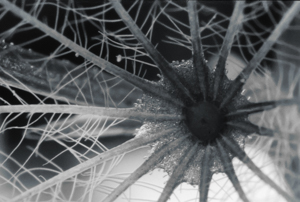
brahman3The topic for Sep 2014 is brahman.

This is, of course, THE topic of Advaita – what else is there?

I posted part 1 of the 3-part essay, which I wrote back in 2009 on the subject of Brahman, last month. I will post part 2 within the next 24 hours.

I recently started looking at Shankara’s dakShiNamUrti stotram for the first time and encountered there a way of looking at tat tvam asi that I hadn’t previously encountered. jIvAtman is treated as Consciousness (tvam – you) and paramAtman is treated as Existence (tat – brahman – every’thing’). asi is aikyam – identity. You are That. Consciousness is Existence. Maybe others have studied this text and can elaborate?

Please submit your quotes, short extracts or personal blogs on this topic!

Belief systems

[Love thoughts]… dissolve the belief systems that had created the false knowledge, in particular the arrogant belief, “I know something, I know things”. All I know is, “I am” and “There is something rather than nothing”. That’s all we know and all we can know; the rest is speculation. (p. 29)


Before its encounter with the truth, the old belief system was standing proudly on the beach, pretending to be a castle. Now it is only sand, waiting to be washed away by the wave of truth bearing down on it. (p. 98)


‘Truth Love Beauty’, Francis Lucille.

upadesha sAhasrI – Part 21

upadesha21

Part 21 of the serialization of the  presentation (compiled by R. B. Athreya from the lectures given by Swami Paramarthananda) of upadesha sAhasrI. This is the prakaraNa grantha which is agreed by most experts to have been written by Shankara himself and is an elaborate unfoldment of the essence of Advaita.

Subscribers to Advaita Vision are also offered special rates on the journal and on books published by Tattvaloka. See the full introduction

The only certain knowledge

“Whatever knowledge we may obtain about anything other than ourself is indirect and therefore open to doubt. The only knowledge that is direct is the knowledge or consciousness that we have of ourself as ‘I am’, and hence it alone can be certain and free of all doubt.

Before we know anything else, we first know our own existence as ‘I am’. This knowledge or consciousness of ourself is our primary and essential form of knowledge. Without knowing ‘I am’ we could not know anything else. Our consciousness ‘I am’ can stand alone without any other knowledge, as we experience daily in deep sleep, but no other knowledge can stand without this consciousness ‘I am’.

. . . . . .

Only when we attain true knowledge of our consciousness ‘I am’ will we be in a position to judge the truth and validity of all our other knowledge. Thus the belief that objective research can lead to true knowledge – a belief that is implicit in and central to the philosophy upon which all modern science is based – is philosophically unsound, and is based more upon wishful thinking than upon any deep or honest philosophical analysis.

All objective knowledge is known by us indirectly through the imperfect media of our mind and five senses, whereas consciousness is known by us directly as our own self. Therefore, if we seek true, clear and immediate knowledge, rather than attempting to elaborate our knowledge of objective phenomena by turning our attention outwards through our mind and five senses, we should attempt to refine our knowledge of consciousness by directing our attention selfwards, towards the essential consciousness that we always experience directly as ‘I am'”

From Happiness and the Art of Being, Michael James, Trafford.
ISBN: 978-1-4251-2465-6
Extract Link
Review Link
Buy from Amazon US, Buy from Amazon UK

The Absence of Belief

Quote

“I would define a ‘true sage’ conceptually as a human organism in which the sense of separation as the author of their actions is gone. It is a human being for whom the belief – and it is a false belief – that they are the centers of the universe, the authors of their thoughts and their feelings and their actions – that belief is absent in a True Sage.

And this is not a belief on the part of the human organism that they are not the authors of their action, it is the absence of the belief that they are. So it is not the presence of the belief that they are not, but the absence of the belief that they are. There are a lot of people running around with the belief that they are not the authors of their action and that belief is simply another belief.”

Wayne Liquorman

Whose Story are You Living?

There seem to be a lot of churches on Maui. The missionaries did a very thorough job here. As I drive around I often see a cryptic message posted on a sign board outside a church. Little sayings that I suppose are meant to bring one back into the fold.

When I see these messages I often try and look at them from the understanding I now have about the nature of reality and the way the world functions as a whole.

Here is one saying that I pass quite often posted outside a Baptist Church. “Whose story are you living, God’s or yours?
Continue reading