
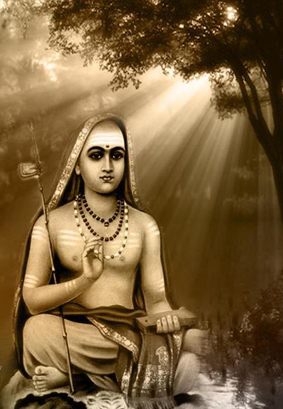
 There has been much healthy debate recently on the Advaita Vision Blog about Liberation, who or what is a jnani or jivanmukta, and what it means to follow traditional Advaita. The theme of this post is that we cannot resolve such questions without first gaining a clear understanding of the body-mind and its role in the context of Liberation. What follows are some reflections inspired by a spirited discussion with Ramesam, with due credit to him for stimulating many of the thoughts below. Any errors or possible misunderstandings are entirely my fault. Or perhaps not, since “Words fall back from it.” Continue reading
Tag Archives: Advaita
Time for the Wind
 Readers of this blog, and its associated website www.advaita.org.uk, will (I hope!) associate my name with my books on Advaita, which have been published fairly regularly since 2003. What very few people know is that I have also written a novel! In fact, this was the first book I wrote. I actually began it around 1974, while I was working as a contract computer programmer and temporarily idle. Unfortunately (I was still being paid), I was not idle for very long and the book was not completed until 1982! Since then I have revised/rewritten it four times! I did attempt to get it published back in the nineteen eighties, but without success. Earlier this year (after completing ‘A-U-M’), I decided the time had come, even though I have had to subsidise the publication as I am not recognised as an author of fiction.
I usually describe the novel as an ‘ecological thriller’, since the action revolves around a landfill site and waste disposal. The science fact also develops quite quickly into science fiction. By the time of the third iteration, however, I had reworked the material to introduce aspects of philosophy, with emphasis (surprise, surprise!) on Advaita. Originally, there had been lots of quotations from T. S. Eliot, but I discovered when writing ‘Back to the Truth’ that copyright permission for lots of Eliot quotes would be both difficult and expensive to obtain. Then I had the brainwave of changing one of the main characters from someone calling himself ‘Elyot’ (T. S. Eliot’s grandfather) to someone calling himself ‘Krish’ (short for ‘Krishna’). And, of course, I used quotations from the Gita instead of from ‘The Four Quartets’.
‘Krish’ only communicates via computer and, in addition to helping the principal character with his investigations into the waste disposal activities, he also discusses matters of Self-inquiry. Blending these elements without artificiality was quite difficult but I think I have succeeded. I was asked to write a blog on these writing aspects for the publisher to tie in with publication in early December. I reproduce this below, together with an extract from the book. (I will post another extract in a few weeks.) Continue reading
‘ego’, self, and metaphysics – Part lV
In the Buddhist perspective, the ego or self as ordinarily considered in Western traditions (i.e., as soul or person), is a non-self, actually a non-entity (anatta). Hence the suffering, which stems from an experience -ultimately illusory- of separation and vulnerability.
Here we have to consider two things. First, according to Mahayana Buddhism, Adi-Buddha, equivalent to Dharmakaya – the highest metaphysical, or divine, level – represents that unique Being or Divine ‘State’, pervading all manifestation as Buddha-nature; and second, the notion of the Self (Atman, derived from the Hindu Vedanta) is not only compatible with that view, but also with that of the Spirit in Christianity and in Islam.
As to the soul (metaphysics and theology), though intrinsically perfect or whole in itself (one could add: in ‘primordial man’ –the purusha or Hiranyagarbha of Hinduism)- it experiences imperfection, self-limitation, anxiety and doubt in its state of (aparent) separation -the ‘fallen state’. Being, not just potentially, a ‘focal point of the Universe’, yet it becomes, through ignorance and self-will, the subject of illusions, attachments, and passions which lead to that predicament. Its condition is thus ambivalent; it can orient itself upwards (or towards the centre) – to ‘holiness’ and integration – or downwards, pulled by its ‘lower nature’ (nafs in its lower stages, according to Sufism). The end result will be either self-denial, or self-assertion; self-giving, or ego-centeredness. Inevitably, this latter tendency, based on ignorance, can only lead to an unwanted result: dispersal, disintegration, and suffering. Alas!, on the whole, if not in principle, psychiatry is not interested in this distinction or dichotomy; but let not anything else be said about this at this point.
From the viewpoint of advaita vedanta, all of what is described in this paragraph – and what follows – pertains to the empirical, relative (ontological and epistemological) level: mithya (or vyavahara), in other words. Continue reading
Tattvabodha – Part 8
 Part 8 of the commentary by Dr. VIshnu Bapat on Shankara’s Tattvabodha.This is a key work which introduces all of the key concepts of Advaita in a systematic manner.
The commentary is based upon those by several other authors, together with the audio lectures of Swami Paramarthananda. It includes word-by-word breakdown of the Sanskrit shloka-s so should be of interest to everyone, from complete beginners to advanced students.
Part 8 looks at the makeup of the gross body, its functions and purpose, and the modifications that it undergoes.
There is a hyperlinked Contents List, which is updated as each new part is published.
The ontological status of concepts in Plato and Shankara
Concerning the theory of Forms or Ideas in Plato – and by extension that of perception – we can find an interesting parallel in the account given by Shankara’s Advaita Vedanta. The Idea of ‘the Good’ (the supreme Idea in Platonic metaphysics) would correspond to the highest ontological principle in advaita: Atman-Brahma; in fact, there is only one ontological principle, one primary, or ultimate, reality, in both philosophers.* Objects of external perception are illusory in both accounts. In Plato they are only images (ikones) of Ideas, which alone are real, whereas in Shankara these objects are also just representations in the mind, phenomena, and described as ‘names and forms’. For example, ‘pot’ is just a name, its underlying ‘substance’ being only clay (this is only an analogy or illustration, since there is no talk of substance in Shankara’s philosophy). There are no objects, and no world, having a separate (objective!) existence, the only reality being Atman-Brahman.
* This makes of Plato a non-dualist, which is contrary to the commonly-held idea that he was a dualist, due to the emphasis given throughout the ages to his doctrine of the two Worlds, Intelligible and Phenomenal (or ‘World of Appearances’).
Tom McFarlane (writing in Quora): ‘What concepts really are is a philosophical question about their ontological status. The answer will depend upon the philosophy you adopt. A materialist would regard concepts as ultimately reducible to the functioning of the material brain, while an idealist would regard concepts (and matter) as ultimately reducible to mind or consciousness.
The most famous idealist account of concepts was given by Plato in his theory of forms. According to Plato, a concept (or form) is a general abstract pattern that has various sensory objects as specific instantiations. The concept of a tree, for example, is an abstract idea that makes it possible for us to experience trees, as such. Without the concept of a tree, we may have experiences of images but they are not recognized as being an experience of a tree without the concept of a tree. In Plato’s view, the concept of the tree is more fundamental than any particular tree because the concept is a necessary precondition for trees to exist as objects of experience. Plato called the experiences of trees as instantiations of the concept of a tree. For more discussion, see What is a form in Plato’s metaphysical theory?’
Tattvabodha – Part 7
Part 7 of the commentary by Dr. VIshnu Bapat on Shankara’s Tattvabodha.This is a key work which introduces all of the key concepts of Advaita in a systematic manner.
The commentary is based upon those by several other authors, together with the audio lectures of Swami Paramarthananda. It includes word-by-word breakdown of the Sanskrit shloka-s so should be of interest to everyone, from complete beginners to advanced students.
Part 7 begins the section on Atma vichAra – investigation into the nature of Atma – and in this part specifically asks the questions ‘What is true knowledge?’ and ‘Who is Self?’. There is also a hyperlinked Contents List, which is updated as each new part is published.
A-U-M Awakening to Reality – Review of book
‘Lucid and exhaustive of most important book in Advaita Vedanta’
The Mandukya Upanishad, the shortest (it has just 12 verses) and , according to a general opinion, the most important of the 12 main Upanishads, has the added interest in being associated with the authoritative karikas of Gaudapada, grand-mentor of Shankaracharia, the initiator of Advaita Vedanta. Of the former it has been said that his is ‘a rational analysis of the totality of our experience in all three states: waking, dreaming, and deep sleep. Incomplete and insufficient will be any philosophy that is based on the waking state alone’ (Swami Brahmananda).
‘When everything has been said, the fact remains that Vedanta is the only way of thinking that claims to study life in all its aspects in a scientific manner. It treats of truth, wisdom, and happiness, subjects of eternal interest to mankind. The credit of having brought to the notice of thinkers the value of its all-comprehensive method revealed in the Upanishads, and of having successfully built an impregnable system on that solid basis, will ever belong to Gaudapada.’ (Swami Satchidanandendra Saraswati).
This new book, authored by the well-known (and, one could say, prolific writer in the field of Advaita Vedanta – this is his 7th book), Dennis Waite, has several features that make of it an important addition to the literature in this specialized area, one that is becoming much better known than it was some 10-20 years ago.
Beginning with a few general remarks, something that strikes the reader is the clarity of the writing and the logic of the exposition of its contents which, at first sight, appears to be an introductory text for the un-initiated. Far from it! – and it is not a question of its length (420 pages) or even of the exhaustive coverage of everything that is relevant to the Upanishad itself and Gaudapada’s running commentary in the karikas. Clear and didactic it is, but the tools (armamentarium), organization of the work, and employment of many important Sanskrit words together with their English translation, plus a long Glossary (41 pp.), make of this book an indispensable reference for the modern reader of both this important Upanishad and Gaudapada’s contribution.
An important feature of the book consists in the numerous references (81 in all!) – most of them with short-to-medium length descriptions of the tenets or arguments of the, mostly modern, authors consulted when DW was in the process of preparing this work (Annotated Bibliography – 33 pp.)
Apart from the illuminating Introduction (36 pp.) and ‘What the Mandukya Upanishad is About’ at the beginning, the following 7 sections are: The World Appearance, Causality, Creation, Nature of Reality, Self-Knowledge, Practical Aspects, and Conclusion. They are all important, certainly, but I found ‘Nature of Reality’ to be like a centre-piece.
There are 7 Appendices at the end, comprising altogether 95 pp. To give one an idea of the completeness of the work, one of the Appendices (No. 5) deals with pronunciation and transliteration, using a recently proposed method: ITRANS. Lastly, a full Index, containing also a list of all the karikas mentioned in the book. AM
Q. 377 – Desire and suffering
(Also discusses Buddhism versus Advaita; analysis versus experience; need for practice)
Q: Your work is both beautiful and rigorous, and I’ve appreciated your continuous efforts to continue the much-beloved tradition of Advaita Vedanta.
As I consider devoting myself to the path of Advaita Vedanta, I find that I keep coming up against a few constant, nagging protests:
First, it seems that the tradition and methodology (although I also assume that there is quite a lot of variety of how Vedanta is taught and realized) is overly academic and scholastic, at least as I view it from the information that I’ve gleaned during my research. The unfolding of the teaching of Vedanta seems to leave the student engaging in a lot of analysis, rather than a deep exploration of how they genuinely experience the world, which lacks transformative power because it remains something objective.
Second, according to some of the sources that I’ve gleaned, it seems to place Vedanta on an extremely high pedestal, as something engaged in only following years of other preparatory practices. But modern practice appears to demonstrate that such preparation, while helpful, is not necessary. I cite websites like “Liberation Unleashed” and Scott Kiloby’s excellent work which show that directly exploring and inquiring into the truth of statements like, “All there is is pure awareness,” etc., can still be highly transformative outside of the context of a more robust regime of spiritual purification and development.
My fear is that if I follow the traditional route, I will end up entangled in these preparatory practices. I’ll just be getting the appetizer for years before getting the meal, in other words, but, in my opinion, why wait?
Is this perception true (given that there will be a lot of diversity)? Do most AchArya-s make their disciples engage in such practices for prolonged periods of time before discussing Vedanta?
I have heard you and many other teachers in the traditional Advaita lineage say things like, “Unless you have a very pure mind…” or “Unless you are highly developed…” etc., the practice of Vedanta will be fruitless. But, if you read the logs, for example, of the website “Liberation Unleashed,” you will find some very impure people – depressed, addicted, desperate, you know, the usual seeker lot!, who come out transformed after only a few days of directly looking into their experience.
I appreciate your thoughts on this and your generosity in helping so many confused seekers. Continue reading
Tattvabodha – Part 6
Part 6 of the commentary by Dr. VIshnu Bapat on Shankara’s Tattvabodha.This is a key work which introduces all of the key concepts of Advaita in a systematic manner.
The commentary is based upon those by several other authors, together with the audio lectures of Swami Paramarthananda. It includes word-by-word breakdown of the Sanskrit shloka-s so should be of interest to everyone, from complete beginners to advanced students.
Part 6 concludes the look at the six sAdhanA-s (shamAdhi shakti sampatti), and in this part addresses samAdhAna (contemplation) and mumukShutva (desire for liberation). This also concludes the examination of sAdhana chatuShTAya, the fourfold spiritual path.There is also a hyperlinked Contents List, which will be updated as each new part is published.
The ‘ego’, the soul, and metaphysics – 3
2. And here we come to a necessary distinction: ego and ‘ego’, or self and ‘self’; the necessary, real or true ego, and the contingent ‘ego’, the ‘false ego’. Based on the previous considerations, it might seem that the latter is what is meant by the empirical, worldly ego, or ‘outer man’ of philosophical discourse (as in Frithjof Schuon), but that would be an error, since that ‘ego’ does nothing, being merely an impostor, or a mask, thus ultimately as unreal as the son of a sterile woman. What is real – though ambivalent, as will be shown just below in this same paragraph – is the soul (jiva in non-dualistic advaita philosophy), that is, the subject, one of his sides, as it were, facing the higher, spiritual domain and the other facing the outer world. This last, outer or ‘empirical man’, is the doer and the sufferer – this is the way he sees him/herself (cf. ‘Explanation’, p. 9, et passim).
Similar remarks can be made for now about individual and ‘individual’, the second term referring to a limited, narrow view, actually an ideology, that is, viewing the individual, and the individual viewing himself, as ‘self-sufficient’, ‘self-motivated’, independent and autonomous –in other words, the product or result of individualism (about which there would be much to say in psychological and sociological terms). The first (individual or jiva) is a metaphysical entity, rooted in being… but why ‘ambivalent’? The answer is that while the second, ‘individual’, stands for a psychological construct (as the ‘ego’, its equivalent term, is such, obviously), what can be said of it – namely, that this deluded ‘individual’, rootless, ‘for himself’ alone, happy may be at times, but mostly forlorn, and subject to all sorts of dis-ease if not despair(1)- is by and large the actual description of the ‘normal ego or individual’! And so a clarification is in place: Continue reading