Tattvabodha – Part 17

Part 17 of the commentary by Dr. VIshnu Bapat on Shankara’s Tattvabodha.This is a key work which introduces all of the key concepts of Advaita in a systematic manner.

The commentary is based upon those by several other authors, together with the audio lectures of Swami Paramarthananda. It includes word-by-word breakdown of the Sanskrit shloka-s so should be of interest to everyone, from complete beginners to advanced students.

Part 17 begins the analysis of creation. The nature of mAyA is explained and the description of the five basic elements is begun.

There is a hyperlinked Contents List, which is updated as each new part is published.

Mulavidya – Real or Unreal? – I

INTRODUCTION

As S.K. Ramachandra Rao relates in his Introduction to Sw. Satchidanandendra’s book ‘Salient Features of Shankara’s Vedanta’ ( a translation of ‘Shankara-Vedanta-Prakriye’ in Kannada language), the Swami decided to find out for himself what the real tradition of Shankara and the latter’s contributions to it had been, since he had suspected for some time that the former had been misrepresented by later advaitins. This desire took form in the way of a monograph he wrote in Sanscrit in 1929 with the title of ‘Mulavidya -nirasa. ‘He applied himself diligently to repeated study of Shankara’s works (Bhashyas on the three Prasthanas) for several years to convince himself that the sub-commentaries (of Vacaspaty Misra and Padmapada) had not done justice to the great master… It was in the year 1920, a year after his wife passed away, that he felt called upon to take this as a mission in his life’. Continue reading

Wave and Ocean

The ‘ocean-wave’ metaphor is a potentially powerful one but is often misunderstood. Here are a few quotes pulled off the Internet from a Google search:

 “The waves emerge briefly as a separate entity; however, just as quickly merge back into the ocean of which it is a part. Us, as human beings, are very much like the waves of the ocean. We briefly surface and display a uniqueness that cannot be duplicated; however, in the end, we reunite with the Whole.”

 “Actually our existence is just like an ocean. You are a wave of the ocean. You may be the most powerful, most thunderous, most beautiful and most inspiring wave of this ocean. But in the ultimate analysis you are just a wave. And the destiny of a wave is to merge again into the ocean. One day your little wave will also merge in the ocean of existence. Contemplate on this and understand the reality. We all are simple and ordinary in front of this huge cosmic play that is going on.”

 “To explain this further, Babaji gave beautiful example of wave – the wave by itself has no identity, it has identity of wave only for a certain time.  When it rises it is known as wave, but once it merges back into the ocean the wave no longer remains the wave, it becomes the ocean.  We have the karmic illusion of different and separate identity.  When we go in, there is no difference, we are particles of that One.” Continue reading

Living in the Moment Eternally — 3

[One of our esteemed Readers, Shri V. Madhava, has been kind to send an off-line message to me a few days ago saying “I enjoy reading your writings and just finished reading the article “Living in the moment eternally Part 2”.  Wondering if there is a Part 3 as there seems to be a broken link…” Reason enough, I guess, to continue on with my chatter — ramesam.]

Part 1                   Part 2 

Brain Activity - Past or Future vs Present Let us recall that living in the Now is an important trait of a jIvanmukta. J. Krishnamurti wondered if we could have an experience but not record it in our brain as a memory so that all our experiencing will be ever in the Present, in the innocent Now, afresh and always anew from moment to moment. Continue reading

Vedanta the Solution – Part 30

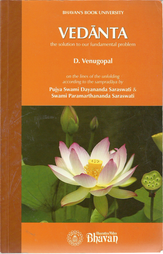
VEDĀNTA the solution to our fundamental problem by D. Venugopal

Part30 concludes the discussion on the ‘description’ of brahman as satyam j~nAnam anantam and then looks specifically at the meaning of ‘existence’ (sat) with reference to the body-mind-sense-complex.

There is a complete Contents List, to which links are added as each new part appears.

Q. 386 – Has enlightenment been ‘dumbed down’?

Q: Self-Realization is a very rare occurrence – the Gita states something like 1 in a billion, and there are very few authentic, fully realized beings known to us, such as Ramana Maharshi, Nisargadatta Maharaj and a few others, (as well as the great anonymous ones). Granted, the world has changed and everything is much faster than it was, but this cannot surely apply to self-realization. The Neo-Advaitins’ awakenings or enlightenments cannot possibly be synonymous with the self-realizations of the great sages such as Ramana and Nisargadatta? 

Also, the hallmark of the great sages such as those mentioned above is that they have a transparent, translucent quality that emanates contentment and  peace.  The Neo-Advaitin teachers that I have observed do not emanate peace, instead, they come across with their body-mind personality traits/baggage as either ‘manic’, ‘neurotic’, ‘depressed’, ‘nihilistic’, etc. The talking, and so much talking at that,  is coming from the mind, and not from “mauna”. It is more like a mixture of counseling, psychotherapy and psycho-babble rather than pragmatic Advaitin philosophy. 

So my question is … has self-realization been dumbed down and redefined by the Neo-Advaitins, or do they not claim full self-realization, but only to be ‘awakened’ or ‘enlightened’?   Tolle comes to mind and Mooji, too… the talking never stops.

Responses from Melanie, Martin, Ramesam, Charles, and Dennis Continue reading

chidAbhAsa

The ‘Real I’ verses the ‘Presumed I’ – An Examination of chidAbhAsa

Ramana Maharshi’s instruction to seekers to ask themselves ‘Who am I?’ is lauded by many modern Western teachers as sufficient, on its own, to lead to enlightenment.  I suggest that this is not strictly true; that what it can do is rather to give us insight into what we are not and thereby point us in the direction of traditional teachings to learn about our real nature. It is inciting us to conduct Self-inquiry in the proven manner, i.e. by listening to a qualified teacher interpret the scriptures, rather than merely providing a mantra or formula to provide an answer directly.
An explanation of how traditional teaching can lead us to an understanding of who I am might begin with an analysis of our three states of consciousness – this is the so-called avasthA traya prakriyA of traditional advaita.
We almost certainly begin with the belief that who-I-really-am is only fully present in the waking state. In the dream state, I am not in command of my mental faculties so that the mind free-wheels outside of my control even though I am not actually unconscious. And we no doubt accept the deep sleep state as one in which mind and body rest and recuperate in order to be ready for the trials that the next day may bring. According to this interpretation, consciousness in deep sleep is in a resting state, as indicated by the lowered activity shown by EEG displays. (This view, also supported by many Western philosophers, claims that consciousness is a by-product or ‘epiphenomenon’ of the brain; an evolutionary advantageous development to enable an animal to find food and mate more efficiently than before. This is also the view of the chArvAka-s or materialists of thousands of years ago – it is certainly not new!) Continue reading

Q. 385 – Is enlightenment meaningless?

Q: If Brahman is perfect, not ignorant, and the sole subject, what is the purpose of enlightenment as proposed by Advaita as the perfect one needs none?

If the ignorant jIva-s are nonexistent and Brahman is perfect, ignorance is nonexistent, therefore perception of separation is nonexistent.  It appears that Advaita, while advocating non dualism and a perfect sole subject, in fact is dualist, reaching out to a nonexistent audience to fix a nonexistent issue, to provide realization that the absolute already witnesses.   Can you shed some light on this?

A (Dennis): Coincidentally, an answer I gave recently to a different question effectively answers yours also:

<<< You have to decide whether you are talking form the empirical viewpoint or the absolute. If you don’t do this, you just get confused because the ‘explanations’ differ.

You are brahman, whether or not you know this. There is ONLY brahman from the absolute standpoint. No one has ever been born so there is no one to be reborn. Continue reading