Science and the nature of absolute reality (Part 2)

Read Part 1

Although science is good at investigating objects, even there it is doomed to fail – because the essence of objects, too, is ultimately the same non-dual reality. As Atmananda Krishna Menon puts it, in his ‘Notes on Spiritual Discourses’: “As long as the least trace of subjectivity remains, objectivity cannot disappear. And until objectivity disappears completely, the real nature of the object can never be visualized. This is the fundamental error committed by science as well as philosophy, both in India and outside, in trying to approach the Truth through the medium of the mind.” (Vol 3 Notes, 1386)

Notes on Spiritual Discourses of Shri Atmananda: Volumes 1, 2 and 3, Shri Atmananda and Nitya Tripta, Non-Duality Press 2009, ISBN 978-0956309129 (Vol 1) Buy from Amazon US or Amazon UK. Continue reading →
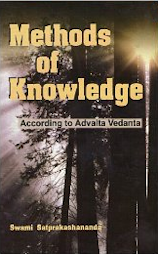
What about karma yoga?

Back in the early days of my spiritual seeking, I used to think that there were three main approaches to enlightenment: karma yoga, bhakti yoga and j~nAna yoga and that any could be used successfully, according to the particular personality and capabilities of the seeker. (I later found out about rAja yoga but let’s not complicate things!) The fact that j~nAna and bhakti effectively and inevitably ‘go together’ to some degree has been written about elsewhere by people such as Dhanya and Peter. Swami Dayananda also often writes about the need to understand the place of Ishvara in one’s spiritual pursuits if they are to be fruitful. So I will not mention bhakti again. I am looking in this article specifically about where karma yoga fits in the scheme of things. Continue reading →

How to be really, really, really happy

In the Taittiriya Upanishad we are told that 1 unit of human joy is that enjoyed by a young person described as being in the prime of life, fit and healthy, possessed of strong mental faculties, amazingly good looking and incredibly well read, spiritually disciplined and ethical, and in possession of untold wealth (not exactly the person next door). Try to imagine the effort that would be required to have untold wealth and untold wisdom. Imagine the effort required to live a highly ethical and spiritual life. It can take a whole lifetime – by which time we will have lost our youthful vigour. The other person, however, who enjoys the same level of joy is ‘a follower of the Vedas, unaffected by desire’ (which can be anyone who makes the effort).

100 times that unit of human joy is one unit of the joy of a being called a Man Gandharva in a higher loka [realm]. In this embodiment as a celestial musician there will only be the experience of subtle enjoyment and no pain. To attain this loka one needs to have accumulated a huge amount of punya [merit] from leading a value-driven and prayerful life. The other person, however, who enjoys 100 times the unit of human joy is the follower of the Vedas, unaffected by desire. Continue reading →

Knowledge and consciousness

My teacher, Swamini Atmaprakasananda, raised a question: If, as in the Gita, Krishna says, ‘I am consciousness’, who is speaking?  Consciousness does not speak, nor does the mithyA body-mind-sense complex, all of which are inert matter.

Then, by way of answering her own question, spoke of the levels of knowledge:

Knowledge is of two types: pure knowledge and manifest knowledge. Pure knowledge, śuddha jñānam, is knowledge that is not manifest and vyakta jñānam is knowledge that is manifest. Vedanta says that Reality, the Absolute Truth of this entire cosmos, the one substance of this substantive universe is pure knowledge. (Pure knowledge, pure consciousness, pure awareness are all synonyms.) Continue reading →