
Īśvara (the Lord), prayer and worship 1/2

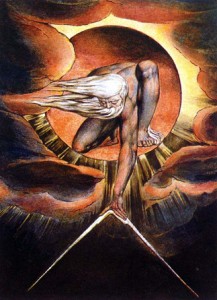
http://earthstation1.simplenet.comOne of the more difficult ideas for some Western seekers to accept is God, the Lord. The usual picture is of a highly judgmental white-bearded figure, sitting in heaven, dispensing punishments and rewards. God, in this picture, is all-controlling, all-powerful and thus I am small and insignificant and a mere pawn in his game. This sort of idea of the Lord is also prevalent in the East. For the godless, prayer and worship obviously have no place, and for the theists, prayer and worship are ultimately to secure a place in heaven or worldly comforts and pleasures. In one of her talks to her London students, Swāminī Ātmaprakāśānanda put all of this into perspective so that anyone with an open mind could get a wider, more liberating vision of these important and vital matters. This part deconstructs the concept of Lord…

What is this world? The world is nothing but a world of objects – different objects, perceptible through different senses. You can reduce the whole universe into five types of objects, perceptible through the five different senses. Every object becomes as good as non-existent if it is not perceived by the appropriate sense organ.

Despite its size, the universe would be as good as non-existent if you didn’t perceive it. The universe has the status of being existent only when it is perceived by you. The Gītā says: “They say the sense powers are superior (to sense objects); the mind is superior to the sense organs; the intellect is superior to the mind. Whereas the one who is superior to the intellect is He (ātmā).” (BhG 3.42) Continue reading

Vision Of Truth (sad darshanam – Part 6)

sarUpa budhirjagatIshvare cha

sarUpa dhIrAtmani yAvadasti

arUpa Atma yadi kaH prapashyet

sA dRRiShtirekA anavahirhi pUrNA


sarUpa budhiH = the notion they  have a form; jagatIshvare cha = in the world

and Ishvara; sarUpa dhIH = notion that Truth has a form; Atmani = in one self;

yAvat = as long as; asti = is there; arUpa Atma = if self iswithout form; yadi = if

(one has knowledge); kaH = who;  prapashyet = sees; sA dRRiShtiH = that

vision; ekA  = alone; anavadhiH  = infinite; hi = indeed; pUrNA = full


As long as, in oneself one has the notion of being with form, i.e. as long as one is identified to the body mind, so long, the world and Ishvara also will be considered to be with form.  If the self is without form, who sees? That vision, indeed is infinite and full.


It is the identification with the body which gives rise to different notions about oneself and the world. If one considers oneself limited to the body and mind then, naturally, the world and Ishvara are separate from him. Being separate, they are then limited and hence with form. So, a person having the wrong notion of oneself being the body will see a world which is limited.
Continue reading

mAyA and Ishvara – Q.325

Q: My understanding of  original consciousness, mAyA, Ishvara is follows:

. Ishvara is the reflected conscious.
. mAyA( shudha satva prakRRiti) is the reflecting medium of original consciousness-Brahman.
. Ishvara controls or has full control over mAyA.

 My question is how can the reflection (Ishvara) have control over the reflecting medium, mAyA? For example, if I see myself in a mirror how can my reflection (image) control the reflecting medium, the mirror?

 Please let me know whether my understanding is correct and throw some light on this. Continue reading

Advaita for Mothers (Q. 323)

We are honored to have input from Swamini Atmaprakashananda, a direct disciple of Pujya Swami Dayananda  for this week’s question!

Q: My question is, as a mother is it ever possible to not be very attached to my child, and be a mother only by Dharma and karma, and ease from the clutches of Moha for my child. How do I do that? I would greatly appreciate if anything here can help me because I truly am looking for it, and struggling with the issue for a long time.

A (Sitara): Advaita does not really make a distinction between different kinds of attachment. While it is true that the bond between a mother and her child is especially strong, it still needs to be dealt with like all other kinds of attachment.

 So how to deal with it?

 First of all: Trying to overcome attachment by dealing with it directly will only work to a limited degree. So I recommend to deal with it both ways, as described below. Continue reading

Panchadasi part 1

A series of posts, presenting a new translation and commentary by James Swartz on the Panchadasi. This was presented by James as a week-long course during July 2012 and was very well received. It will be posted in around 35 parts at the rate of one part every 2 – 3 weeks. I will be editing and commenting on the material as we go and James may provide additional commentary if time allows. So there may be scope for readers to provide feedback. Please email me via the ‘Contact Form’ if you do not understand anything and wish to seek clarification.

Read Part 1 of the Panchadasi.


Clearing the mind (Q. 311)

Q: I come across a lot about clearing the mind….but if there is no person, no-one that can have a will of his/her own, surely a desire or will to clear the mind is a nonsense? The mind cannot be tamed because there is not a person to whom it belongs, someone with their own free will? Is that at all right? Surely a clear mind would only arise because it is the will of Brahman?

 A: It’s only nonsense once you know that you are not a person!

 Also, you have to be very clear when you are talking about Brahman. Strictly speaking, the term ‘brahman’ refers to the non-dual reality and, if you are using it in this sense, it is not meaningful to speak of ‘the will of brahman’ – brahman does not have any will; there are no ‘parts’ to brahman and there is nothing other than brahman.

 If you are talking about the person (appearance) within the world (appearance), then you have to refer to Ishvara as the ‘creator’ and the dispenser of body-minds in accordance with accumulated karma from past lives.

 You have to be clear in your own mind about this distinction because, for example, the Brahma Sutras uses the word ‘brahman’ in both senses and expects you to know which one is being referred to in any given instance!