
Īśvara (the Lord), prayer and worship 1/2

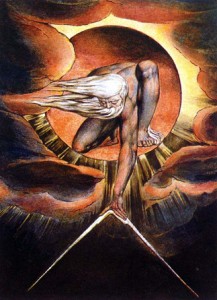
http://earthstation1.simplenet.comOne of the more difficult ideas for some Western seekers to accept is God, the Lord. The usual picture is of a highly judgmental white-bearded figure, sitting in heaven, dispensing punishments and rewards. God, in this picture, is all-controlling, all-powerful and thus I am small and insignificant and a mere pawn in his game. This sort of idea of the Lord is also prevalent in the East. For the godless, prayer and worship obviously have no place, and for the theists, prayer and worship are ultimately to secure a place in heaven or worldly comforts and pleasures. In one of her talks to her London students, Swāminī Ātmaprakāśānanda put all of this into perspective so that anyone with an open mind could get a wider, more liberating vision of these important and vital matters. This part deconstructs the concept of Lord…

What is this world? The world is nothing but a world of objects – different objects, perceptible through different senses. You can reduce the whole universe into five types of objects, perceptible through the five different senses. Every object becomes as good as non-existent if it is not perceived by the appropriate sense organ.

Despite its size, the universe would be as good as non-existent if you didn’t perceive it. The universe has the status of being existent only when it is perceived by you. The Gītā says: “They say the sense powers are superior (to sense objects); the mind is superior to the sense organs; the intellect is superior to the mind. Whereas the one who is superior to the intellect is He (ātmā).” (BhG 3.42) Continue reading


Different Teachings – Q.334

Q: How do you explain two enlightened people (in the advaitic sense) that have different teachings?  For instance, I think someone like Greg Goode and Swami Dayananda would disagree on many things despite both arguably being enlightened. For example let’s take Greg’s essay on idealism (http://www.advaita.org.uk/discourses/teachers/idealism_greg.htm).  

 I don’t think Swami Dayananda-ji will agree with the core position that an object doesn’t exist unless perceived.   In fact I have asked Swami Tadatmananda this question (in the form of ‘does a rock exist before someone sees it?’) and he answered in the traditional sense saying that it does.   From your point of view does this still fall under the umbrella of differences in teaching style?    I also believe we could get a debate between the two on the topic of Ishvara and freewill. Continue reading

Depression – Q.330

Depression – Q. 330

 Q: For years now I’ve been severely depressed and it doesn’t seem to be changing. What led me to Advaita, I think, was the intense desire to know what I guess I can only meaningly refer to as God.

I read a lot about how we are not our bodies and how if we can be aware of something, then that ‘something’ cannot be us. I understand all this. There is a formless awareness that appears to be prior to everything, prior to my body, my mind and the suffering of depression, I can see that.

One book I’ve read, not specifically about depression, advises that we remain with that awareness, as that awareness that is prior to both body and mind. However, I find this difficult. The body and mind come out of the Self and thus must be the Self. Beyond this the reasoning and experience of it gets quite subtle, but I’ll give it my best shot. Yes, there is an awareness that is before the mind and body, something that you might call the Ultimate subject, but It is only apparent because of the body and mind – without the body and mind, the Self wouldn’t know itself. Continue reading

Short questions and answers No. 2

Here are a few more short Q & A’s which do not merit a separate post of their own: (Dennis’ answers, so don’t blame any of the other bloggers!)

Q: Nisargadatta says : Delve deeply into the sense ‘I am’ and you surely discover that the perceiving centre is universal, as universal as the light that illumines the world. All that happens in the universe happens to you, the silent witness. On the other hand, whatever is done, is done by you, the universal and inexhaustible energy.

My question in two parts:

 1. If my awareness is the absolute one and there is no other – then yours does not exist?

 2. If they both exist as the Absolute but are separately perceived by two minds why am I not aware of your experience as well as my own?

 So far as I can see, without reliance on solipsism, non-duality/Vedanta must posit a reality where the Absolute is being “dipped into” by separate minds? Continue reading

Annihilation of Thought

Yogavaasishta is a remarkable Advaitic text in many ways. It is at once a theoretical text and a practical Manual. It combines the abstruse Vedantic concepts of Non-duality with simple doable tips and presents them in an engrossing manner.  Sage Vasishta often uses the technique of bringing home the most intricate philosophical point through a fictitious tale crafted on the spot with imaginary characters  representing with high fidelity the point to be illustrated in an unforgettable manner.  One such story is of Kadamba Daasura**. It tells us about the untenability of the perceived world. Daasura is shown to be living on the last tender leaf of the topmost branch of a Kadamba tree (Anthocephelus – Latin name: Adina cordifolia) where sustenance for any being, leave alone a human, is impossible. Sage Vasishta intends to impress on us that the sustenance of a world (which we take to be real and functioning) to be equally impossible.

Daasura teaches his son that the world is a creature of the ‘thought’  that thinks it. Intent on ending the world, the son who is hardly in his early teens enquires what is thought and how thought itself originates and what are the means of annihilating the thoughts. Daasura’s response to these questions is very profound and a summary is presented below. Continue reading

upadesha sAhasrI part 5

Part 5 of the serialization of the  presentation (compiled by R. B. Athreya from the lectures given by Swami Paramarthananda) of upadesha sAhasrI. This is the prakaraNa grantha which is agreed by most experts to have been written by Shankara himself and is an elaborate unfoldment of the essence of Advaita.

Subscribers to Advaita Vision are also offered special rates on the journal and on books published by Tattvaloka. See the full introduction and part 1 of the new series.

brahman and AkAsha – Q. 326

Q: My mind has this tendency of creating doubts every once in a while and I was able to find answers for every doubt I’ve had through contemplation, logic and reasoning. But not this one.

Before I begin, please understand that my mind simply will not accept anything that cannot be proven to it through logic and reasoning, which is why ‘Sruti says so’ has not satisfied my mind.

So, my question is, how can we say that Brahman is the cause of Akasha (I’m referring to the Vedic element which is the substratum of everything that exists) and not Akasha itself? How do we know that consciousness itself is simply not the Akasha our bodies are made of which happens to be a conscious entity?

I understand that reality is non-dual, but Akasha being omnipresent (basis of all things), omnipotent (since it is Akasha that takes all forms, it can be said to be the cause of everything), omniscient (if we cannot deduce that Akasha is an unconscious entity, it would become omniscient), infinite, eternal and able to take forms without changing its own nature makes it no different from what is described as Brahman. Continue reading

mAyA and Ishvara – Q.325

Q: My understanding of  original consciousness, mAyA, Ishvara is follows:

. Ishvara is the reflected conscious.
. mAyA( shudha satva prakRRiti) is the reflecting medium of original consciousness-Brahman.
. Ishvara controls or has full control over mAyA.

 My question is how can the reflection (Ishvara) have control over the reflecting medium, mAyA? For example, if I see myself in a mirror how can my reflection (image) control the reflecting medium, the mirror?

 Please let me know whether my understanding is correct and throw some light on this. Continue reading

Experience and Knowledge (Q. 321)

Q: ‘Experiential’, seemingly, is becoming a stumbling block in current discussions within spirituality and non-duality. There are the ‘experiential’, usually ‘anti-intellectual’ types (who deprecate ‘merely intellectual’, or ‘conceptual’ approaches), and those who defend the proper use of mind and the intellect, without denying the validity of experience.

 Would it be possible, though, to dispense with either of the two concepts: ‘knowledge’ and ‘experience’?; they appear to overlap, practically being synonyms and, indeed, one can say “I know pain in the belly”, or, “I know such and such emotion”, “I know (I am acquainted with) life”, etc., without resorting to the word ‘experience’ – the word ‘acquaint’, conveniently, is derived from the Latin via old French: cognoscere, gnoscere. The other alternative would be to dispense with the word ‘knowledge’ and use instead ‘real’/’unreal’, ‘reality’, which is, precisely, sat/asat in sanskrit – and expressions using these terms are quite frequent, as everybody… realizes (‘is cognizant with’, then, would have to be ruled out). Just today I wrote in a comment that true understanding is an experience, but now I have my doubts. Ultimately, certainly, the only Experiencer/Knower is brahman/atman (though he remains ever unmoved). Continue reading

Understanding the Mind

A mind is the complex of cognitive faculties that enables consciousness, thinking, reasoning, perception, and judgement — a characteristic of human beings, but which also may apply to other life forms. (Wikipedia)

(in a human or other conscious being) the element, part, substance, or process that reasons, thinks, feels, wills, perceives, judges, etc.: the processes of the human mind. 2. Psychology. the totality of conscious and unconscious mental processes and activities. 3. intellect or understanding, as distinguished from the faculties of feeling and willing; intelligence. (Dictionary.com)

It is generally agreed that mind is that which enables a being to have subjective awareness and intentionality towards their environment, to perceive and respond to stimuli with some kind of agency, and to have a consciousness, including thinking and feeling. (Wikipedia)

———–

Advaita vedanta is frequently criticized by Western advaitins for its intellectual approach. Many things can be said about this but I would like to clarify here what Advaita Vedanta means by mind.

In the West quite a number of functions are subsumed under this one term ‘mind’. From the point of view of vedanta the above definitions are a bit of a mumbo jumbo. Two flaws in particular need to be pointed out. The first is to do with the use of the word ’consciousness’. Whereas Wikipedia says mind enables consciousness, vedanta states the opposite: consciousness enables mind. The other flaw is that there is no differentiation between all the various functions listed: ‘thinking, reasoning, perception, and judgement ‘.

I would like to take up this latter point here. Continue reading