Tattvabodha – Part 5

OLYMPUS DIGITAL CAMERAPart 5 of the commentary by Dr. VIshnu Bapat on Shankara’s Tattvabodha.This is a key work which introduces all of the key concepts of Advaita in a systematic manner.

The commentary is based upon those by several other authors, together with the audio lectures of Swami Paramarthananda. It includes word-by-word breakdown of the Sanskrit shloka-s so should be of interest to everyone, from complete beginners to advanced students.

Part 5 continues to look at the six sAdhanA-s (shamAdhi shakti sampatti), and in this part addresses uparama (observance of duty), titikshA (forbearance) and shraddhA (faith). There is also a hyperlinked Contents List, which will be updated as each new part is published.

Q. 373 – Ego, soul and mithyAtva

Q: For the last few years I have been trying to develop a manuscript detailing a working model which marriages the teachings of Advaita Vedanta with contemporary research on NDE or “Near Death Experience” and similar fields of inquiry. There are several questions I have, but for now I will only bother you with one: Is it possible the Atman does possess a “spiritual ego”?

 Clearly the culprit for the ignorance of our real self as the Self is the wrongful identification with the body-mind. Shankara explains the identification with the kosha-s perpetuates the illusion, which is nothing more than a superimposition of the kosha(s) on brahman helped by mAyA.

 The way I see it, our greatest enemy is the ego, the human ego. This ego comes from the mind and is maintained alive by desires. But I have many reasons to suspect there is also a “spiritual ego” present in the Atman, which similarly perpetuates the ignorance of the wrongful identification by the so-called discarnate “spirit soul”.

 The metaphor I have used is this: there is an actor in the “spiritual world” (the Atman) which wrongfully identifies with a spiritual ego preventing it from realizing brahman. This actor goes through an induced amnesia, after agreeing to play the role of a character in the Grand Stage of the world. This is the incarnation stage. The human ego is the combination of the spiritual ego – which carries the saMskAra-s and the vAsanA-s – plus particular influences on the personality traits caused by internal factors such as the brain/mind of the new body, as well as external factors such as family, society, education, etc. This is the embodied Atman as the jIva. Continue reading

Advaita is not Idealism

Thames(Originally posted to Advaita Academy Nov 2010)

All students of advaita know that every ‘thing’ is brahman. And they know that ‘I am brahman’. It is therefore a trivial mathematical reduction to say that everything is me. But there is a danger here. Some people conclude that the world is an appearance that ‘I’ create in some way; that the world ‘is’ because I perceive it. In this way, such people claim that advaita is equivalent to the subjective idealism of the Western philosopher Berkeley, who said “to be is to be perceived” (esse est percipi). This, of course, is a denial of the separate existence of matter and this might naïvely be thought to be equivalent to the Advaitin concept of mithyA.

(Note that the word ‘ idealism’ has nothing to do with aiming for perfection, but means that things have no reality in themselves, only existing as ideas in mind.)

From the point of view of absolute reality, there is only brahman. But then there is nothing to talk about! Such a discussion is only meaningful from the standpoint of empirical reality – our everyday world. If subjective idealism were true, the world would cease to exist when we go to sleep and would have to be created anew on awakening. Berkeley got around this sort of problem by claiming that the world continues to exist because it is perceived by God. And again, one might be tempted to claim that this parallels advaita in that we claim that the world is a creation of Ishvara, rather than the individual. This is not quite the case. In advaita, objects really do exist. Ishvara is the material cause, as well as the efficient cause of the universe. The point is that the substratum of their existence is brahman alone. In the case of Berkeley, however, the objects only exist in the mind of God, as it were.

Greg Goode, who studied Berkeley for his doctorate, believes that Berkeley’s last book may well have resolved his views to match those of advaita, but there were very few copies of that book ever made and it has not been possible to confirm this.

Advaita, then, does not claim that objects have no reality separate from the subject at the level of the world. In this sense, it is a realist philosophy and not an idealist one. This is highlighted by the following very interesting analysis, which I recently came across in one of the talks by Swami Paramarthananda on the Brahma Sutra.

Our principal pramANa, or source of knowledge, is pratyakSha or perception. When we see something for the first time, we see it in the present and, as a result of the examination of its various attributes, we conclude what it is. We can call this ‘cognition’. At some time in the future, we may encounter an object. By comparing its attributes in the present with remembered attributes from the past (as retrieved from the memory), we may be forced to conclude that this object is the same one that we saw in the past. This is called ‘recognition’ – seeing the object again. This fact of recognition is effectively a refutation of idealism (which is also the philosophy of the yogachAra or vij~nAna vAda Buddhists, a branch of Mahayana Buddhism). If the object that is seen now is the same object as the one that was seen in the past, then clearly it has a real existence and is not only an appearance in mind (which might otherwise be called a figment of the imagination).

You can read a series of essays from Chittaranjan Naik on ‘A Realist View of Advaita’.

Q. 372 – Superimposition and Memory

Q: What is the relationship between memory and superimposition (adhyAsa)? In the metaphor of rope and snake, we say that we fail to see the snake clearly, because of inadequate light – there is partial knowledge and partial ignorance. When we superimpose a snake on the rope, we are drawing on fear and memory. We must have seen a snake (or image of one in a film or book) before in order to be able to mistake the rope for one. Similarly, we mistake brahman for the body and the world etc.

 But what about a baby or someone who has no memory as a result of brain damage? Is there still superimposition in this case?

Responses from Ted, Venkat, Ramesam, Martin, Sitara and Dennis

A (Ted): We have to bear in mind that the example of a rope being mistaken for a snake is an analogy, and as is the case with any analogy, the example is imperfect. In the example, the snake image is based on a previous experience of the mistaken perceiver.

 In terms of mistaking the body-mind-sense complex as well as the innumerable other objects that constitute the manifest universe for Brahman, however, we are dealing with something a little bit different. Whereas in order to mistake the rope for a snake, one must have previously seen a snake, the projection of the apparent reality (i.e., the manifest universe in both its subtle and gross aspects) is not based on experiential memory, but rather results from the mind’s ability to recognize the “cosmic blueprints” that abide in dormant form in the Macrocosmic Causal Body, which is personified as Isvara, and are made manifest through the conditioning that maya upadhi, the limiting adjunct of causal matter, puts upon Brahman. That is, the mind is an instrument that is designed or a mechanism that is “programmed” to recognize these forms and, thus, is able to discern their apparent existence within the cosmic soup of pure potentiality (i.e., the unmanifest realm or “mind of God,” if you will) from the data it receives via the perceptive instruments/organs. Continue reading

Tattvabodha – Part 4

OLYMPUS DIGITAL CAMERAPart 4 of the commentary by Dr. VIshnu Bapat on Shankara’s Tattvabodha.This is a key work which introduces all of the key concepts of Advaita in a systematic manner.
The commentary is based upon those by several other authors, together with the audio lectures of Swami Paramarthananda. It includes word-by-word breakdown of the Sanskrit shloka-s so should be of interest to everyone, from complete beginners to advanced students.

Part 4 begins to look at the six sAdhanA-s (shamAdhi shakti sampatti), and in this part addresses shama (control of mind) and dama (control of senses). There is also a hyperlinked Contents List, which will be updated as each new part is published.

Tattvabodha – Part 3

OLYMPUS DIGITAL CAMERAPart 3 of the commentary by Dr. VIshnu Bapat on Shankara’s Tattvabodha.This is a key work which introduces all of the key concepts of Advaita in a systematic manner.

The commentary is based upon those by several other authors, together with the audio lectures of Swami Paramarthananda. It includes word-by-word breakdown of the Sanskrit shloka-s so should be of interest to everyone, from complete beginners to advanced students.

Part 3 discusses viveka (discrimination) and vairAgya (dispassion) in the ‘fourfold attainment’, sAdhana chatuShTAya sampatti. There is also a hyperlinked Contents List, which will be updated as each new part is published.

The Enlightened Person

swartz_essenceHere is an extract from the final chapter of James Swartz’s new book ‘The Essence of Enlightenment’. I haven’t read it all myself yet, but dipping into it at random shows that it is every bit as good as his ‘How to Attain Enlightenment’. It has, for me, his hallmark style of forthright, clear, informative writing, adhering to traditional teaching derived from scriptures and as interpreted by modern sampradAya-s. He has no qualms about bluntly (even brutally) exposing mistaken views but leaves the reader feeling uplifted, and with a much clearer understanding of even the most difficult topic.

chin mudrA

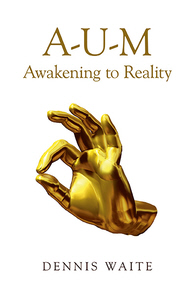
small_A-U-MHere is the second extract from my forthcoming book on the Mandukya Upanishad and Gaudapada’s kArikA-s. It explains the symbolism associated with the cover image. This explanation occurs near the end of the book, since it utilizes concepts with which the reader might be unfamiliar (until he or she has read the book). But since readers of this site should certainly be familiar with the terms, there is no harm in presenting it here!

chin mudrA

Now that we have almost concluded the unfolding of the kArikA-s, we can return to that cover image! The ‘hand-sign’ is not actually mentioned in the Mandukya Upanishad, nor by Gaudapada, though it is highly relevant. As I mentioned in the introduction, it is a gesture associated with the Sage who is said to be the first teacher of Vedanta – Dakshinamurti. As such, he was the head of the teaching sampradAya and did not himself have a teacher – i.e. he was already fully enlightened. He is also identified with the God Shiva. It is called chin mudrA or j~nAna mudrA (more usually chin), where chin means Consciousness and mudrA means sign.

It is often said that Dakshinamurti taught through silence. Of course, this would not make any sense. Silence can be interpreted in innumerable ways, few of which are likely to convey useful knowledge! But, once we have the knowledge, a symbol can convey a world of information, reminding us through memory of what we have previously learned. Witness the vast amount of knowledge which is now conveyed to you through the word OM.

The hand position shown on the cover of this book is another symbol of this sort. And it is highly relevant to the same knowledge.

Here is the symbolism:

  • The thumb represents paramAtman. There is some reasoning behind this. The scriptures speak of paramAtman as residing in the space in the heart (hRRidaya). By this, we were expected to understand ‘mind’, since it used to be thought that the mind was contained in the physical organ of the heart. Since the heart is about the size of a fist, it was reasonable to think that the space inside was about the size of a thumb.
  • The forefinger represents the individual or jIva. It could also be thought of as the ego or sense of myself. It is common in many cultures to use the forefinger to point out personal opinions and also to threaten or criticize others whose views differ from ‘mine’.
  • The second finger represents the gross body, sthUla sharIra or waker.
  • The third finger represents the subtle body, sUkShma sharIra or dreamer.
  • The fourth finger represents the causal body, kAraNa sharIra or deep-sleeper.
  • The first finger is normally held in association with the other three, indicating our identification with the body and mind.
  • All four fingers depend upon the thumb for their strength and ability to do practically anything. It is this feature which distinguishes us from other animals and gave humanity its great advantage in manipulating objects.
  • When the index finger is moved to touch the tip of the thumb, it separates from the other three, indicating realization that I am not in fact these bodies at all. In forming an unbroken circle with the thumb, it is recognizing that jIvAtman and paramAtman are one, unaffected by the three mithyA states of consciousness.

I now have a firm publication date for the book, incidentally – it is September 25th. It is now available for pre-order. It is quite expensive, but then it also quite thick (431 pages).

The paperback details are: ISBN 978-1-78279-996-2 UK: £20.99 US: $36.95
and the EBook: ISBN 978-1-78279-997-9 UK: £12.99 US: $21.99

Buy from Amazon US; Buy from Amazon UK

The first extract from the book may be read here.