
NDM: When you say: “Who and what for does one set these standards? Are the standards not highly contextual, local, artificial and subjective? Does qualifying anything – vAsanA-s or actions – based on such purely judgmental aspects have any holiness? A society’s imposition of rules and regulations, howsoever high may be the value and whatsoever may be the morality and nobility, does not have Absoluteness. They may have a societal sanction but lack intrinsic Sanctity. Who to say right or wrong or good or bad? Things just exist. Nothing is positive or negative until a ‘thought’ interferes.”
But what about dharma? The natural laws of the universe or God as some would call it. Some vAsanA-s violate dharma, others do not. Such as a vAsanA for smoking cigarettes like Nisargadatta had, is an unhealthy vAsanA but it’s only going to injure his lungs at most. Someone like the American guru Adi Da had extreme vAsanA-s such as having sexual relationships with his students, physically and psychologically exploiting and abusing them. How does dharma play into this equation?
Ramesam Vemuri: ‘Dharma’ to me in the context of Advaita is synonymous to brahman, undefinable, ungraspable. The Sanskrit word for the “Natural Laws of the Universe or God” is ‘niyati.’ Thus these two words are not the same for me. Continue reading
 Quoting from the talk of an Advaita teacher on the message of the aitareya Upanishad:
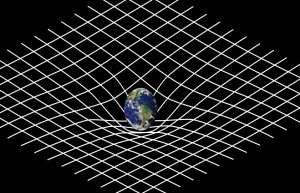 Hardly does a minute go by when a student of Advaita does not hear an analogy. The subject being so abstruse and abstract, the teacher ostensibly to make things easy to understand (सुख बोधाय), resorts to the method of using an “analogy.” Much like in Theoretical Physics and Quantum Physics, the concepts in Advaita too are usually counterintuitive and metaphor is a powerful tool to help drive home a difficult idea. The danger in using the metaphor is that it, more often than not, lulls the student with a sense as though s/he “got” it (the Oneness of All That-IS). Perhaps because of that, it is not seldom that we find even an advanced student of Advaita being tempted to extend a metaphor beyond the intended point and make his/her own inferences from such a wrong projection. (I am frequently asked questions on ‘reflected Consciousness,’ ‘Witness-Consciousness’ etc. based on such improper extensions).
 We all know that the shruti predominantly adopts the model of adhyAropa–apavAda (superimposition – sublation) in imparting the incommunicable Advaita message. There are other types of models and prakriyA-s also available in the scripture and tradition but they do not seem to be as popular. The adhyAropa–apavAda model superimposes an “imagined” or illusory creation on the really real Reality and as the student ingests the core Advaitic teaching, the superimposition is sublated. We find, however, that the shruti spends more time dealing with diverse aspects of the superimposed creation (birth, sustenance, death, action, fruits of action, rebirth etc.), the sublation being left to the ingenuity of the student as s/he reaches her/ his final understanding. One teacher estimates that Shankara in general devotes 90 percent of his time in most of his works on expiation of the Advaita doctrine and the attendant practices, leaving only a minor part on sublation and the outcome of the practices. This situation in some quarters has given rise to an insistence that the shruti teaches creation and that we have to take only the shruti vAkya-s and Shankara’s commentary on them as the pramANa (reference standard) for understanding the Advaita message forsaking other methods and vAkya-s in the scripture. Is that the intention of shruti? What is the final position of the shruti about creation from an Advaita perspective?
  Many misconceptions and misunderstandings appear to be prevailing about Yoga and samAdhi in Advaita. We shall take up in this Part of our Series, an assortment of those topics in no particular order and examine the possible correct position.
 We shall present in this Part – 2 how the word samAdhi is used in Yogavasishta (Yogavasishta is available as a pdf at this site). The word samAdhi occurs very ubiquitously in this text. It is used both in its Yogic and Advaita Vedanta meaning. A few select citations are illustrated below.