Mulavidya – Real or Unreal? – I

INTRODUCTION

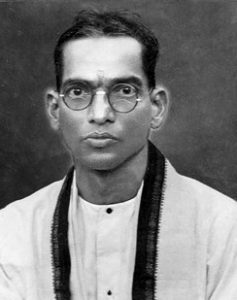
As S.K. Ramachandra Rao relates in his Introduction to Sw. Satchidanandendra’s book ‘Salient Features of Shankara’s Vedanta’ ( a translation of ‘Shankara-Vedanta-Prakriye’ in Kannada language), the Swami decided to find out for himself what the real tradition of Shankara and the latter’s contributions to it had been, since he had suspected for some time that the former had been misrepresented by later advaitins. This desire took form in the way of a monograph he wrote in Sanscrit in 1929 with the title of ‘Mulavidya -nirasa. ‘He applied himself diligently to repeated study of Shankara’s works (Bhashyas on the three Prasthanas) for several years to convince himself that the sub-commentaries (of Vacaspaty Misra and Padmapada) had not done justice to the great master… It was in the year 1920, a year after his wife passed away, that he felt called upon to take this as a mission in his life’. Continue reading

Tattvabodha – Part 16

Part 16 of the commentary by Dr. VIshnu Bapat on Shankara’s Tattvabodha.This is a key work which introduces all of the key concepts of Advaita in a systematic manner.

The commentary is based upon those by several other authors, together with the audio lectures of Swami Paramarthananda. It includes word-by-word breakdown of the Sanskrit shloka-s so should be of interest to everyone, from complete beginners to advanced students.

Part 16 looks at the ‘definition’ of Atman as sat-chit-ananda – existence-consciousness-bliss and concludes the section on Atma vichAra.

There is a hyperlinked Contents List, which is updated as each new part is published.

Birth and Death

One of the most startling passages that I encountered when I first began to study advaita was that in chapter 2 of the Bhagavad-Gita in which Arjuna bemoans the fact that he is expected to kill his teachers and relatives. Krishna responds with the following amazing statement (II.19 – II.20): “He who thinks that the spirit kills, and he who thinks of it is killed, are both ignorant. The spirit kills not, nor is it killed. It was not born; it will never die: nor once having been, can it ever cease to be: unborn, eternal, ever enduring, yet most ancient, the spirit dies not when the body is dead.” (Ref. 1)

Needless to say, the idea of death is one that disturbs most people. Indeed, it is probably the most feared event for the vast majority whether or not they believe that it signifies the literal end of their existence. Life appears to have the profile of a hill. We start at the bottom; slowly we begin to make an impression on life, ‘making a name for ourselves’, acquiring all of those things that are considered to make life significant – job, spouse, peer recognition, house and money etc. And then, there comes a time when we feel that we have achieved all that we are going to achieve. Ambitions cease; physical and mental capabilities decrease; ailments become more frequent; there is a gradual slide into physical decay and ultimate death. As Macbeth puts it so depressingly:

Life’s but a walking shadow, a poor player
That struts and frets his hour upon the stage
And then is heard no more.

Or, as Jaques puts it in ‘As You Like It’:

Last scene of all,
That ends this strange eventful history,
Is second childishness and mere oblivion,
Sans teeth, sans eyes, sans taste, sans everything.
Continue reading

Tattvabodha – Part 15

Part 15 of the commentary by Dr. VIshnu Bapat on Shankara’s Tattvabodha.This is a key work which introduces all of the key concepts of Advaita in a systematic manner.

The commentary is based upon those by several other authors, together with the audio lectures of Swami Paramarthananda. It includes word-by-word breakdown of the Sanskrit shloka-s so should be of interest to everyone, from complete beginners to advanced students.

Part 15 continues to look at the metaphor of the five sheaths, from the Taittiriya Upanishad. This part explains the bliss sheath and then goes beyond the sheaths to examine the nature of the Self – Atman.

There is a hyperlinked Contents List, which is updated as each new part is published.

dhyAna and samAdhi

Meditation

dhyAna and samAdhi are quite fascinating, pretty alluring and romantically inspiring terms for an aspirant on the spiritual path. They are almost always spoken in a tone that creates an awe. They sound mysterious, other worldly and ethereal. Many stories are told in the Purana-s about highly revered Sages lost in deep meditation or samAdhi to the extent that they were unaware of their own body being buried in heaps of sand or eaten away by critters and crawlers. Hair-rising narratives too are often reeled out about the powers that dhyAna and samAdhi lead one to – clairvoyance, multiple accomplishments (aNimAdi siddhi-s), infinite longevity (ciranjIvatva), visitations to subtler worlds inaccessible to normal human beings and so on. There is hardly a spiritual Guru who does not harangue about the glories a seeker will be bestowed through practicing dhyAna and samAdhi. Some teachers would even make these as a pre-requisite before any true ‘knowledge’ is imparted. As a result, the words dhyAna and samAdhi acquired varying meaning. Teachers too historically used or interpreted them in different ways. We shall attempt to take a synoptic view particularly from a Non-dual perspective what these terms connote and their role and relevance for a seeker who has adopted the jnAna mArga (The Knowledge Path) in his/her pursuit of liberation.

The write up is structured as a Power Point Presentation downloadable as a pdf file at: http://www.advaita.org.uk/discourses/downloads/dhyAna_samAdhi.pdf. Continue reading

Tattvabodha – Part 14

Part 14 of the commentary by Dr. VIshnu Bapat on Shankara’s Tattvabodha.This is a key work which introduces all of the key concepts of Advaita in a systematic manner.

The commentary is based upon those by several other authors, together with the audio lectures of Swami Paramarthananda. It includes word-by-word breakdown of the Sanskrit shloka-s so should be of interest to everyone, from complete beginners to advanced students.

Part 14 continues to look at the metaphor of the five sheaths, from the Taittiriya Upanishad. This part explains the vital, mental and intellectual sheaths.

There is a hyperlinked Contents List, which is updated as each new part is published.

Knowledge and Enlightenment

Over the past few months, we have had several posts following which there were discussions in which some participants attempted to argue that knowledge was not the direct cause of enlightenment. Alternative suggestions have been that enlightenment comes with nirvikalpa samAdhi or that one has to pursue some course of action, such as asking ‘Who am I?’.

I argued that neither of these were the case; that ONLY Self-knowledge could give enltightenment. This is primarily because ignorance is the cause of saMsAra and knowledge, not action, is opposed to ignorance. And I said that I would endeavor to find quotations from scripture or from Shankara to support this contention (since some participants were not prepared to accept arguments from such as Swami Dayananda).

Below, I have compiled a brief list of some of those quotations and hope these should be adequate to convice readers that the above is the stance of traditional Advaita and it is supported by clear, reasoned argument. Continue reading

Tattvabodha – Part 13

OLYMPUS DIGITAL CAMERA

Part 13 of the commentary by Dr. VIshnu Bapat on Shankara’s Tattvabodha.This is a key work which introduces all of the key concepts of Advaita in a systematic manner.

The commentary is based upon those by several other authors, together with the audio lectures of Swami Paramarthananda. It includes word-by-word breakdown of the Sanskrit shloka-s so should be of interest to everyone, from complete beginners to advanced students.

Part 13 concludes the exmaination of the states of experience with the deep-sleep state and begins to look at the metaphor of the five sheaths, from the Taittiriya Upanishad. This part explores the sheath made of food.

There is a hyperlinked Contents List, which is updated as each new part is published.

Tattvabodha – Part 12

OLYMPUS DIGITAL CAMERA

Part 12 of the commentary by Dr. VIshnu Bapat on Shankara’s Tattvabodha.This is a key work which introduces all of the key concepts of Advaita in a systematic manner.

The commentary is based upon those by several other authors, together with the audio lectures of Swami Paramarthananda. It includes word-by-word breakdown of the Sanskrit shloka-s so should be of interest to everyone, from complete beginners to advanced students.

Part 12 examines the waking and dream states of experience.

There is a hyperlinked Contents List, which is updated as each new part is published.

Tattvabodha – Part 11

OLYMPUS DIGITAL CAMERA

Part 11 of the commentary by Dr. VIshnu Bapat on Shankara’s Tattvabodha.This is a key work which introduces all of the key concepts of Advaita in a systematic manner.

The commentary is based upon those by several other authors, together with the audio lectures of Swami Paramarthananda. It includes word-by-word breakdown of the Sanskrit shloka-s so should be of interest to everyone, from complete beginners to advanced students.

Part 11 looks at the five organs of action and the nature of the causal body.

There is a hyperlinked Contents List, which is updated as each new part is published.