Becoming, Being and the Brain

brain - nancyCan one day the brain science tell us “Who we truly are?”

And show the difference between ‘becoming’ and ‘Being’  in a brain scan?

Can a scan possibly differentiate a “Knower of Truth” vs an “Expert on Truth”?

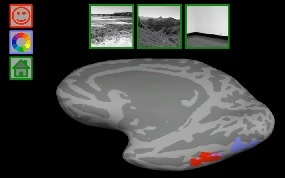
Please watch this Talk (17:40 min) of Nancy Kanwisher, a Professor of Cognitive Neuroscience at MIT. Nancy’s Talk is supported by excellent graphics.

Bhakti in Advaita

“Bhakti” in common parlance is generally taken to mean a sort of Master – slave relationship of a seeker towards a superior Guru/Master/Lord/God, an attitude that in a way does reinforce duality.

Historically speaking, Bhakti as a cult took root in India after the Muslim invasions. The Abrahamic monotheistic religions with their proselytizing spirit attracted the masses offering the promises of a personal God who would fulfill their wants. Perhaps to counter this, indigenous Bhakti cults developed and continue to do so today. 

The Advaita scriptural texts, strictly speaking, do say that devotional approach to a personal deity is an inferior path for Enlightenment. Further, some of them explicitly state that the devotee has to be a “Shiva” himself in order to worship Shiva. Yogavaasishta says a Vishnu only can truly worship a Vishnu. The implication in these statements is that the devotee should lose the sense of being a separate individual from what is being worshiped – it insists on a total identity, Oneness, of the subject-object.

I feel that the techniques like meditation, Bhakti, rituals, pilgrimages etc. are useful at two levels to a seeker:

  • Bhakti etc. will work as a sort of aid to train the mind in its ability to stay focused (instead of wavering) and unbiased (being aware of one’s own hidden prejudices). These two aspects sharpen the mind and make it ready to take up Self-inquiry on one’s own.
  • Bhakti and other such techniques are useful once again at a later stage after the Advaitic message is completely ingested without any doubt but a seeker experiences some difficulty to abide constantly in Brahman. The mind out of its sheer old habit pulls him/her back to the lures of the world from unceasing abidance as Brahman. Using Bhakti and other such things as little crutches, it will be easy for the seeker then to come back to rest as Awareness instead of being driven by the vagaries of the mind.

From:  Place of Bhakti in Advaita – The Reply to the Question, Jul 27, 2012

Q.361 – Advaita and the Brain

Q: Hello, I have a question. Professor V. Ramachandran, a neurologist at UC San Diego, in his research outlined that  the Temporal lobe in the brain, which when excited by electricity results in the individual having a religious experience where they “now understand the cosmos” and feel as one with it. This has been characterized in press reports as “The God Zone”   He tells in his book:  “It seems somehow disconcerting to be told that your life, all your hopes, triumphs and aspirations simply arise from the activity of neurons in your brain. Science— cosmology, evolution and especially the brain sciences—is telling us that we have no privileged position in the universe and that our sense of having a private non-material soul “watching the world” is really an illusion (as has long been emphasized by Eastern mystical traditions like Hinduism and Zen Buddhism).”

So according to modern science, there’s nothing spiritual or paranormal. Consciousness in any form is produced only in the brain. How do those new information fit in the Advaita?

A (Ramesam): The quote of Dr. V.S. Ramachandran, if I am not wrong, seems to be from his 1998 book on “Phantoms in the Brain.”

By the late nineties the thrust given to Neuroscientific research through ‘The Decade of the Brain’ project was coming to an end. As a result of this concerted effort, illuminating light began to shine on many hitherto dark corners of the brain’s way of functioning – be it memory, emotions, thought process, neurological ailments or even the intractable mind-brain relation. The general atmosphere prevailing in those times was that of all round excitement and euphoria about the new findings which opened the doors to promising avenues of research in Neuroscience. Dr. Ramachandran made a name for himself with contributions to the advancement of our knowledge on the alleviation of pain from surgically excised limbs, synesthesia and even the application of neuroscientific principles to art and sculpture. Continue reading

Reality, appearance, and Time

Quotes:

Lord Vishnu: As a matter of fact, the trunk, stem, branches, leaves and so on did not emerge out of the seed. The seed has transformed itself into all of them.

रूपालोक मनस्कार तत्ताकाल क्रियात्मक्म् ।

कुम्भकारो घटमिव चेतोहन्ति करोतिच ॥ — sarga 48 – shloka 52

What is present now is perceived by the senses. What will be in the future is anticipated by the mind by its projection. What was past is remembered by the mind by identifying itself with the past things/ events. Therefore, it can also be said as:

Present Time       rUpAloka kAla        Period of Direct Observation (Perception)

Future Time         manaskAra kAla    Period of Mental Projection (Anticipation)

Past Time            tattA kAla                Period of Mental Identification (Remembrance)

Thus the three times viz., Present, Future and Past are nothing but what the mind makes up like a potter churns out pottery. It is again the mind that makes them disappear.  — p: 84

*****

Sage Gadhi: Pardon me, My Lord! You insist that every event, every ‘thing’ in the world is a phantasm, a creation of the mind. It is quite puzzling to me. Certain things take place in the world as per the Law of Nature regularly on time. If it is taken that the entire world is nothing but a figment of imagination, how can there be a rule or rhyme to it? How can any Law of Nature be valid? The world does certainly seem to revolve around a time frame. How is it possible to attribute it to some fancy? Continue reading

Reality, appearance, and mind

Quote:

Sage Vasishta:  Please listen to me carefully as I shall now teach you the most supreme of all topics — ways to calm down the mind. Just like pillars bear the weight of a building, raajasic and taamasic people carry on their shoulders the unlimited illusion of a world. But saatvic natured persons like you can leave this burden as easily as a snake sheds its skin. The only way to do it is through an understanding of the essence of Truth (tatva vichaaraNa).

Whatever is not existent at the beginning and also at the end, but appears only in-between cannot be Real. Whatever stays permanently at all times (past, present and future) only can be True. How does a thing that has no existence at the beginning and at the end appear to be born and to exist in-between? The fact of the matter is neither anything is born nor anything has grown. All of this is entirely a play of the mind!

जायते मन एवेह मन एव विवर्धते ।

सम्यग्दर्शन दृष्ट्या तु मन एवहि मुच्यते ॥  — shloka 11, sarga 5

What is born here is mind, what develops is also mind. If you consider properly, what is liberated also is mind.”

Extracted from p:7 of the book:  Yogavaasishta Part IV: The Calm Down by K.V. Krishna Murthy, (English rendering by Dr. Vemuri Ramesam), Avadhoota Datta Peetham, Mysore 570025, India, 2008, pp: 194.

GK: III-40 and Some (Mis)Conceptions

During the mid-part of the last century when we were in our adolescence, the most common ambition of an average educated Indian was to go abroad. So we used to have a fancy to learn some foreign language. I tried Chinese but could go hardly beyond two pages of a book I bought from the Higginbotham’s.  Deutche (German) was the next attraction because that was still the Lingua franca for Science in those days. I forgot all of what I learnt but one thing that stuck to me was a charming quote which expresses the German spirit of approach in developing their expertise. It goes something like this:

“Es gibt nichts Praktischeres als eine gute Theorie.“

(My thanks to Sitara who was kind to correct my initial wrong wording and also for letting me know that it was Immanuel Kant who said it).

The quote means that “there is nothing more practical than a good theory.”

IMHO, the statement is a delight to every theoretician and undoubtedly very dear to all those oriented to jnAna mArga (Self-inquiry). Continue reading

Appearance and Reality – As Properties

“In order to understand a new material, one has to understand its Intrinsic properties as well as its Assumed (Transient) properties.  The intrinsic properties of Brahman are Sat (Reality), Chit (Consciousness) and Ananda (Bliss).  His transient or assumed qualities are Creation, Sustenance and Dissolution.  One should know both these qualities of Brahman in order to understand him.  It is very difficult to directly comprehend or talk about the intrinsic qualities of Brahman.  That’s why, at many places, the Vedas firstly talk about the assumed, temporary or transient qualities of the Brahman and then explain Brahman in terms of his natural intrinsic qualities.

The following quote from Taittiriyopanishad is very pertinent in this context among all the statements in the Vedas about the transient qualities of Brahman:

यतोवा इमानि भूतानि जायन्ते
येन जातानि जीवन्ति
यत्प्रय्त्यभिसंविशन्ति ||    —   III-1-i,  taittirIya upanishad

It means: “Brahman is that from which all the five major elements like the sky are born, by which all that were born are sustained and into which all those sustained finally enter and unify with it.”

The properties of creation, sustenance and dissolution do not always adhere to the Brahman. Therefore, they are to be called as temporarily assumed characteristics.  Both Vasishta and Valmiki Maharishis prepared the scope of their teachings in YogavAsiShTha keeping this fact in mind. ”  — From: p: 1-2, Yogavaasishta, Part III – Sustenance, K. V. Krishna Murthy, (English translation Dr. Vemuri Ramesam), Avadhoota Datta Peetham, Mysore, India, 2006.

The transient qualities are the Appearance.

The intrinsic qualities are the Reality.

Spontaneous thoughts

You may recall my earlier Post on “Two Genres of Thought” in Dec 2013.

A just published research study says:

Spontaneous thoughts, intuitions, dreams and quick impressions — we all have these seemingly random thoughts popping into our minds on a daily basis. The question is what do we make of these unplanned, spur-of-the-moment thoughts? Do we view them as coincidental wanderings of a restless mind, or as revealing meaningful insight into ourselves?

A research team from Carnegie Mellon University and Harvard Business School set out to determine how people perceive their own spontaneous thoughts and if those thoughts or intuitions have any influence over judgment. Published in the Journal of Experimental Psychology: General, their research found that spontaneous thoughts are perceived to provide potent self-insight and can influence judgment and decisions more than similar, more deliberate kinds of thinking — even on important topics such as commitment to current romantic partners.

The (perceived) meaning of spontaneous thoughts.
Morewedge, Carey K.; Giblin, Colleen E.; Norton, Michael I.
Journal of Experimental Psychology: General, May 12 , 2014,

akhaNDAkAra vRRitti – Some Questions

I have a few questions on the concept and origin of the term akhaNDAkAra vRRitti. Will be grateful for any contribution and thoughts on my dobuts.

1.  Does the term “akhaNDAkAra vRRitti” appear in any major upanishads or Bhagavad-Gita? If so, where (citation)?

2.  Where and by whom was the term “akhaNDAkAra vRRitti” introduced for the first time in Advaita?

3.  Is the concept “akhaNDAkAra vRRitti” an attempt to extend the process of ‘Object cognition’ by the mind as explained in Vedanta Paribhasha to the stage of Self-realization?

4.  Does it occur prior to (and hence causal to) Self-realization or is the term “akhaNDAkAra vRRitti” a post hoc  explanation of  a presumed process that might have occurred in the mind on Self-realization?

5.  Does the term have a practical utility for a seeker as a sAdhana tool? If so how?

Thanks and regards,

Attention – ad tendere

The word “Attention” is derived from two Latin words, ad tendere, meaning “to stretch towards.”

Rupert Spira explains very clearly how attention turning towards itself is the ending of the mind.

1.  Attention Falling Back to its Source (From Rupert at Parmoor in Dec 2013) – 8:35 min:  http://www.youtube.com/watch?v=JJzIz31rt4I

2.  Attention and Awareness (From Rupert at Santa Sabina in Oct 2013) – 8:38 min:  http://non-duality.rupertspira.com/watch/attention-and-awareness

3.  The Sinking of Attention into Itself (From Rupert at Santa Sabina in Feb 2014) – 13:07 min:  http://non-duality.rupertspira.com/watch/the-sinking-of-attention-into-itself

4.  Attention is Awareness Plus an Object (From Rupert at Mercy Center, CA in Apr 2013) – 14:53 min:  http://non-duality.rupertspira.com/watch/attention-is-awareness-plus-an-object

The message in these Videos is beautifully crystal clear and truly meditational, I submit.