Tattvabodha – Part 15

Part 15 of the commentary by Dr. VIshnu Bapat on Shankara’s Tattvabodha.This is a key work which introduces all of the key concepts of Advaita in a systematic manner.

The commentary is based upon those by several other authors, together with the audio lectures of Swami Paramarthananda. It includes word-by-word breakdown of the Sanskrit shloka-s so should be of interest to everyone, from complete beginners to advanced students.

Part 15 continues to look at the metaphor of the five sheaths, from the Taittiriya Upanishad. This part explains the bliss sheath and then goes beyond the sheaths to examine the nature of the Self – Atman.

There is a hyperlinked Contents List, which is updated as each new part is published.
dhyAna and samAdhi

Meditation

dhyAna and samAdhi are quite fascinating, pretty alluring and romantically inspiring terms for an aspirant on the spiritual path. They are almost always spoken in a tone that creates an awe. They sound mysterious, other worldly and ethereal. Many stories are told in the Purana-s about highly revered Sages lost in deep meditation or samAdhi to the extent that they were unaware of their own body being buried in heaps of sand or eaten away by critters and crawlers. Hair-rising narratives too are often reeled out about the powers that dhyAna and samAdhi lead one to – clairvoyance, multiple accomplishments (aNimAdi siddhi-s), infinite longevity (ciranjIvatva), visitations to subtler worlds inaccessible to normal human beings and so on. There is hardly a spiritual Guru who does not harangue about the glories a seeker will be bestowed through practicing dhyAna and samAdhi. Some teachers would even make these as a pre-requisite before any true ‘knowledge’ is imparted. As a result, the words dhyAna and samAdhi acquired varying meaning. Teachers too historically used or interpreted them in different ways. We shall attempt to take a synoptic view particularly from a Non-dual perspective what these terms connote and their role and relevance for a seeker who has adopted the jnAna mArga (The Knowledge Path) in his/her pursuit of liberation.

The write up is structured as a Power Point Presentation downloadable as a pdf file at: http://www.advaita.org.uk/discourses/downloads/dhyAna_samAdhi.pdf. Continue reading

Time for the Wind – Ending

time_for_windAn Explanation of the Ending

One or two readers of this book have expressed some mystification over the ending; and maybe the other three were too polite to comment…  Accordingly, it occurred to me that it might be helpful to write this brief essay to provide a little more explanation.

WARNING: If you haven’t yet read the book, what I am about to write will not be relevant to you and will spoil the experience if you do decide to read it later.

Here is the link to download the PDF document but, if you still haven’t read the book, here are links to purchase from Amazon first:

Buy from Amazon US (book)
Buy from Amazon US (Kindle)
Buy from Amazon UK (book)
Buy from Amazon UK (Kindle)

If you would like to read the Prologue to whet your appetite, read it here! The initial announcement for the novel also contained a further extract from the book.

Tattvabodha – Part 14

Part 14 of the commentary by Dr. VIshnu Bapat on Shankara’s Tattvabodha.This is a key work which introduces all of the key concepts of Advaita in a systematic manner.

The commentary is based upon those by several other authors, together with the audio lectures of Swami Paramarthananda. It includes word-by-word breakdown of the Sanskrit shloka-s so should be of interest to everyone, from complete beginners to advanced students.

Part 14 continues to look at the metaphor of the five sheaths, from the Taittiriya Upanishad. This part explains the vital, mental and intellectual sheaths.

There is a hyperlinked Contents List, which is updated as each new part is published.

Overview of Western Philosophy – Part 3

(Read Part 2 of the series.)

Part 3 – Plato, Aristotle and the Cynics

Socrates is famous for claiming that ‘the unexamined life is not worth living’. If we simply go through our lives seeking pleasures for their own sake without ever looking for some sense of purpose and meaning, then we might as well not have existed. The hedonist’s retort to this is that, if we spend all of our lives searching for significance and fail to find any (whether or not there actually is one), then we have wasted our opportunity to enjoy it while we are able. The fact that many claim that there is a purpose, and that they themselves have realised this, is not really any help. Most of such people will be held by us to be deluded religious fanatics and their opinions will carry little weight. If there is meaning then it does seem that we must discover it for ourselves, perhaps by systematically examining all of the claims and deciding whether they are in any way justified. Continue reading

Three Q&As in Quora

Three Q/As from QUORA (on brain, philosophy, QM, NDE, consciousness)

1. How does the brain understand philosophy?

M. The brain… understanding philosophy? My reply to this is similar to the one I gave recently to another question and which was based on Socrates’ answer to an observation that someone was making. The man saw a pool of water being stirred by a stick held by a man and said that the stick was stirring the water. To which Socrates replied: ‘Is it the stick, or the man moving the stick?’ (Which one is the real agent – the material, or the instrumental cause, in Aristotelian terms?).

Equally, is it the brain, or the mind which ‘moves’ the brain which moves the stick which stirs the water?

Is it the brain, or the mind which (using the brain as an instrument) understands philosophy? Actually, it is consciousness (as a substrate) using the mind using the brain… Consciousness itself does not do anything Continue reading

Tattvabodha – Part 13

OLYMPUS DIGITAL CAMERA

Part 13 of the commentary by Dr. VIshnu Bapat on Shankara’s Tattvabodha.This is a key work which introduces all of the key concepts of Advaita in a systematic manner.

The commentary is based upon those by several other authors, together with the audio lectures of Swami Paramarthananda. It includes word-by-word breakdown of the Sanskrit shloka-s so should be of interest to everyone, from complete beginners to advanced students.

Part 13 concludes the exmaination of the states of experience with the deep-sleep state and begins to look at the metaphor of the five sheaths, from the Taittiriya Upanishad. This part explores the sheath made of food.

There is a hyperlinked Contents List, which is updated as each new part is published.

The Relevance of Kant’s Transcendental Idealism to Advaita Vedanta, Part III

kant3

The Critique of Pure Reason is a long and intricate text. Most of what I discussed in Parts I and II is material covered just in the Introduction! In this final installment of our Kant series, we’ll briefly discuss the first formal section of the CPR, the Transcendental Aesthetic, where Kant elucidates his radical view of space and time. Also, from a later section of the critique, we will examine Kant’s notion of the transcendental synthetic unity of apperception, and I will argue that he is essentially talking about Atman in Western philosophical terms. Continue reading

Q. 382 – Art and Vedanta

Q: As an artist and casual reader of advaita-vedanta, I wanted to ask about advaita-vedanta’s opinion on Art (be it music, painting, dance etc.).

Generally speaking, we can classify art into broadly 2 categories – sentimental art and non-sentimental art. But, as a practitioner of the former and a student of the latter (I had strict classical music training), I almost think of myself as being ‘attracted’ to art – as in, there is this sense of desire to create music. Personally, I have been advised by several elders to continue producing and practicing music. But does this go against the advice of advaita-vedanta? Am I acting on desires? Will art get artists permanently stuck in the cycle of samsara?

I ask this question because – There are so many Slokas, mantras, verses (sam-veda) that are musical… so it seems like music is encouraged by the vedas and the upanishads. But at the same time, it seems like a thing of desire. This confusion needs to be cleared!

Responses from Martin, Charles, Ted and Dennis Continue reading

The Relevance of Kant’s Transcendental Idealism to Advaita Vedanta, Part II

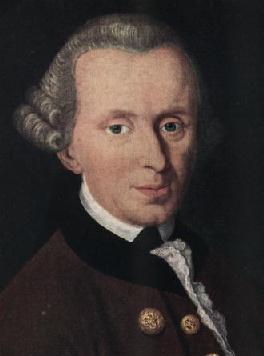
266px-Immanuel_Kant_(portrait)In Part I of this three-part series, I introduced Kant’s work and summarized his views on a priori and a posteriori knowledge. In this second part, we’ll review analytic versus synthetic judgments, clarify the meaning of transcendental idealism as it applies to Kant’s work in general, and also analyze tat tvam asi in terms of Kant’s philosophy.

Analytic and Synthetic Judgments

Kant’s investigation of the faculties of reason led him to explore the nature of judgments. He made clear the crucial difference between analytic and synthetic judgments. Kant’s jargon can become admittedly arcane, but analytic and synthetic are not hard to understand. Continue reading