Living In The Moment Eternally – 2

[Nobody has obviously noticed or pointed out that the continuation articles have not been posted for two years! So I am proceeding with the Series of articles here a bit hesitantly as I am not sure of the Reader-interest. In these two years my computer lost the “memory” of my notes and files stored on the subject (thanks to the hackers from Nigeria). I am hence obliged to go by whatever material I could harness in the ‘now’ from my computer. Part – 1 here.   Part – 3 here .  ]

The main question of interest for us here is “How does the body of a Self-realized man live eternally in the ‘Now’ and function in the day to day life of eating, moving, acting and interacting in the absence of ‘memory’ of past experience/knowledge for recognition? What does “Now” mean for him/her? Is the “Now” on a temporal dimension?”

Whether we are consciously aware of it or not, it is impossible to lead a normal life in the world without memory. Maybe it is simply responding to when your name is called or you have to find a solution to a much more complicated problem of technology, memory plays a significant role. Therefore, before we venture to answer the questions on the functioning of a jIvanmukta‘s body, one could be curious to know about the lives of those who are  at a disadvantage in their worldly life because they do not have an access to their memory anymore . I shall list briefly a few such cases which are well studied by scientists. Their lives may look yet times hilarious and often poignant and heartbreaking but always harrowing to their care givers.Wearing - HM Continue reading

Q. 371 – Deep-sleep state

Q: In advaita, we use the recall of a “good deep sleep” as a very important argument for proving continued presence of awareness… the question is, how does this recall happen? We have a process in advaita by which ‘the presence of a pot is known’. How is deep sleep known? Or – How is the fact that one slept well, recalled?

Responses from DhanyaRamesam, Martin, Ted and Dennis

A (Dhanya): When I was a child, there was a TV show I liked to watch.  It was called ‘You Are There.’  As I recall, the show depicted a famous scene from history, and then ‘you’ (meaning in this case the narrator), magically showed up in the scene and got to ask the historical figures all sorts of questions.  (I guess I should Google it to make sure I recall the details of the show correctly).  Anyway, I do remember that I enjoyed the show, and often these days recall the title, because one could ask oneself the question, ‘How is anything known?’ and the answer would be because ‘You are There!’  The whole point of deep sleep in the teachings of Vedanta is to is highlight ‘You are There’  Your nature is consciousness, i.e. that by which anything is known.  The absence of any thing is also known.  Thus one can recall the fact that one slept well.  Why?  Because You are There. Continue reading

Modern knowledge and the Vedas

Do the Vedas really contain any advanced knowledge as so many people claim they do?    QUORA

15.3.15 – I’d say the Vedas contain the most fundamental and ‘advanced’ knowledge there is, though mostly portrayed  in the form of paradox (analogy, metaphor, story, etc.), so that one has to crack the code in order to find the wealth hidden in them. That knowledge is not like empirical science, which is cumulative and provisional, and which could be said to be somehow contained in it, even if in embryonic or potential form. That knowledge or perspective is metaphysical rather than mystical. According to the Vedas there is one and only one reality: consciousness (brahman, the Absolute, etc.), which pervades the whole universe; it is immanent in it as well as transcendent… “the smallest of the small, the largest of the large”. It cannot be measured out or understood by the mind, for which it is ineffable, but it is that by which the mind comprehends… it cannot be expressed in words but by which the tongue speaks… it is eye of the eye, ear of the ear, mind of the mind, as expressed in the Upanishads.

Modern physics is having a hard time trying to explain away what consciousness is in terms of physical phenomena (neuronal activity in the brain), but consciousness is not just an irreducible phenomenon or datum; it is reality itself, everything being comprehended in it (theories, doubts, projections, emotions, things, thoughts, intelligence, observer and observed, you and I). The part (for instance, an ‘external’ observer) cannot understand the whole into which he/she is enclosed. For the Vedas, to repeat, reality is one, and contemporary physics is trying to find out in which way it is so (‘theory of everything’, ‘unified field’…). Not all physicists are reductionist, some of them having seemingly mutated into philosophers with a workable understanding of the core of Vedic teachings.


Q. 370 – nirvikalpa samAdhi

Q: Should a person have compulsorily experienced nirvikalpa-samādhi in order to know that he has a mind which is prepared for jñāna? In other words, is experience of nirvikalpa-samādhi a must as a sādhana?

Responses from VenkatMartinTed, Shuka and Dennis

A (Venkat): Nirvikalpa-samAdhi is an experience of the absence of objects, for a finite period of time, which the experiencer eventually exits to re-perceive the world.  As it is not permanent, it is not real.  Any temporary experience that is witnessed cannot be a pre-requisite for j~nAna – since j~nAna is the permanent dissolution of the illusory I-thought.

“Abiding permanently in any of these samadhis, either savikalpa or nirvikalpa, is sahaja. What is body consciousness? It is the insentient body plus consciousness. Both of these must lie in another consciousness which is absolute and unaffected and which remains as it always is, with or without the body consciousness. What does it matter whether the body consciousness is lost or retained, provided one is holding on to that pure consciousness? Total absence of body consciousness has the advantage of making the samadhi more intense, although it makes no difference to the knowledge of the supreme.” – Sri Ramana Maharshi Continue reading

Vision Of Truth (sad darshanam) – Part 21

िये प्रकाशं परमो वितीर्य

स्वयम् धियो अन्त: प्रविभाति गुप्त: ।

धियं परावर्त्य धियो अन्तरे अत्र

संयोजनान्नेश्वर-दृष्टिरन्या ।। —२४

dhiye prakAsham paramH vitIrya

svayam dhiyo antaH pravibhAti guptaH

dhiyam parAvartya dhiyaH antare atra

sanyojanAnneshvara dRiShTiranya—24

dhiye = to the intellect; prakAsham = sentiency;  paramH = Supreme; vitIrya = lent;

svayam dhiyo antaH = Itself (being) inside the intellect;  pravibhAti guptaH = shines while being hidden; dhiyam parAvartya = having turned intellect;  dhiyaH antare – within intellect;  atra = here; sanyojanAt = by uniting; na Ishvara dRiShTiranya = Ishvara vision (takes place)not by anything else.

The supreme having lent sentiency to the intellect, shines while being hidden inside the intellect. Having turned the intellect, here, within the intellect, by uniting, Ishvara vision takes place not by anything else.

The organs and mind are material in nature, by themselves inert. The all-pervading consciousness also available in the mind, lends sentiency to them. They, by nature are extrovert.

Man, has a tendency of feeling inadequate in many ways. This makes him search for something to make him more fulfilled. He resorts to the external world through the mind and organs. This is innate to all and has to be deliberately changed.

The first step to changing is to discriminate between the real and the unreal. Coming to this stage itself takes along time. Years of conditioning has led man to believe he is getting happiness and peace from the world. He has time and again been credulous enough to believe so, never questioning it, accepting it as the norm. On the other hand, he has been incredulous at the fact that the truth is something diametrically opposite. Continue reading

Science and Philosophy – Part III  

“The intellectual life of the whole of western society is increasingly being split into two polar groups…literary intellectuals at one pole – at the other scientists, and as the most representative, the physical scientists. Between the two a gulf of incomprehension.”

“A good many times I have been present at gatherings of people who, by the standards of the traditional culture, are thought highly educated and who have with considerable gusto been expressing their incredulity at the illiteracy of scientists. Once or twice I have been provoked and have asked the company how many of them could describe the Second Law of Thermodynamics. The response was cold: it was also negative. Yet I was asking something which is about the scientific equivalent of: Have you read a work of Shakespeare’s? “- C.P. Snow (in the 1960s)

Continue reading

Waking World is also Unreal

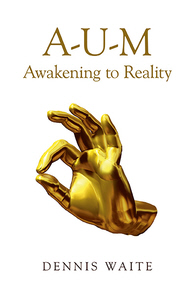
small_A-U-MDreams are a powerful metaphor in Advaita. The Yoga Vasishtha is perhaps the best known book to utilize them extensively but probably the earliest teacher to do so was Gaudapada in his kArikA-s on the mANDUkya upaniShad.

He effectively says that the waking state is unreal, like dreams, ‘because we experience it’. This is anvAya-vyatireka logic: we experience objects in dreams, and they turn out to be unreal; therefore the objects we experience in waking are also unreal.

This does not sound very convincing and there are various arguments that we can raise to object to the analogy. Gaudapada raises them for us, in case we can’t think of them all! Here is the third argument he puts forward. It is an extract from my forthcoming book, which will be published 25th September 2015.

Third objection to world being unreal

And this leads on to the third objection namely that, whereas the dream world is subjective, the waking world has objective reality. It is experienced as external to ourselves, whereas the dream takes place in our mind (K2.9 – 10). But this notion suffers from the same confusion as before. We only recognize that the dream world is ‘in our mind’ when we are awake; at the time of the dream, it is just as much ‘external’ as is the waking world when we are awake. We might as well say that the waking world is really non-existent since it disappears when we are in the dream or deep sleep states. At the time of the dream, I experience external objects and events in just the same manner. Their illogicality or even impossibility only becomes apparent on awakening. Continue reading

Astavakra – dharma

OLYMPUS DIGITAL CAMERAkartavya-taiva saMsAra na tAM pashyanti sUrayaH |
shUnyA-kArA nirA-kArA nir-vikArA nirA-mayAH || .. XVIII.57 ..

The sense of duty, indeed is the mundane world. This is not acknowledged by the Wise-one, who has realized himself as the All-pervading formless, Immutable, Untainted Self.

Of course I have a sacred duty to look after, protect, serve and help my wife and children, and also my community, that I see around me in my dream!

The dream-I while dreaming believes that the dream-world is real. In this, sense-of-Reality, are born all my duties and responsibilities. When I have awakened to the waker-I, what duties are there towards my dream-family and dream-community? The Wise-one, Liberated-in-life, is the Awakened-one. He has ‘awakened’ to the Infinite Consciousness. He cannot be touched by the laws of duties and responsibilities projected and maintained by the mind-in-disturbance. No sense-of-duty can arise without attachments; attachments cannot be unless we permit a sense-of-reality to the world-of-plurality. To the awakened, the illusory world of objects and beings are no more and therefore, he, living as the ‘All-pervading’, Formless, Immutable and untainted’ Self, has no more any sense-of-duty towards anyone.

Astavakra GitaSwami Chinmayananda, Central Chinmaya Mission Trust
Buy from Amazon US, Buy from Amazon UK

Seven Stages of Chidabhasa

chidAbhAsaGuest Author – Vijay Pargaonkar
Seven Stages of Chidabhasa

Based on Panchadasi by Vidyaranya Swami

Chapter 7.0 “Trupti Deepa”(marathi translation by Pundit Vishnu Shastry Bapat (1908) and hindi translation by Pundit Ramavatar Vidyapati (1912))

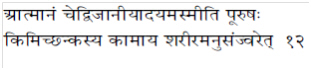
Brihadaranyaka Upanishad 4-4-12
br4-4-12


“If a man knows the Self as “I am This” then desiring what and for whose sake will he suffer in the wake of the body.”
(The entire Trupti Deepa chapter of Panchadasi is based on this shruti mantra)

Kutastha, the pure Consciousness, is asanga (without any association) and avikari (immutable). This Kutastha is also the adhisthana (substratum) of “bhrama” (illusions- not to be confused with Brahman) of indriya-sharira (body- mind complex). When it gets associated (the association is only vyavaharic/transactional and not real) with mind through anyonya-adhyasa (mutual superimposition) it is known as Jiva. Kutastha’s reflection in mind “chidabhasa” alone cannot be the Jiva since it has no existence of its own without Kutastha – image in a mirror is not possible unless there is a face behind it. The mixture/combination of chidabhasa and Kutastha is also referred to as purusha in the the shruti above. Continue reading

Science vs. Philosophy – Part II

Y – I can not parse your meaning, i.e. I have no idea what you are trying to say.

Still have no idea what you are trying to say.

X – What I’m trying to say is to point at core insights within Eastern philosophy (Hinduism, Buddhism, Taoism), particularly in advaita Vedanta – but also in Christianity and Islam in their highest metaphysical conceptions. If you are not interested in any of this, that’s alright.

Actually, whatever science – and its highfaluting ‘scientific method’ – is is shot through with difficulties and controversies, including the sacrosanct falsifiability principle (or dogma). Just read the Wickipedia article on this (and on rationality, etc.) and the respective positions of Khun, I. Lakatos, and P. Feyerabend among others. You must know something about all this already if you are scientifically inclined.

Y – What “core insights”?  There is nothing insightful about making up unevidenced tosh, anyone can do it and each piece of tosh has exactly equal validity, none.

And with regard to your ludicrous and unfounded “criticism” of the scientific method, I have one response, yea shall know them by their fruits.

Continue reading