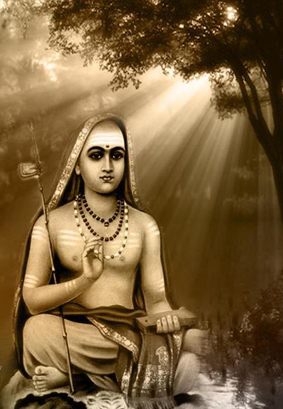
Namaste! Let me start by thanking Sri Dennis Waite and Sri Peter Bonnici for having invited me to think aloud amidst you and share the traditional wisdom of Advaita Vedānta with you. This very site and all its contents are for the amelioration of the Individual and through that, the whole Society and hence a lot of puṇya accrues to them. May them and their families and friends be blessed by īśvara.
Over a series of blogs, I intend presenting the complete Vision of Advaita Vedānta, not swerving from the tradition and yet applied to current day context. There will be continuity of Ideas between the blogs and I would like readers to be aware of this when they read the individual blogs; afterall, isn’t the individual always connected to the total? I shall endeavor to publish the blogs within reasonable time of each other so that the overall vision is not lost.
I commence my first blog entitled “Success”, with my prayers to īśvara that may my attempt in presenting the Vision of Advaita Vedānta be successful and may its readers benefit from the wisdom contained therein.
Everyone wants t o succeed in life, whatever be their definition of success. The definition varies according to the stage in life in which they are. For a Student, it is success in exams, for a Youth, it is success in love, for a Married Middle Aged Person, it is success in his profession and for an Old Person, it is healthy life.
Whatever one’s definition of success be, one has to setup “Clear Goals” with timelines and measurable indicators for one to assess oneself as successful. Unfortunately, most of us do not have enough clarity on our Goals; that needs to be fixed first. “Goal Setting” is not my topic and hence let us assume that one has a very clear idea of one’s goal; now it becomes important to know what the factors that contribute to success are. This is what ṛṣis (seers) have to say in this regard; Continue reading →