Use of words for Brahman
Brahman is not an object of knowledge. Being free from attributes, It is beyond words and ideas. Up Sah 18.24 states that word or idea can refer to objects of knowledge and not to non-objects. Brahman is known and realized as the innermost self and the ultimate subject and is therefore not an object of cognition. The Self is known as that remains after negating all objects by the process of neti, neti (18.25). The same idea is reiterated in 18.28 which says that word can apply to ego which is possessed of species and not to Self which has no classification, i.e., swagata, sajatatiya and vijatiya. Self is devoid of any differentiation. Then the question is why are words used to describe It?
Tag Archives: words
Sanskrit: language of the gods part 2

Here is the second of a two-part essay by Peter Bonnici, explaining why Sanskrit is so valuable and why a qualified teacher is necessary. (One of a number of essays, blogs and book reviews by myself and others which I will be reposting here over the next few months (they can no longer be found on-line at present). Dennis
Sanskrit: language of the gods (Part 2) – Peter Bonnici
(Read Part 1)
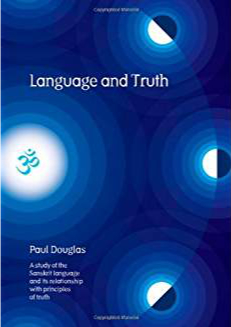
The ability of Sanskrit to convey truth expressed through the vision of advaita is the holy grail pursued by Paul Douglas in ‘Language and Truth’. The explicit influences on Douglas’s understanding of Sanskrit come from two main sources: his spiritual guide, Shantananda Saraswati, one time AcArya of Jyotir Math in BadrinAth, and the linguist and grammarian BhatRRihari. In that sense it is a devotee’s book, a book that explores the language to validate the teachings of the guru, in particular, one of his statements: ‘The grammatical rules of Sanskrit are also the rules of creation’.
The book gives the general reader a good insight into the building blocks of the language and to the evolution of nouns and verbs from seed form (dhAtu) to fully inflected word in a sentence (pada). In clear, readable language we are given insights into the elements of Sanskrit that support the premise that the author wants to understand. Continue reading