Adi Shankara

lamp and grassMost people (or at least those who visit this website!) will be aware that the dates for Shankara’s birth and death are a trifle hazy. It is generally assumed that he lived around the ninth century A.D. and had a fairly short life, dying at around the age of 32. Fewer people will know, however, that one of the principal Maths – namely that at Sringeri – actually has his date of birth as 44 BCE. And 509–477 BCE are the dates based on records from other Maths!

In fact, there are endless discussions in the academic world over details such as these. The sort of argument that is used takes a quotation from some writing attributed to Shankara, in which another person, place or quotation is used. If the date of that cited material is known, then it can be concluded that Shankara must have been living at a time later than this. (Such arguments enable the BCE dates to be discounted.) Unfortunately, in most cases, the dates of the cited person or place are not known either! Basically, Indians in the past have not been particularly good at recording their historical events. Plus, enlightened sages are not in the slightest bit interested in having their name associated with any recorded words or in having anyone record their biographies. Continue reading

Dreaming of God

Here is an article I was asked to write recently for my publisher’s blog. It discusses my approach to writing about Advaita, with particular emphasis on my last book, ‘A-U-M: Awakening to Reaility’. It also touches upon that perennially thorny issue – experience versus knowledge!

Topaz-P1040197A philosophically-inclined wit once inquired into the difference between having God speak to one in a dream and dreaming about God. This metaphysical query is the basis of this article on Mind-Body-Spirit books in general and my own writing in particular.

Let’s assume for a moment that I am a ‘successful’ author (by which I mean that I have written books that are acknowledged as ‘worthy’ rather than that I have made much money from the pursuit!) There are effectively two elements to this success:
A) being able to write, and
B) being knowledgeable about the subject-matter of the books.

If I am deemed to have achieved those accomplishments, what were the principal factors? Continue reading

Prologue – Time for the Wind

time_for_windThe E-Book of this new thriller (with more than a few hints of Advaita) should be available in E-Book format now. The paperback version has been printed and should be avaialble for purchase within the next 2 – 3 weeks. I posted an article about the problems of wtiting a book such as this several weeks ago, together with an extract in which the philosophical dialog first begins.

Here, hopefully to whet you appetite, I have posted the entire prologue to the story, which is based on an actual incident: Weston, near Runcorn, Cheshire, England, Jan. 2000.

Language and Teaching

I think we have probably had enough discussion on the ‘Experience versus Knowledge’ question. I cannot imagine many visitors wanting to read through 50+ comments on the topic! So here is an article that I have just had published in the Newsletter of Ramana Maharshi Foundation UK. It is on a subject closely related to the above question and indeed was touched upon in some of the comments…

Language and Teaching

Language is something we tend to take very much for granted. When someone says something to us, and providing we recognize the words, we think that we understand what it is that the speaker intends to communicate. And we respond appropriately. This is often not verbal – when it is, there is a subsequent opportunity to resolve any misunderstanding. Our response is usually to form an immediate mental opinion or judgement upon what has been said. And this is probably not merely a spoken or unspoken comment upon the particular topic expressed but also upon the person who made the statement. This all happens instantaneously and automatically. Thus it is that it can actually be worse for our comprehension if we already know something about the topic to begin with than if we are completely ignorant. What we take in will be significantly coloured by what we believe to be our prior knowledge (which may actually be ignorance). Continue reading

Q.381 – Knowledge, belief and experience

Note: This discussion follows on from the last question on ‘Finding a Teacher’ (apart from the introductory paragraphs).

Many seekers think that the essence of enlightenment is ‘experience’; that they need to actually experience something for themselves before they can be regarded as enlightened. In line with this, they denigrate the notion that a teacher can convey whatever it is that the seeker needs by simply talking to them, answering questions and so on. Even worse, they feel, is the idea that enlightenment can be gained by reading a book!

Maybe the term ‘Self-inquiry’ is largely to blame for this misconception. Seekers attached to this idea think that subjecting their own experiences (perceptions, ideas, theories etc) to close examination is somehow the key.

Whatever is the case, such seekers are seriously confused and need to distinguish carefully between ‘experience’, ‘belief’ and ‘knowledge’. Below I provide a question and answer discussion I had early last year with a reader on this general subject. But first I would like to give an example from my own experience, which (for me) provided a very clear distinction between these three. (And I refer to this example in the question and answer session.)

The experience occurred about 30 years ago. You will have to bear with me as it takes a little while (and two diagrams!) to explain. Continue reading

Time for the Wind

time_for_windReaders of this blog, and its associated website www.advaita.org.uk, will (I hope!) associate my name with my books on Advaita, which have been published fairly regularly since 2003. What very few people know is that I have also written a novel! In fact, this was the first book I wrote. I actually began it around 1974, while I was working as a contract computer programmer and temporarily idle. Unfortunately (I was still being paid), I was not idle for very long and the book was not completed until 1982! Since then I have revised/rewritten it four times! I did attempt to get it published back in the nineteen eighties, but without success. Earlier this year (after completing ‘A-U-M’), I decided the time had come, even though I have had to subsidise the publication as I am not recognised as an author of fiction.

I usually describe the novel as an ‘ecological thriller’, since the action revolves around a landfill site and waste disposal. The science fact also develops quite quickly into science fiction. By the time of the third iteration, however, I had reworked the material to introduce aspects of philosophy, with emphasis (surprise, surprise!) on Advaita. Originally, there had been lots of quotations from T. S. Eliot, but I discovered when writing ‘Back to the Truth’ that copyright permission for lots of Eliot quotes would be both difficult and expensive to obtain. Then I had the brainwave of changing one of the main characters from someone calling himself ‘Elyot’ (T. S. Eliot’s grandfather) to someone calling himself ‘Krish’ (short for ‘Krishna’). And, of course, I used quotations from the Gita instead of from ‘The Four Quartets’.

‘Krish’ only communicates via computer and, in addition to helping the principal character with his investigations into the waste disposal activities, he also discusses matters of Self-inquiry. Blending these elements without artificiality was quite difficult but I think I have succeeded. I was asked to write a blog on these writing aspects for the publisher to tie in with publication in early December. I reproduce this below, together with an extract from the book. (I will post another extract in a few weeks.) Continue reading

dUra

VenicedUra

Continuing the reposting of blogs from Advaita Academy, here is one from 2010. It is interesting to note that I have not further encountered this word since then! So it was a one-off. Nevertheless, it remains an interesting one and has a useful message.

I encountered a new Sanskrit word recently and its use and interpretation are quite enlightening. No doubt we are all familiar with those statements in the Upanishads which extol the extreme virtues of brahman. For example, in the Katha Upanishad, we have “the self is lesser than the least, greater than the greatest” (I.ii.20). And in the Isha Upanishad, we have “Unmoving, it moves faster than the mind” and “unmoving, it moves; is far away, yet near; within all, outside all” (verses 4 and 5). (These quotes are from ‘The Ten Principal Upanishads’ by Shree Purohit Swami and W. B. Yeats – a poetic rendering.) Then again, in the Kaivalya Upanishad (v.20), it is said “I am smaller than the smallest; I am the biggest, I am everything…Continue reading

Advaita is not Idealism

Thames(Originally posted to Advaita Academy Nov 2010)

All students of advaita know that every ‘thing’ is brahman. And they know that ‘I am brahman’. It is therefore a trivial mathematical reduction to say that everything is me. But there is a danger here. Some people conclude that the world is an appearance that ‘I’ create in some way; that the world ‘is’ because I perceive it. In this way, such people claim that advaita is equivalent to the subjective idealism of the Western philosopher Berkeley, who said “to be is to be perceived” (esse est percipi). This, of course, is a denial of the separate existence of matter and this might naïvely be thought to be equivalent to the Advaitin concept of mithyA.

(Note that the word ‘ idealism’ has nothing to do with aiming for perfection, but means that things have no reality in themselves, only existing as ideas in mind.)

From the point of view of absolute reality, there is only brahman. But then there is nothing to talk about! Such a discussion is only meaningful from the standpoint of empirical reality – our everyday world. If subjective idealism were true, the world would cease to exist when we go to sleep and would have to be created anew on awakening. Berkeley got around this sort of problem by claiming that the world continues to exist because it is perceived by God. And again, one might be tempted to claim that this parallels advaita in that we claim that the world is a creation of Ishvara, rather than the individual. This is not quite the case. In advaita, objects really do exist. Ishvara is the material cause, as well as the efficient cause of the universe. The point is that the substratum of their existence is brahman alone. In the case of Berkeley, however, the objects only exist in the mind of God, as it were.

Greg Goode, who studied Berkeley for his doctorate, believes that Berkeley’s last book may well have resolved his views to match those of advaita, but there were very few copies of that book ever made and it has not been possible to confirm this.

Advaita, then, does not claim that objects have no reality separate from the subject at the level of the world. In this sense, it is a realist philosophy and not an idealist one. This is highlighted by the following very interesting analysis, which I recently came across in one of the talks by Swami Paramarthananda on the Brahma Sutra.

Our principal pramANa, or source of knowledge, is pratyakSha or perception. When we see something for the first time, we see it in the present and, as a result of the examination of its various attributes, we conclude what it is. We can call this ‘cognition’. At some time in the future, we may encounter an object. By comparing its attributes in the present with remembered attributes from the past (as retrieved from the memory), we may be forced to conclude that this object is the same one that we saw in the past. This is called ‘recognition’ – seeing the object again. This fact of recognition is effectively a refutation of idealism (which is also the philosophy of the yogachAra or vij~nAna vAda Buddhists, a branch of Mahayana Buddhism). If the object that is seen now is the same object as the one that was seen in the past, then clearly it has a real existence and is not only an appearance in mind (which might otherwise be called a figment of the imagination).

You can read a series of essays from Chittaranjan Naik on ‘A Realist View of Advaita’.

chin mudrA

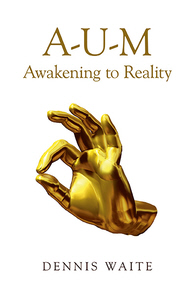
small_A-U-MHere is the second extract from my forthcoming book on the Mandukya Upanishad and Gaudapada’s kArikA-s. It explains the symbolism associated with the cover image. This explanation occurs near the end of the book, since it utilizes concepts with which the reader might be unfamiliar (until he or she has read the book). But since readers of this site should certainly be familiar with the terms, there is no harm in presenting it here!

chin mudrA

Now that we have almost concluded the unfolding of the kArikA-s, we can return to that cover image! The ‘hand-sign’ is not actually mentioned in the Mandukya Upanishad, nor by Gaudapada, though it is highly relevant. As I mentioned in the introduction, it is a gesture associated with the Sage who is said to be the first teacher of Vedanta – Dakshinamurti. As such, he was the head of the teaching sampradAya and did not himself have a teacher – i.e. he was already fully enlightened. He is also identified with the God Shiva. It is called chin mudrA or j~nAna mudrA (more usually chin), where chin means Consciousness and mudrA means sign.

It is often said that Dakshinamurti taught through silence. Of course, this would not make any sense. Silence can be interpreted in innumerable ways, few of which are likely to convey useful knowledge! But, once we have the knowledge, a symbol can convey a world of information, reminding us through memory of what we have previously learned. Witness the vast amount of knowledge which is now conveyed to you through the word OM.

The hand position shown on the cover of this book is another symbol of this sort. And it is highly relevant to the same knowledge.

Here is the symbolism:

  • The thumb represents paramAtman. There is some reasoning behind this. The scriptures speak of paramAtman as residing in the space in the heart (hRRidaya). By this, we were expected to understand ‘mind’, since it used to be thought that the mind was contained in the physical organ of the heart. Since the heart is about the size of a fist, it was reasonable to think that the space inside was about the size of a thumb.
  • The forefinger represents the individual or jIva. It could also be thought of as the ego or sense of myself. It is common in many cultures to use the forefinger to point out personal opinions and also to threaten or criticize others whose views differ from ‘mine’.
  • The second finger represents the gross body, sthUla sharIra or waker.
  • The third finger represents the subtle body, sUkShma sharIra or dreamer.
  • The fourth finger represents the causal body, kAraNa sharIra or deep-sleeper.
  • The first finger is normally held in association with the other three, indicating our identification with the body and mind.
  • All four fingers depend upon the thumb for their strength and ability to do practically anything. It is this feature which distinguishes us from other animals and gave humanity its great advantage in manipulating objects.
  • When the index finger is moved to touch the tip of the thumb, it separates from the other three, indicating realization that I am not in fact these bodies at all. In forming an unbroken circle with the thumb, it is recognizing that jIvAtman and paramAtman are one, unaffected by the three mithyA states of consciousness.

I now have a firm publication date for the book, incidentally – it is September 25th. It is now available for pre-order. It is quite expensive, but then it also quite thick (431 pages).

The paperback details are: ISBN 978-1-78279-996-2 UK: £20.99 US: $36.95
and the EBook: ISBN 978-1-78279-997-9 UK: £12.99 US: $21.99

Buy from Amazon US; Buy from Amazon UK

The first extract from the book may be read here.

Atma vichAra

The Self cannot be ‘known’ in any objective sense because it is the ultimate subject – there is no other subject that could know it. This is why science can never tell us anything about the Self. Science works by collecting data and analyzing it; formulating theories and then using them to predict what will happen when data are gathered in a different situation. This can never be applied to Self/brahman, because brahman has no data.

Strictly speaking, vichAra refers to investigation into ‘things’ so that Atma vichAra is effectively a contradiction in terms; the Self is not a thing. Spiritual investigation has to be done rather differently. The correct term is shAstra mImAMsA and it is really scriptural ‘investigation’ that we must conduct in order to find out about the Self. Monier-Williams translates mImAMsA as “profound thought or reflection or consideration; investigation, examination, discussion”. The philosophical branch that studies the Upanishads etc at the end of the Vedas (Vedanta) is called uttara mImAMsA. (uttara means “later, following, subsequent, concluding” but also “superior, chief, excellent, dominant”.)

We ‘discover’ the Self by removing ignorance. If someone holds up a screen in front of our face and then brings an object to show us, but keeps it behind the screen, we can say nothing at all about the object. However, as soon as the screen is taken away, the object is revealed to our senses and the perception takes place automatically. Similarly, knowledge of the Self is obscured by ignorance but as soon as that ignorance is removed, the Self is immediately self-evident; we do not have to do anything to ‘investigate’ it.

Scripture functions like a mirror. When we look into a mirror, we do not literally see our face and body, we only see an image of it. Yet this enables us directly to perform whatever actions are required on the body itself – combing the hair, shaving and so on. We do not shave the image but the actual hair on the face. Similarly, the scriptures do not directly represent the Self but the information therein, when explained by a qualified teacher, directly enables the ignorance in our mind to be removed, revealing the Self-knowledge which is as though hidden beneath.

Actions will never bring about Self-knowledge, since action is not opposed to ignorance. Nor will practices such as meditation or prayer. As Swami Paramarthananda puts it, meditation will only bring about quiet ignorance.

As Shankara puts it (if he was the author of vivekachUDAmaNi v.13): “It is through reflection over the words of a truly benevolent soul that one comes to a knowledge of reality, and not through bathing at sacred places, charity or hundreds of breathing practices”. [1] I.e. it is through shravaNa, manana and nididhyAsana and not through asking ‘Who am I?’ that one gains Self-knowledge.

[1] The Crest Jewel of Wisdom; viveka-chUDAmaNi, commentary by Hari Prasad Shastri, Shanti Sadan, 1997. ISBN 0-85421-047-0.