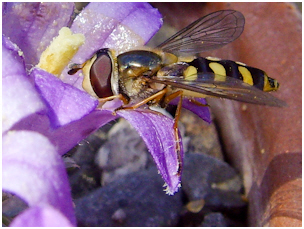
Pantheism, agnosticism/atheism — and Advaita Vedanta

How would you define your sense of pantheism?   www.quora.com/How-would-you-define-your-sense-of-pantheism/answer/Brad-Neil

Brad Neil, proponent of nonduality

I have devised this classification for reference: Modes of pantheism

(Divine pantheism; Natural pantheism; Spiritual pantheism; scientific pantheism)

Modes of pantheism

Within the range of categories given, I find myself somewhat ambivalent:

  • I most closely align with natural I believe the physical universe is all that there is, and that there are eternal forces and energies at play. I do not believe in the supernatural.
  • Scientific pantheism is least applicable to me because I really don’t have a problem being labeled an atheist. In my opinion, atheism and pantheism are almost (but not quite) two sides of a coin.
  • But when I’m feeling in my best of moods, I think I fall under spiritual or divine When my mood is high, I sometimes experience an awe and a gratitude that gives me a deeper feeling of connection to existence.

More generally, self-labels that I do not find objectionable include pantheist, nondualist, agnostic, atheist, and skeptic. However, I have none of these words tattooed on my forehead, and I reserve the right to change my thinking at any time. Continue reading
Tattvabodha – Part 21

Part 21 of the commentary by Dr. VIshnu Bapat on Shankara’s Tattvabodha.This is a key work which introduces all of the key concepts of Advaita in a systematic manner.

The commentary is based upon those by several other authors, together with the audio lectures of Swami Paramarthananda. It includes word-by-word breakdown of the Sanskrit shloka-s so should be of interest to everyone, from complete beginners to advanced students.

Part 21 begins the chapter on micro and macrocosm with a look at the jIva and its distinction from Ishvara.

There is a hyperlinked Contents List, which is updated as each new part is published.

The Simulation Hypothesis

digital-universe Wow! Wow!!

I have no words to describe.

A sheer Joy of 50 minutes. I was sitting glued to the seat. It’s almost like a Meditation where a ‘you’ dissolves untraceably and seamlessly into each pixel appearing on the screen.

All the super Stars of Physics, both of the past and current times, and their theories are discussed in simple understandable terms. The scientific evidence thus far available points to the inevitable inference that the perceived world is no more than a dream-like virtual reality, with no solidity or physicality to it. Nor do the space and time have true existence. Every object and every event in the universe is equidistant from the One Consciousness that is crafting the projection.   Continue reading

Q. 393 – Idealism or Realism?

Q:       Advaita often uses certain language and metaphors, and these can often come across as sort of a “subjective idealism plus”. Where subjective idealism argues that the “outside world” is a completely nonexistent illusion produced in a mind, Advaita sometimes seems to say yes, that’s true – only, behind that mind that imagines the world is consciousness witnessing the mind, which is “projected” onto consciousness by the mysterious maya. In other words, Berkeley was right, only he didn’t go far enough. This leaves Advaita sounding like total solipsism, blended with hardline idealism. Consciousness, some sort of unimaginable void incapable of anything, is having a mind and a world “imagined” onto it by maya, which despite the incapability of consciousness to do anything is still a “power” of that consciousness. (Of course, this is very much a conceptualization, taking these metaphors too literally and looking at these terms and concepts through a very Westernized lens. But this is often the way some teachings sound!)

      But in addition to the talk of all things being total illusion, I will also hear that Advaita is realist – that the universe is not a hallucination; that it is, in one sense, “actually there”; and that it is in comparison to the changeless paramarthika viewpoint that vyavahara is “unreal”. This position makes much more sense to me than imagining the universe to be some sort of magic trick.

      Now, I recognize that these explanations – both of them – are attempts to “point” at truth, and not a tidy description of truth itself. Ultimately, there is only brahman; there are no “illusory things” and no “real things”. But I’m far from truly grasping that yet, so I suppose my question is: which of these descriptions more accurately reflects the nature and relation of vyavahara and paramartha? Or are both illustrations only as useful as what they can communicate to a student? Or am I just getting way too caught up in concepts here? Continue reading

Brahman’s Simplicity to Complex Human Mind

question

  1. Why Doesn’t Time Flow Backwards?
  2. Do Cause and Effect Really Exist?
  3. Where Does Complexity Come From?
  4. What (or How Entropy) Powers the Earth?
  5. What Is the Purpose of Life?

The above are some of the questions that all curious and observant persons ask at one time or another. Those very questions are at the base of all human investigation – be it a scientific quest or a philosophical contemplation.  Continue reading

Who (or what) is it that ‘acts’?

Those who have read any of my books, or the brief biography that is available on this site and others, will know that I began my ‘philosophical investigations’ with the School of Economic Science, as it is known in the UK. And you will also know that I have commented frequently upon the misguided notions that were propagated by the school in the name of Advaita. One of the key misunderstandings that I had, which was not cleared for many years, despite reading widely and discussing Advaita with many people on the Internet, relates to ‘action’.

As usual, this was a Sankhyan idea effectively being passed off as belonging to Advaita. It was the notion that it is ‘the guNa that act’, or that action is a function of prakRRiti. In the first edition of ‘The Book Of One’, I actually had a chapter called ‘The Myth of Action’ and the first section of this was entitled ‘Only the guNa Act’. Here are several paragraphs from this:

 “The three qualities of nature, the guna, of which all of nature is constituted, are in constant motion and this is the only ‘action’. Yes, the body acts – it is constituted of the three guna – but we do not. Here is a useful practical example of this: It may be that you cycle from time to time. I enjoy cycling in the New Forest, where I live – free exercise in beautiful surroundings and fresh air. However, there are a few hills along the routes, and sometimes you have to go up these rather than down. Many people just get off and walk their cycle up. Others take it as some sort of challenge and insist on trying to cycle to the top without having to dismount. When the going becomes hard, they make an extra mental effort, along the lines of ‘I am damn well going to get to the top, even if it kills me’! This is the hard way! Continue reading

Tattvabodha – Part 19

Part 19 of the commentary by Dr. VIshnu Bapat on Shankara’s Tattvabodha.This is a key work which introduces all of the key concepts of Advaita in a systematic manner.

The commentary is based upon those by several other authors, together with the audio lectures of Swami Paramarthananda. It includes word-by-word breakdown of the Sanskrit shloka-s so should be of interest to everyone, from complete beginners to advanced students.

Part 19 looks at the traditional description of the formation of the mental aspects from the sattvika qualities of the five elements and the formation of the organs of action from the rajasika aspects.

There is a hyperlinked Contents List, which is updated as each new part is published.

Reality of the world

The discussion that follows stems from a comment I made on a recent article in the July NOW Newsletter. This is produced by a group in Australia led by Alan Mann and is a resource for the works of Thomas Traherne, as well as Douglas Harding, John Wren-Lewis and George Schloss.

I publish our email exchanges verbatim, as they occurred, below. Please feel free to add any useful comments!

  1. ***************************************

Hi Alan,

Regarding your preferred definition of ‘real’ (“The definition of real which I prefer is: actually existing as a thing or occurring in fact; not imagined or supposed.”):

Does a chair exist? As a chair? What if I remove the legs and back; is it still a chair? Was it a chair a year ago, 10, 100, 1000 years ago? What about similar periods in the future? I suggest that it is not the chair that exists at all, it is the wood out of which it is made. (And the same argument applies to the wood over longer timescales.) A ‘chair’ is not real; it is only name and form of wood. Etc. ‘Things’ are not real; no ‘thing’ exists in its own right; it is dependent upon something more fundamental for its existence. And this goes on, all the way back to Consciousness.

Have you read the story I wrote about this? – the ‘first definition’ at http://www.advaita.org.uk/discourses/definitions/advaita.htm. You can publish this in your next edition if you like.

Best wishes,
Dennis Continue reading

Tattvabodha – Part 18

Part 18 of the commentary by Dr. VIshnu Bapat on Shankara’s Tattvabodha.This is a key work which introduces all of the key concepts of Advaita in a systematic manner.

The commentary is based upon those by several other authors, together with the audio lectures of Swami Paramarthananda. It includes word-by-word breakdown of the Sanskrit shloka-s so should be of interest to everyone, from complete beginners to advanced students.

Part 18 concludes the description of the ‘creation’ of the five basic elements and then moves on to the description of the evolution of the subtle sense organs of the jIva.

There is a hyperlinked Contents List, which is updated as each new part is published.

Foundation Sources for Advaita

Below is a compilation of two dozen + one of the Mantra-s/shloka-s from various shruti /smriti sources which form the Basic Foundation for the Concepts of Advaita. The selection is arbitrary and purely based on what appealed to me to be significant. Other learned seekers may like to add to or delete from or suitably emend this list in order to make it comprehensive and authentic. If any authoritative lists are already available in public domain (preferably online), a reference and a link to them will be appreciated. Continue reading