
Q.490 Consciousness and the Brain

Q: My question is one I can’t seem to clarify through any book, teacher or teaching:

How do we know that the brain isn’t responsible for consciousness? While we can observe mind with all of it’s contents as objects and then say we cannot be that which we observe, how can we be sure that there is not just some part of the brain which does the observing that is giving us this ability to watch thought? How does Vedanta address this? How can we know that the brain isn’t simply the one observing all phenomena?

Side note: I lost consciousness once due to a fall and blacked out, and all I can say is that there was complete absence of being and no one there to be aware of the non-beingness. No observer nor observed. Beyond no-thing. Absolutely no experience beyond the concept of the word. Continue reading

From the Grossest to the Subtlest – 2/2

Part – 1

Narada climbs up the staircase from Name up to Spirit almost hopping and jumping spurred by his own enthusiasm and curiosity.   He asks his venerable teacher at each step after meditating, “What’s next?”  He, however, falls absolutely silent after meditation at the level of Spirit, the 15th itself. He has another flight of steps to take to reach the Ultimate, the Absolute!

Swami Krishnananda of the Divine Life Society tells us that the 7th chapter of the Upanishad expounds the magnificent doctrine of the bhuma, the Absolute, the plenum of Being, the fullness of Reality. But also cautions us that “As we go further and further in this chapter, we will find it is more and more difficult to understand the intention of the Upanishad. The instructions are very cryptic in their language. Even the Sanskrit language that is used is very archaic, giving way to various types of interpretations.” Though the words may look familiar, their meaning is significantly different and connote a much deeper sense. Continue reading

From the Grossest to the Subtlest – 1/2

Shankara opens his commentary on the 6th chapter of chAndogya with a very brief intro. bringing out the context of Svetaketu’s story and its relationship (sambandha) to the rest of the Upanishad. He says that the 6th chapter explains two important points, which are:
  1. “How this whole universe proceeds from, subsists in and becomes absorbed (or merged) into brahman because the seeker has been previously ASKED TO MEDITATE, free from all love and hate and being self-controlled, upon that universal brahman to be the source, sustainer and dissolver at 3.14.1 of the Upanishad”; and
  2. “How when the Knower of the Truth has eaten, the whole universe becomes satiated.”

Appropriately enough, after the completion of the 16 sections, at the end of the chapter, he makes the following concluding remarks:

Continue reading

Gaudapada and World Appearance

(Extract from the book)

What exactly happens when a person is enlightened or ‘gains mokSha’?  A popular, although somewhat incomprehensible, belief is that the world somehow ‘disappears’; that, for the j~nAnI, there simply is no longer any duality. Quite how the j~nAnI (apparently) continues to eat, drink and converse is not adequately explained by those who hold such a view. But Gaudapada approaches it from a different and even more dramatic angle.

Prior to my enlightenment, I make the mistake of identifying myself with the body-mind, believing myself to be a separate entity. This is the result of my Self-ignorance – not realizing that I am the unlimited Atman. Gaudapada says that this ignorance is beginningless (anAdi) (K1.16). At the dawn of Self-knowledge, I recognize that I am not the waker, dreamer or deep-sleeper but the non-dual turIya.

As to whether or not the world then disappears, Gaudapada effectively asks: how can it disappear when it didn’t exist to begin with? “If the visible world actually existed, there is no doubt that it might stop (i.e. disappear) (as soon as j~nAna was gained). (But) this (apparent) duality is merely mAyA (and) the absolute truth is non-dual.” (K1.17) Continue reading

Ignorance and the World

After the two long discussions on this fascinating topic, I would like to offer the following as my final word on the subject (hopefully!):

The world is brahman – sarvam khalvidam brahma. So we can say that the cause of the world is brahman (and shruti does say this!). The cause is not ignorance. It is because of ignorance that we see the world as separate objects and people but that is not the same thing. Yes, we superimpose ‘things’ upon the non-dual reality. That is adhyAsa. But that is not the ‘cause’ of the world. Ignorance is absence of knowledge and the world could not arise from an ‘absence’ or nothing. Brahman is the cause and, for the sake of ‘explanation’ we posit that it does so via the power of mAyA. Even so, the world is nothing other than Brahman, since Brahman is both material and efficient cause.

Ignorance is not the cause of the world; it is the reason that we fail to realize that the world is Brahman. When that ignorance is removed, the realization dawns; but since it had nothing to do with the appearance, the world does not disappear when the ignorance goes. If the (appearance of the) world had not been there to begin with there would have been nothing for us to superimpose upon. It was and remains mithyA – dependent upon Brahman for its reality. When we gain Self-knowledge, what goes away is the ignorance, not the world.

Q.489 Creation and reincarnation

Q: Is Ishvara/mAyA the one responsible for the form of the universe or is the jiva responsible for it?

If Ishvara/mAyA:

  • then who/what is Ishvara and how does it create the universe?
  • then how does adhyAsa come into the picture because if Ishvara is the creator then even if adhyAsa is removed then the appearance of the world will still be there.

If the jiva

  • then why does the world not disappear upon enlightenment (a jiva is responsible for the dream at night whilst asleep, therefore the dream disappears upon waking)

I have heard many examples of gold/ornament with regards to the universe and Brahman (Gold being brahman, the names/forms being the ornaments). I’m not sure I have fully grasped this comparison, in what sense does matter depend on Brahman?

I see that all things are experienced IN consciousness and therefore in that sense the world of objects/atoms/quantum fields etc depends on consciousness/Brahman because the world can not be experienced without consciousness. It doesn’t seem right to me, because it’s not something you could ever refute. Obviously we can’t experience the world without consciousness. Continue reading

Q.488 Reading Minds

[Note: This is a long Q&A. Any help that other bloggers and readers can give to resolve the questioner’s concerns will be welcomed!]

Q: If waking life is a kind of dream or modulation of awareness then why is it so continuous? Many Advaitins see waking life as some form of dream, correct me if I’m wrong.

Dreams when asleep are always very new, different and unpredictable. And then they disappear and you wake up and forget the dream. And most likely you will not continue where it ended next sleep. On the other hand, waking life reappears after sleep and it is the ‘same’ as yesterday and it only seems to disappear if you die.

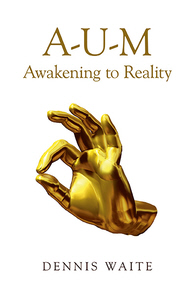
A: There is a lot more to it than that. And it cannot all be explained in a couple of sentences. Pretty much all of my book ‘A-U-M: Awakening to Reality’ was about this. (It is a commentary on Mandukya Upanishad and the explanation by Gaudapada.)

There are 3 states of consciousness – waking, dream and deep sleep and none of them are ‘really real’. Waking seems to be real for the waker. The dream is equally real for the dreamer (who thinks he is a waker)! The true reality is the Consciousness that is the basis of all 3 states. Waking life is said to be like a dream so that you can use this as a metaphor for gaining enlightenment. Continue reading

The myth of Rahu


The scriptures utilize many stories and metaphors to coax the mind towards an understanding of Brahman – after all, this is one of the few ways this can be done since Brahman cannot be described. One that is rarely encountered is the myth of rAhu.

According to Monier-Williams (Ref. 179), the word ‘rAhu’ means ‘the Seizer’. It refers to a story in the Hindu purana-s (sacred books of mythology and cosmology), although the myth also occurs in much older Buddhist texts. The fable has the gods ‘churning’ the ocean in order to extract the ‘nectar of immortality’ (amRRita). One of the demons who are watching this, disguises himself, steals a portion and drinks it, thereby becoming immortal too. The sun and moon gods witnessed this and told Vishnu, who subsequently cut off the demon’s head. The head became known as rAhu and the rest of the body (with the tail of a dragon) as ketu. They were then evicted from the earth, from where rAhu continually tries to wreak revenge on the sun and moon by eating (‘seizing’) them. We see these attempts when eclipses take place. Continue reading

The Lie of the Upanishads – 2/2:

Part – 1

Shankara leaves no scope for any doubt when he declares at the end of his commentary at 2.1.33, sUtra bhAShya, that “The shruti statement of creation does not relate to any reality, for it must not be forgotten that such a text is … meant for propounding the fact that everything has brahman as its Self.” (Translation by Swami Gambhirananda).

Shankara also asserts in his commentary on mantra 2.1.20, brihadAraNyaka: “Therefore the-mention in all Vedanta texts of the origin, continuity and dissolution of the universe is only to strengthen our idea of Brahman being a homogeneous unity, and not to make us believe in the origin etc. as an actuality.” (Trans: Swami Madhavananda).

He makes it abundantly clear in his commentary at 3.15, Gaudapada kArikA  that “Therefore, we have reasonably to conclude that the scriptural statements regarding creation, etc., are for the purpose of helping the mind to realize the oneness of Atman, and for no other purpose whatsoever. Therefore, no multiplicity is brought about by creation, etc. (Translation by Swami Nikhilananda.)

The 35th Sringeri Acharya HH Sri Abhinava Vidyatirtha was unequivocal when he told a disciple that “To cater to the doubts of such people (i.e. less advanced aspirants) as regards creation, the scriptures speak variously of origination. Scriptures are actually not concerned with creation at all.” Continue reading