Q. 388 – Fear of Deep Sleep

Q: I am reading Dennis’ book ‘The Book of One’, and I am on the chapter about deep sleep.

From the age of around seven ( I am now 51), I have had a morbid terror of sleep. Not dreaming sleep which I enjoy (I am one of those rare people that has quite regular lucid dreams), but deep sleep, and equate it with “unconsciousness or non-consciousness” or death which leads to death anxiety. I understand that this fear is a result of constructs that I have devised, and am my own torturer. But the enquiry in this book and other books on Hinduism I have read seems to be returning me to the same cul-de-sac that is the dead end of my search.

Just reading the chapter now left me cold with fear and even worse complete dissappointment, as it doesn’t feel intuitive to me that this is our natural state? I really don’t want to return here at all, is this a normal reaction people feel when they are introduced to this concept?

I am not an intellectual. I have persevered with the book and it’s concepts, even though at times it is quite clearly beyond my comprehension. But is that it? Is that all there is? A kind of acceptance of annihilation of this ego-mind… forever?

I have some recollection of the Indra story where they ask the same question of Prajāpati and wasn’t quite satisfied?

Will this fear pass?

A (Dennis): You should take up meditation with the determination to practice fully. The nature of this would depend upon which method you chose. I took up mantra-based meditation similar to TM, which required 30 mins practice twice per day. This sounds impossible to begin with I know but, after a few months, it becomes part of your routine. And you benefit in so many ways, both mentally and physically. But the point is that, eventually (the time varies from one individual to another), you reach the point where you begin to experience periods of samAdhi. At these times, your mind becomes totally still. You are still aware of external and internal events but you remain entirely detached from both. You know that you are neither the body nor the mind but the observer of these. There is no ego at these times because you recognize this independence. Ego IS identification with one or other.

In deep sleep, you do not experience anything. But this is because there is nothing to experience, not because ‘you’ have disappeared. You see neither external world (because the senses are inactive) nor internal thoughts (because the mind is inactive). But the Self that is the witnessing Consciousness in deep meditation is still present in deep sleep. It never ‘sleeps’ (or dies) because it is the only thing that really exists. It is who you really are.

Hope this helps!
Tattvabodha – Part 16

Part 16 of the commentary by Dr. VIshnu Bapat on Shankara’s Tattvabodha.This is a key work which introduces all of the key concepts of Advaita in a systematic manner.

The commentary is based upon those by several other authors, together with the audio lectures of Swami Paramarthananda. It includes word-by-word breakdown of the Sanskrit shloka-s so should be of interest to everyone, from complete beginners to advanced students.

Part 16 looks at the ‘definition’ of Atman as sat-chit-ananda – existence-consciousness-bliss and concludes the section on Atma vichAra.

There is a hyperlinked Contents List, which is updated as each new part is published.

The Mystery – Part 6

Continuing this new, short series presenting the booklet by Bimal Prasad, in which he answers some ‘Rarely Asked Questions’ on Life. Primarily from the perspective of Advaita, questions addressed include the nature of happiness, consciousness, mind and ego. There is also practical guidance on meditation in the final chapter. Answers are relevant and succinct, so that many of the issues of interest to the seeker are covered.

This sixth part looks at the relationship between Consciousness, witness and ego, at the nature of the Self and reality, and asks what we mean by Self-knowledge. See the Contents List or go straight to Part 6 of the series.

The complete (electronic form) booklet may also be purchased from Amazon.

Living in the Moment Eternally — 3

[One of our esteemed Readers, Shri V. Madhava, has been kind to send an off-line message to me a few days ago saying “I enjoy reading your writings and just finished reading the article “Living in the moment eternally Part 2”.  Wondering if there is a Part 3 as there seems to be a broken link…” Reason enough, I guess, to continue on with my chatter — ramesam.]

Part 1                   Part 2 

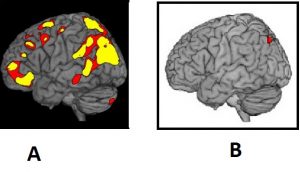
Brain Activity - Past or Future vs Present Let us recall that living in the Now is an important trait of a jIvanmukta. J. Krishnamurti wondered if we could have an experience but not record it in our brain as a memory so that all our experiencing will be ever in the Present, in the innocent Now, afresh and always anew from moment to moment. Continue reading

Consciousness and neuro-science

Discussion from Quora

(Different from above) Prof. Donald Hoffman – The Case Against Reality .

A professor of cognitive science argues that the world is nothing like the one we experience through our senses.

Evolution has shaped us with perceptions that allow us to survive. They guide adaptive behaviors. But part of that involves hiding from us the stuff we don’t need to know. And that’s pretty much all of reality, whatever reality might be.

Snakes and trains, like the particles of physics, have no objective, observer-independent features

Gefter: I suspect they’re reacting to things like Roger Penrose and Stuart Hameroff’s model, where you still have a physical brain, it’s still sitting in space, but supposedly it’s performing some quantum feat. In contrast, you’re saying, “Look, quantum mechanics is telling us that we have to question the very notions of ‘physical things’ sitting in ‘space.’” Continue reading

If we do not experience from within a body, then where oh where do we feel-think-do from?

whirlpool

Image by valemngilda

Think of a whirlpool. There seems to be a definable shape that we can point to and know as a whirlpool, and yet there is nothing separate or fixed about its whirlpool-ness. All the water that constructs the thing we have labelled “whirlpool” is in flow, never the same water in any moment, and yet it appears to hold its shape/from so convincingly that we believe we can point to the moment our whirlpool began, measure it’s lifetime, and record the moment it ceases to be.

But what is it that convinces us that the whirlpool is separate and of its own causal relatedness to “other” forms we have labelled in the single field of All That Is?

For as much as we focus on the ways to practice into a consciousness immune to mithyA, we have the experiences we have as All That Is in constant flow, unfixed and inseparable, no matter how we might label that experience.

It seems prudent to mention at this point that we are prone to use the word experience to separate so-called “personal identity” from “other-ness”, so the concept of experience encompassing all that we have labelled inner, outer, before, present, and so on, is an unnatural leap… until one comprehends the arbitrary lines we have drawn (even in language being the means of defining ideas that can be fixed in objective transfer of meaning), and recognise these too as whirlpools in the ocean of All That Is.

13186929-Background-with-physical-formulas--Stock-Vector-physics-scientific-equation

Image by Andrey Alyukhin

Of course, the analogy can only go so far. According to the assumptions of our current cosmology, to know-observe a whirlpool is to be separate from it, and to literally form a whirlpool the ocean must exist within an atmosphere. But in our present physics of a causal universe, we have no means of explaining an alternative conceptual reality with words. Even the term “reality” inspires our perceptual bias dividing existence as dimensional from that which cannot be known/named/defined.

Which also means that while it seems that we can be taught the Vedantic mokSha; that there are those who trust innately, and perceive (for want of a better word) the whirlpool in its ocean state. Those who seek to trust, and devote themselves to practices which might reveal an ocean in all things. And those who examine trust through chemical, experimental, and philosophical means in order to demystify that which defies explanation (which will ultimately allow us to speak of that which language is yet to adequately express)… we do not experience (learn/live/know) from within a body because the “body”, the “self”, and experience as a point of separation, are all whirlpools within an ocean of All That Is.

“There is no dissolution, no origination, none in bondage, none possessed of the means of liberation, none desirous of liberation, and none liberated.” Gaudapada (K2.32)

chidAbhAsa

The ‘Real I’ verses the ‘Presumed I’ – An Examination of chidAbhAsa

Ramana Maharshi’s instruction to seekers to ask themselves ‘Who am I?’ is lauded by many modern Western teachers as sufficient, on its own, to lead to enlightenment.  I suggest that this is not strictly true; that what it can do is rather to give us insight into what we are not and thereby point us in the direction of traditional teachings to learn about our real nature. It is inciting us to conduct Self-inquiry in the proven manner, i.e. by listening to a qualified teacher interpret the scriptures, rather than merely providing a mantra or formula to provide an answer directly.
An explanation of how traditional teaching can lead us to an understanding of who I am might begin with an analysis of our three states of consciousness – this is the so-called avasthA traya prakriyA of traditional advaita.
We almost certainly begin with the belief that who-I-really-am is only fully present in the waking state. In the dream state, I am not in command of my mental faculties so that the mind free-wheels outside of my control even though I am not actually unconscious. And we no doubt accept the deep sleep state as one in which mind and body rest and recuperate in order to be ready for the trials that the next day may bring. According to this interpretation, consciousness in deep sleep is in a resting state, as indicated by the lowered activity shown by EEG displays. (This view, also supported by many Western philosophers, claims that consciousness is a by-product or ‘epiphenomenon’ of the brain; an evolutionary advantageous development to enable an animal to find food and mate more efficiently than before. This is also the view of the chArvAka-s or materialists of thousands of years ago – it is certainly not new!) Continue reading

Q. 385 – Is enlightenment meaningless?

Q: If Brahman is perfect, not ignorant, and the sole subject, what is the purpose of enlightenment as proposed by Advaita as the perfect one needs none?

If the ignorant jIva-s are nonexistent and Brahman is perfect, ignorance is nonexistent, therefore perception of separation is nonexistent.  It appears that Advaita, while advocating non dualism and a perfect sole subject, in fact is dualist, reaching out to a nonexistent audience to fix a nonexistent issue, to provide realization that the absolute already witnesses.   Can you shed some light on this?

A (Dennis): Coincidentally, an answer I gave recently to a different question effectively answers yours also:

<<< You have to decide whether you are talking form the empirical viewpoint or the absolute. If you don’t do this, you just get confused because the ‘explanations’ differ.

You are brahman, whether or not you know this. There is ONLY brahman from the absolute standpoint. No one has ever been born so there is no one to be reborn. Continue reading

Three Q&As in Quora

Three Q/As from QUORA (on brain, philosophy, QM, NDE, consciousness)

1. How does the brain understand philosophy?

M. The brain… understanding philosophy? My reply to this is similar to the one I gave recently to another question and which was based on Socrates’ answer to an observation that someone was making. The man saw a pool of water being stirred by a stick held by a man and said that the stick was stirring the water. To which Socrates replied: ‘Is it the stick, or the man moving the stick?’ (Which one is the real agent – the material, or the instrumental cause, in Aristotelian terms?).

Equally, is it the brain, or the mind which ‘moves’ the brain which moves the stick which stirs the water?

Is it the brain, or the mind which (using the brain as an instrument) understands philosophy? Actually, it is consciousness (as a substrate) using the mind using the brain… Consciousness itself does not do anything Continue reading

The Mystery – Part 3

Continuing this new, short series presenting the booklet by Bimal Prasad, in which he answers some ‘Rarely Asked Questions’ on Life. Primarily from the perspective of Advaita, questions addressed include the nature of happiness, consciousness, mind and ego. There is also practical guidance on meditation in the final chapter. Answers are relevant and succinct, so that many of the issues of interest to the seeker are covered.

This third part is entitled ‘Pointers to Consciousness’ and answers questions about the nature of existence, reality, truth and consciousness. See the Contents List or go straight to Part 3 of the series.

The complete (electronic form) booklet may also be purchased from Amazon.