How possible would it be for you to live without Technology? (From Quora)
My answer: A given individual can live without technology – telephone, radio, TV, automobile – but society in general can no longer go back (how far back?) to the time of 3 or 4 generations ago. Everything has been ‘piling up’ and become more and more complex and, at the same time, integrated or intertwined more or less haphazardly. We need modern technology even if only to take us out of this mess – a mess which I don’t need to describe in any detail and which affects the whole world.
Are we at the point of no-return? Nobody knows. While there are dangers, there are also opportunities, advances and turn-backs. Each individual is like a cog of a great machine (or a thread in a tangle?), and only individuals can bring about some change for the better – others do it for the worse. It is like the ancient lore of good and evil in endless battle. The myth of Prometheus (and also that of Pandora) loom over all of us. The Greeks understood all this very well.
‘Advaita Vision’ is an antidote.
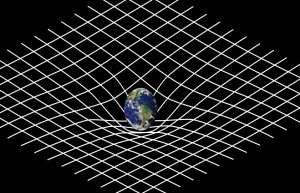 Hardly does a minute go by when a student of Advaita does not hear an analogy. The subject being so abstruse and abstract, the teacher ostensibly to make things easy to understand (सुख बोधाय), resorts to the method of using an “analogy.” Much like in Theoretical Physics and Quantum Physics, the concepts in Advaita too are usually counterintuitive and metaphor is a powerful tool to help drive home a difficult idea. The danger in using the metaphor is that it, more often than not, lulls the student with a sense as though s/he “got” it (the Oneness of All That-IS). Perhaps because of that, it is not seldom that we find even an advanced student of Advaita being tempted to extend a metaphor beyond the intended point and make his/her own inferences from such a wrong projection. (I am frequently asked questions on ‘reflected Consciousness,’ ‘Witness-Consciousness’ etc. based on such improper extensions).
 Many misconceptions and misunderstandings appear to be prevailing about Yoga and samAdhi in Advaita. We shall take up in this Part of our Series, an assortment of those topics in no particular order and examine the possible correct position.
 We shall present in this Part – 2 how the word samAdhi is used in Yogavasishta (Yogavasishta is available as a pdf at this site). The word samAdhi occurs very ubiquitously in this text. It is used both in its Yogic and Advaita Vedanta meaning. A few select citations are illustrated below.
 samAdhi is a highly specialized term in Yoga and also in Vedanta. However, paradoxically, the word does not stand to convey the same ‘concept’ in a rigid and fixed manner in all its occurrences across different scriptural texts. Like all other Sanskrit words in the scriptures, the word attains a lot of fluidity and delicate malleability in the hands of the Sages and ancient authors to convey a very precise and what is otherwise inexpressible philosophical idea. Such flexibility in the use of technical words is unknown and unimaginable in the West, particularly so if one is trained in the modern science. Therefore, it is important to bear in mind that one cannot nail the meaning of the word as per one single definition when comparing its usage across different texts by different authors of different times. ‘anubhava’ and ‘anubhUti’ usually rendered into English as “experience,” often used in association with samAdhi, is another such word that needs care in handling.