Q. 416 – More on evil

Q: If everything is the manifestation of consciousness, is there any explanation for so much pain, suffering, illness, disease, starvation, depression etc?

I have read and understood that Consciousness manifests itself in everything and  through human beings in order to experience the life (or dream) it created.

If this is so then one comes to the conclusion that sadism and masochism are experiences Consciousness also wants to feel, bearing in mind the atrocities that humans are committing nowadays.

A (Dennis): This is a question I am sure many will relate to. I can provide an answer in a number of ways.

Firstly, similar questions have been asked before. See, for example, Questions 100, 120 and 134. Secondly, I could throw this open to the other bloggers who may look at it from different angles. Let me know if you want me to do this. Thirdly, here are a couple of ideas that may help.

If, by ‘Consciousness’, you mean the non-dual reality (which I assume you do – so do I) then you have to concede that from that point of view there can be no ‘experiences’ and no value judgments. If you accept the conclusion of Advaita – ‘all there is is Consciousness’, then Consciousness is all there is! It is a bit like using steel to make scalpels and also to make daggers. From the standpoint of the steel, both are steel only. It is only the person who says one is good and the other bad. And the person, too, is only Consciousness.

Another way of looking at it is by comparing it to dream. Presumably you have dreams in which ‘bad’ things happen? Why do you do this? Why not always dream about good things? But, when you wake up, does it really matter? Was the bad thing really bad? When you realize the truth, you also know that the waking world is ultimately no more real than the dream world. Both are turIya, only.

Finally, you should note that Consciousness does not do anything, does not desire anything. Nor does it experience anything, either for itself or ‘through’ the supposedly created entities. The ‘bottom line’ of Advaita is that nothing has ever been created.

Overview of Western Philosophy – Part 18

Note that this is the Concluding part

(Read Part 17 of the series.)

Nowadays, there are still large numbers of people who, even if they do not entirely accept all of the claims made by their religion and no longer recognize it as an authority for their everyday behavior, nevertheless pay lip service. And sentiments such as ‘love thy neighbor as thyself’ do seem to contain great wisdom, finding a balance between the two extremes given above.

But with all of our values no longer ‘supplied’ by religion, people have been forced to develop them for themselves. In the absence of expert guidance, the principal influence now tends to be the media and we have such ridiculous situations as the cinema’s cult of the anti-hero. It is now normal for films to conclude with the thief in some luxurious setting surrounded by money and women and no sign whatsoever of justice or retribution. It is acceptable for the individual to triumph over the perceived constraints of society, including its laws. And it is far more usual for the governments, police and similar bodies to be portrayed as corrupt, with ‘hidden agendas’ and secret conspiracies against you and me. And we have been brainwashed into cynically believing this to be normal.  Continue reading

The Chinmaya Mission, Sw. Dayananda, and scholarly disquisitions

Excerpted (with apologies) from:

www.academia.edu/25991692/Paradigms_and_Styles_of_Advaita_Mission_An_Experiment_in_Interpretation

“I have a message to the West as Buddha had a message to the East” – Vivekananda.

“Once more the world must be conquered by India. This is the dream of my life, and I wish that each one of you who hear me today will have the same dream in your minds, and stop not until you have realised the dream.”

Ramakrishna Mission never transcended ethnicity in any absolute sense; instead, its distinctive teachings and structure brought it into complex negotiations with the various cultures it encountered, in India and in the West… Śaṅkara the Missionary. Continue reading

On Narada Bhakti Sutras – 15

On Narada Bhakti Sutras  – 15

Part – 14  

6.  FROM MARKANDEYA PURANA:

Narada happened to go to Indra’s court at a time when the celestial damsels Rambha and others were giving a dance performance.  After a while Indra enquired from Narada as to whose performance was like best by him. Narada responded by saying that the performance of that girl who danced with passion, emotion and agility was the best. The dancers were debating within themselves as to who did better, when Indra intervened and requested Narada to declare the winner. Narada announced that that girl who could excite the Sage Durwasa would top them all. A damsel by name Vapuvu accepted the challenge.

7.  FROM BRAHMAVAIVARTA PURANA:

The sons of Daksha were about to commence creation. Narada met them at that time and directed them to work for liberation instead of getting stuck with the cycles of birth and death. He successfully dissuaded them from creation.  Coming to know of the role played by Narada, Daksha complained to Brahma. Daksha then cast three spells on Narada – that Narada would take birth in the womb of Daksha’s daughter, he would be a wanderer without a stable place of stay and he would not have a wife. Continue reading

Q. 415 – Having the same thoughts.

Q: If thoughts arise from Consciousness, and Consciousness is the Absolute, AND we are all connected to the Absolute, why do we not all have the same thought simultaneously?

A: This is one of those many questions which confuse reality and appearance. The absolute reality is that there is ONLY Consciousness and, from that perspective you cannot say any more. At the level of empirical reality, there is clear duality – world, object, separate people etc. At this level, separate people have distinct thoughts, which are private. You cannot mix these two levels except to acknowledge that the empirical level is only an appearance (even though we believe it is real most of the time). As a crude metaphor, you might suppose that you take a lump of gold and make a ring and a bangle from it. If you drop the ring in some chemical and it is tarnished, you might ask why, since the ring and bangle are the same gold, does the bangle not become tarnished also. But this metaphor has its limitations!

You might enjoy reading the discussion at http://www.advaita.org.uk/discourses/teachers/mindreading_benjamin.htm. Benjamin asked a similar question here: Why can’t I read your thoughts?

Q. 414 – Is liberation guaranteed?

Q: Is final liberation from brith and death cycle guaranteed for everyone? Will some individuals attain liberation in 300 lifetimes, others in 300.000 but it will always be a finite time? Or is it the case that some individuals can collect worse and worse karma and as a result experience more and more suffering without end?

A (Dennis): I don’t really like this sort of question! Implicit in the question is the assumption that there really are individual people who undergo birth and death and rebirth. This, of course, is how it seems to be from the vantage point of the mind ‘before liberation’. And traditional advaita certainly teaches all of this in the beginning. However, the ‘bottom line’ of advaita is that there never has been any creation; there are not really any jIva-s or worlds; there is not really any karma or reincarnation. So, in the end, the question is meaningless. The truth is that there is only ever brahman or Consciousness, and brahman ever was and ever will be; no birth or death, no heaven or hell.

This may not be the answer you were looking for but I don’t want to give you an interim explanation which has to be taken back later.

Q: There is still the fear in me that my suffering will never end. It does not matter that this is only from a relative dreamer perspective. When I was young and stupid, I had an obsessive compulsive disorder which make me perform rituals. I had to do them in the proper sequence and time and told myself that if I ‘pass’ I will be happy forever and if I not I will suffer worse and worse pain – progressive suffering forever – the worst imaginable fate.

A: What you have to understand is that you are not these ideas in your mind. In fact, you are not the mind or body. One of the most useful metaphors is to think of the mind as a ‘reflector’ of consciousness, in a similar way to a mirror being a reflector of light. Just as the sun in the mirror is not the real sun, so the consciousness in your mind is not the real Consciousness. You currently think that you are the reflection but who you really are is the Consciousness itself, which ‘shines’ independently of the existence of the reflection. It is only the reflection that thinks it is suffering, just as a dirty mirror might ‘think’ that it is not reflecting properly. You are really eternal and ever free, unaffected by anything.

On Narada Bhakti Sutras – 14

Part – 13  

4.  FROM ADBHUTA RAMAYANA:

The Musician Kaushika was singing melodious tunes in the Heaven. Goddess Lakshmi along with her cohorts, several Sages, Narada, Tumbura and several others visited the Heaven at that time. Goddess Lakshmi requested Tumbura to sing along with Kaushiki. After the duo performed, she honored them and bestowed gifts to them. Narada felt slighted by her action. He cursed her to  be born to wicked people and be punished by them.

Lord Vishnu then cajoled Narada and told him that Tumbura achieved special accomplishment because of his devotional singing. Vishnu asked Narada that he should go to the Manasottara Mountain range and learn singing from a bird living there if he desired similar abilities. He went to Manasottara Mountain and learnt the singing under tutorship of the bird. When he returned and met Tumbura, he discovered he was no match and felt very jealous of Tumbura. So he went back to Vishnu. Vishnu promised to teach singing to Narada when Vishnu takes birth as Krishna.

Narada approached Krishna and requested him to teach him singing. Krishna directed him to learn the singing for a year from Jambavati. After that Krishan directed him to go to each of his wives for a year and learn singing. Even then he could not master singing. Finally he was taught by Krishna. He became very skilled in singing, he became free of his jealousies and lived happily.

5.  FROM LINGA PURANA / SHIVA PURANA:

It was a time when Narada was observing askesis on the Himalayan Mountains. In order to disturb his austerities, Indra sent a few celestial damsels to distract him.  But Narada was a great devotee of Shiva. Because of the power of that devotion to Shiva, his mind was very stable and did not get lured by the damsels. Narada felt proud of his own achievement. He thought that it was because of his prowess that his mind did not waver and he did not fall for those girls’ wiles. After completing his austerities and meditation, he went to Shiva, Brahma and Vishnu. Even though Vishnu that it was due to Shiva’s power, Narada was boastful of his ability to control his mind in not being beguiled by the celestial damsels. Vishnu decided to teach him lesson.  Narada took leave of Vishnu and proceeded on his onward journey.  Vishnu created a city at a place on Narada’s route. He also generated an attractive palatial building in the city. A voluptuous and beautiful woman by name Shrimati was also created and placed in that palace. Narada fell for her charm. He wanted to win her hand. So he went back to Vishnu and requested him to bestow the Vishnu’s looks on him.

Narada and Parvata were on a tour of the world. They reached the city where Ambarisha lived. Ambarisha received them with befitting honors. They saw the melodiously singing Shrimati at his house. They enquired about the girl. Ambarisha told them that she was his daughter. Both of them requested him to give that girl in marriage to them. As it was not possible for both of them to marry her, he agreed to give her to one of them whom she chose.  A date was fixed for Shrimati to meet both and select one of them.  Narada and Parvata met Vishnu separately without the knowledge of one another and each of them prayed to Vishnu to convert the other’s face to look like that of a monkey. Lord Vishnu fulfilled the desire of both of them. Both of them came to attend the function where Shrimati would express her choice.  Vishnu also went to witness the goings on. Everyone laughed looking at the mokey-like faces of Narada and Parvata. Shrimati chose Vishnu as her husband because of his comely features. Vishnu took her along with him.

Narada and Parvata were outraged. They cursed Ambarisha that he would become a womanizer as he failed to stick to his word of marrying Shrimati to one of them.  But Vishnu’s weapon chased them both and they had to run away.  They went to the Heaven and they saw Shrimati at Vishnu’s place. They cast a spell on Vishnu accusing him for having deceived them by making their faces look like monkeys and winning the girl of their love.  They said that Vishnu would be born as a human being, would suffer separation from his wife and would be able to join back with her with the help of monkeys. Vishnu revealed that everything happened the way it did because of the power of Shiva. Because of that curse, Vishnu eventually took birth as Rama, got separated from his wife, and could get back his wife with the help of monkeys.

(To continue …. Part – 15).

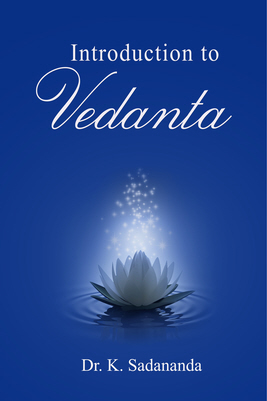
Acharya Sadananda new book

Introduction to Vedanta

Bad news: Some readers may have noticed that the series ‘Introduction to Vedanta’ by Dr. K. Sadananda disappeared from my website a few days ago.

Good news: The series has now been published by Sethu R Rathinam in a quality, 218 page paperback and as an E-book on Amazon Kindle.

From my foreword to the book:

‘An Introduction to Vedanta’ was originally serialized on the Advaitin discussion group where it was justifiably well-received. As they say in the advertising media: ‘it does what it says on the box.’ It covers all of the material needed to introduce the subject to a new seeker, clarifying aspects that could otherwise prove difficult or even dampen enthusiasm. He never talks down to his listeners but speaks directly to them using everyday examples that resonate immediately. No doubt he benefits from having been taught directly by Swami Chinmayananda and more recently by many other teachers including Swami Tejomayananda and Swami Paramarthananda, but his scientific background also brings naturally clear reasoning ability to his analysis of the subject with the result that he seems able to explain the most difficult topics.

Anyone looking for an overview of the essential teaching of Advaita could not do better than to read this Introduction.

And I consider myself fully qualified to recommend the book since I editied it myself!

The paperback or Ebook may be purchased now from Amazon:
Buy from Amazon US (book) ….. $10.00 Buy from Amazon US (Kindle) ….. $5.00
Buy from Amazon UK (book) ….. £8.00 Buy from Amazon UK (Kindle) ….. £3.82