Tattvabodha – Part 5

OLYMPUS DIGITAL CAMERAPart 5 of the commentary by Dr. VIshnu Bapat on Shankara’s Tattvabodha.This is a key work which introduces all of the key concepts of Advaita in a systematic manner.

The commentary is based upon those by several other authors, together with the audio lectures of Swami Paramarthananda. It includes word-by-word breakdown of the Sanskrit shloka-s so should be of interest to everyone, from complete beginners to advanced students.

Part 5 continues to look at the six sAdhanA-s (shamAdhi shakti sampatti), and in this part addresses uparama (observance of duty), titikshA (forbearance) and shraddhA (faith). There is also a hyperlinked Contents List, which will be updated as each new part is published.

Advaita is not Idealism

Thames(Originally posted to Advaita Academy Nov 2010)

All students of advaita know that every ‘thing’ is brahman. And they know that ‘I am brahman’. It is therefore a trivial mathematical reduction to say that everything is me. But there is a danger here. Some people conclude that the world is an appearance that ‘I’ create in some way; that the world ‘is’ because I perceive it. In this way, such people claim that advaita is equivalent to the subjective idealism of the Western philosopher Berkeley, who said “to be is to be perceived” (esse est percipi). This, of course, is a denial of the separate existence of matter and this might naïvely be thought to be equivalent to the Advaitin concept of mithyA.

(Note that the word ‘ idealism’ has nothing to do with aiming for perfection, but means that things have no reality in themselves, only existing as ideas in mind.)

From the point of view of absolute reality, there is only brahman. But then there is nothing to talk about! Such a discussion is only meaningful from the standpoint of empirical reality – our everyday world. If subjective idealism were true, the world would cease to exist when we go to sleep and would have to be created anew on awakening. Berkeley got around this sort of problem by claiming that the world continues to exist because it is perceived by God. And again, one might be tempted to claim that this parallels advaita in that we claim that the world is a creation of Ishvara, rather than the individual. This is not quite the case. In advaita, objects really do exist. Ishvara is the material cause, as well as the efficient cause of the universe. The point is that the substratum of their existence is brahman alone. In the case of Berkeley, however, the objects only exist in the mind of God, as it were.

Greg Goode, who studied Berkeley for his doctorate, believes that Berkeley’s last book may well have resolved his views to match those of advaita, but there were very few copies of that book ever made and it has not been possible to confirm this.

Advaita, then, does not claim that objects have no reality separate from the subject at the level of the world. In this sense, it is a realist philosophy and not an idealist one. This is highlighted by the following very interesting analysis, which I recently came across in one of the talks by Swami Paramarthananda on the Brahma Sutra.

Our principal pramANa, or source of knowledge, is pratyakSha or perception. When we see something for the first time, we see it in the present and, as a result of the examination of its various attributes, we conclude what it is. We can call this ‘cognition’. At some time in the future, we may encounter an object. By comparing its attributes in the present with remembered attributes from the past (as retrieved from the memory), we may be forced to conclude that this object is the same one that we saw in the past. This is called ‘recognition’ – seeing the object again. This fact of recognition is effectively a refutation of idealism (which is also the philosophy of the yogachAra or vij~nAna vAda Buddhists, a branch of Mahayana Buddhism). If the object that is seen now is the same object as the one that was seen in the past, then clearly it has a real existence and is not only an appearance in mind (which might otherwise be called a figment of the imagination).

You can read a series of essays from Chittaranjan Naik on ‘A Realist View of Advaita’.

Tattvabodha – Part 4

OLYMPUS DIGITAL CAMERAPart 4 of the commentary by Dr. VIshnu Bapat on Shankara’s Tattvabodha.This is a key work which introduces all of the key concepts of Advaita in a systematic manner.
The commentary is based upon those by several other authors, together with the audio lectures of Swami Paramarthananda. It includes word-by-word breakdown of the Sanskrit shloka-s so should be of interest to everyone, from complete beginners to advanced students.

Part 4 begins to look at the six sAdhanA-s (shamAdhi shakti sampatti), and in this part addresses shama (control of mind) and dama (control of senses). There is also a hyperlinked Contents List, which will be updated as each new part is published.

Tattvabodha – Part 3

OLYMPUS DIGITAL CAMERAPart 3 of the commentary by Dr. VIshnu Bapat on Shankara’s Tattvabodha.This is a key work which introduces all of the key concepts of Advaita in a systematic manner.

The commentary is based upon those by several other authors, together with the audio lectures of Swami Paramarthananda. It includes word-by-word breakdown of the Sanskrit shloka-s so should be of interest to everyone, from complete beginners to advanced students.

Part 3 discusses viveka (discrimination) and vairAgya (dispassion) in the ‘fourfold attainment’, sAdhana chatuShTAya sampatti. There is also a hyperlinked Contents List, which will be updated as each new part is published.

Tattvabodha – Part 2

OLYMPUS DIGITAL CAMERAPart 2 of the commentary by Dr. VIshnu Bapat on Shankara’s Tattvabodha.This is a key work which introduces all of the key concepts of Advaita in a systematic manner.

The commentary is based upon those by several other authors, together with the audio lectures of Swami Paramarthananda. It includes word-by-word breakdown of the Sanskrit shloka-s so should be of interest to everyone, from complete beginners to advanced students.

Part 2 provides an introduction to the series and begins the discussion of sAdhana chatuShTAya sampatti. There is also a hyperlinked Contents List, which will be updated as each new part is published.

Tattvabodha – Part 1

OLYMPUS DIGITAL CAMERAI am pleased to announce that Dr. VIshnu Bapat has granted permission for us to host his unpublished commentary on Shankara’s Tattvabodha.This is a key work which introduces all of the key concepts of Advaita in a systematic manner.

The commentary is based upon those by several other authors, together with the audio lectures of Swami Paramarthananda. It includes word-by-word breakdown of the Sanskrit shloka-s so should be of interest to everyone, from complete beginners to advanced students.

Here is the link to Part 1. This provides an introduction to the series and covers the Invocation. There is also a hyperlinked Contents List, which will be updated as each new part is published.

Questions by Peregrinus

[Reference: https://www.advaita-vision.org/life-is-a-dream-the-world-is-real/#comment-3266 ]

Gary Crowley 2006Dear PtN,

Great Questions!

In providing answers to those very  questions, volumes have been written, several concepts have been floated and related downstream issues have been under constant debate from several centuries (if not millennia) ago up to even now . The positions taken are so extreme and contradictory to each other that protagonists of different propositions do not see eye to eye.  Unable to wrap their minds around the Advaita concepts and unconvinced by the Advaita models, some people (Tatva vadins – followers of the 13th century Madhvacharya) ascribe as much reality to the individual as to brahman but deny the identity of the two. The fights between them and the Advaitins are legendary. And there are notorious disagreements even within the Advaitins also on subtle details of the theories they propose as answers. Hence it is quite safe to say at the outset that there are no straight answers to any of these fundamental questions, as you may be already knowing from your voracious reading. Hence, switching on all caveats and disclaimers …… …… ……, I stick my neck out. Continue reading

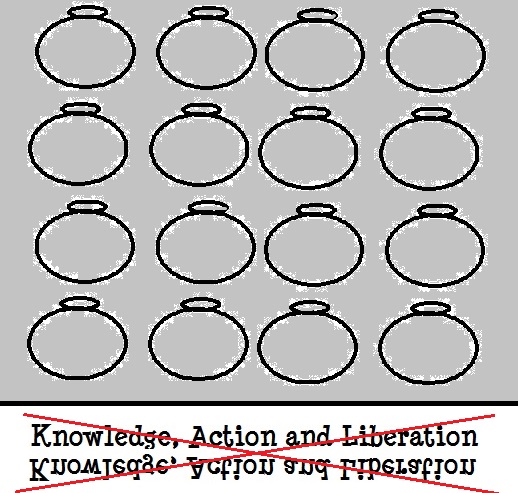
Knowledge, Action and Liberation – AV


title figure 1When Ed Witten, the legendary genius Physicist of Princeton, proposed his theory integrating the four or five disparate string theories during the mid-nineties, he called it the M-theory. He did not specify what exactly M stood for.  So Science Communicators went wild with their own interpretations. Some said M is for Mother to say it is the mother of all theories. Others said M is for Meta. Still others said M is for Membrane or Matrix. Some even suggested M is for Mystery or  Magic.

I leave it to the imagination of the reader what AV stands for in the title of this Post.

It can mean Another View, Advaita Vedanta, Alternate Version, Astonishing Vision, Absolute Veridicality or one can even split the two words and pair them to suit to their taste — like Absolute Vedanta or Another Version etc.

***

First Kudos to Dennis for a smooth and clear explication of a topic usually considered abstruse and difficult in his recent post titled “Knowledge, Action and Liberation.”  He takes off with an elan and panache that only he can. But en route he hits a patch of misdirecting metaphor. The promised destination, alas is missed! Continue reading

adhikAritva – Graduate Quals !?

Whenever I hear of ‘adhkAritva’, I am reminded of the ‘Graduate Quals’ or Prelims in the North American Universities.

Every aspiring candidate for Grad studies  has to cross these  nightmarish (for some) mandatory ‘hurdles on the course’ in order to “to continue studies at a higher level, and/or allow the student to comprehend his/her studies and see how prepared they are for the looming” super-knowledge he/she will earn.

In India, I understand, that such Prelims are introduced for admission of even Nursery class students by some elite schools to filter the mad rush of applications from the parents seeking the entry of their wards into the portals of those exclusive repositories of wisdom.

Perhaps there is a reason for all such uncanny devices of regulation and control where an ‘organized educational program’ requiring an approved Governmental Accreditation is involved

But for imparting the simple teaching that, at its core, says you are already that ‘nitya suddha buddha mukta‘ which you seek to know, do we have to have these mandatory regulations?

In fact it is said in spiritual matters that there is no teaching unless a question is asked. And it is equally true that there cannot be a fixed  teaching cast in a rigid framework of curriculum because the teaching has to be molded as a melodious tune in a waltz-like dance with the spiritual aspirant’s questions. There cannot be ‘institutionalization.’

After all, it is not about running the ‘business’ of “teaching shops” with product guarantees in a market environment. The spiritual Seekers these days come with a maturity of brain and having had varied experience in the phenomenal world. They come (mostly) with open minds to ‘question’ and are courageous to be irreverent (not impertinent).  These are not like the students in the good old ancient days when a ‘brahmachari’ is sent away to the ‘Gurukula’ at the tender age of 7-10 when even the brain cells of the kid have not yet matured, basic knowledge skills and analytical acumen are not yet learnt and the lad had to be educated even in the three R’s. Enormous times are spent in preparing their wavering child-minds to develop focus and attention, deductive and inductive logic, discrimination and discretion etc. Do we need to repeat all that on a 30 or 40 or 50 or whatever age person?

All that the advaita teaching talks  about is deconstructing the belief structures of the seeker. If the belief is in ego, egolessness is the teaching. If the belief is a hidden feeling in the nooks and corners of the body or mind, the teaching has to shine light to illuminate those hidden quarters.

On another note, it has to be said that the programs for ‘training trainers’ have perhaps a greater need for implementing stricter eligibility criteria.  The reasons are obvious. The prospective teachers have a responsibility not to mislead the eager seeker, should be able to maintain the pristine purity and integrity of the essence of the message and so on.

So steps to regulate them will hopefully help in curbing the mushrooming growth of the ‘industry’ of spiritual teaching being run on MNC marketing models, self-perpetuating their own authority and ‘brand development’ through their “Quals.”

Sanskrit for Seekers

sanskrit_for_seekers

Since you are reading this blog, you are presumably a spiritual seeker interested in Advaita. It is also very probable that your knowledge of Sanskrit is minimal or non-existent. I receive occasional complaints about the use of ITRANS – the transliterated ‘English’ form of Sanskrit words – so even that causes problems for many, let alone the original script (called Devanagari) which Sanskrit uses. So why would you want to learn anything at all about the language? Well, if you really are interested in Advaita (or Buddhism, if it comes to that), it is a fact of life that most of the original material from which these teachings derive was written in Sanskrit. Without any knowledge of the language, without even the ability to look up a word in a dictionary, you are forced to rely upon the abilities, and the integrity, of whichever author happened to ‘translate’ the original text on which he or she is commenting. I am currently writing a book on the Mandukya Upanishad and Gaudapada kArikA-s, and this has involved me in referencing many different translations of the original text. [Note that this is a good example why you need to know some Sanskrit. The word kArikA means ‘a verse, commentary or treatise’ but if you ignore the capitals and write this as ‘karika’, it means ‘an elephant’!] And it would amaze you how it is possible to render quite different meanings. Whether this is because of language ability or because the author has a vested interest in propagating a particular point of view is not always possible to say. What I can say, is that is essential to be able to check specific words from time to time to ensure one gleans original intent rather than a modern, possibly biased interpretation. And, before I continue, here is a confession from the introduction to the book: Continue reading