
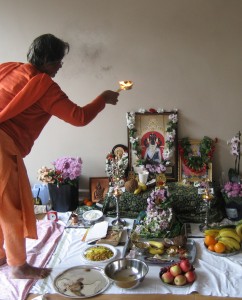
Īśvara (The Lord), prayer and worship 2/2

worshipSee Part 1

In the previous extract from her talks to London students, Swāminī Ātmaprakāśānanda, laid out a more liberating vision of Íśvara – liberating in the sense that it gets away from the old man in the sky image or some force-field etc. From the perspective of traditional advaita vedānta Íśvara is seen as the sum total of the universal natural law and order.

“Every natural law is Īśvara. The law ordaining grace is Īśvara. Action is Īśvara. The results of actionis Īśvara. Merit is Īśvara. Demerit is Īśvara. Pain is Īśvara. Pleasure is Īśvara. Right and wrong action is Īśvara. Punishment for the wrong action is Īśvara. Good is Īśvara. Evil is Īśvara – don’t say that evil is not God. Everything is Īśvara.”

The universal law and order is what determines the fruits of actions. You can’t see this with physical eyes, but you can understand the laws being manifest. Anything done, knowingly, unknowingly, intentionally, unintentionally – however it is done – any action has to result in a reaction, has to cause some effect.

If this be the case, what is the role of prayer or worship? With simple logic and reason Swaminiji once more breaks down resistance to these activities… Continue reading
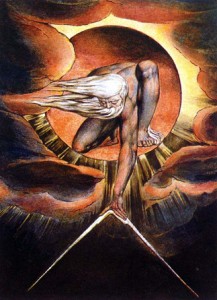
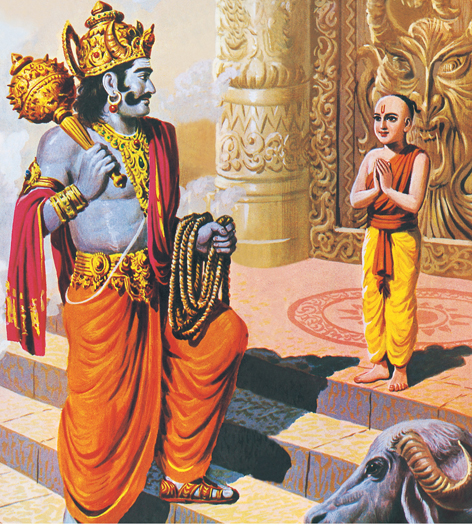
The Changing World – Q.337

Q: Since brahman is non-dual, attributeless, changeless, and eternal, and since brahman is everything, it must follow that everything is also non-dual, attributeless, changeless, and eternal. So how can it be that we experience duality, attributes, change, and impermanence in the world? How can the changeless manifest change, even if this change is in appearance only (mithyA)? How can there be anything but the “perfect” unchanging oneness if everything is this oneness?

A (Ramesam):  The manifestation of Consciousness (= Brahman) as the world (multiplicity) in a sense is an “explanatory gap” from a strict rationalistic point of view. It is, perhaps, the ‘weakest link’ in the Advaita siddhanta (theoretical framework).

Having said so, there are a number of ways to resolve the ‘One –-> many’ problem. I shall list here several metaphors just to answer the “appearance” of the world part without getting into the bigger questions related to why and how of “creation” itself (origin of the universe). Continue reading

Īśvara (the Lord), prayer and worship 1/2

http://earthstation1.simplenet.comOne of the more difficult ideas for some Western seekers to accept is God, the Lord. The usual picture is of a highly judgmental white-bearded figure, sitting in heaven, dispensing punishments and rewards. God, in this picture, is all-controlling, all-powerful and thus I am small and insignificant and a mere pawn in his game. This sort of idea of the Lord is also prevalent in the East. For the godless, prayer and worship obviously have no place, and for the theists, prayer and worship are ultimately to secure a place in heaven or worldly comforts and pleasures. In one of her talks to her London students, Swāminī Ātmaprakāśānanda put all of this into perspective so that anyone with an open mind could get a wider, more liberating vision of these important and vital matters. This part deconstructs the concept of Lord…

What is this world? The world is nothing but a world of objects – different objects, perceptible through different senses. You can reduce the whole universe into five types of objects, perceptible through the five different senses. Every object becomes as good as non-existent if it is not perceived by the appropriate sense organ.

Despite its size, the universe would be as good as non-existent if you didn’t perceive it. The universe has the status of being existent only when it is perceived by you. The Gītā says: “They say the sense powers are superior (to sense objects); the mind is superior to the sense organs; the intellect is superior to the mind. Whereas the one who is superior to the intellect is He (ātmā).” (BhG 3.42) Continue reading

Vision Of Truth (sad darshanam – Part 6)

sarUpa budhirjagatIshvare cha

sarUpa dhIrAtmani yAvadasti

arUpa Atma yadi kaH prapashyet

sA dRRiShtirekA anavahirhi pUrNA


sarUpa budhiH = the notion they  have a form; jagatIshvare cha = in the world

and Ishvara; sarUpa dhIH = notion that Truth has a form; Atmani = in one self;

yAvat = as long as; asti = is there; arUpa Atma = if self iswithout form; yadi = if

(one has knowledge); kaH = who;  prapashyet = sees; sA dRRiShtiH = that

vision; ekA  = alone; anavadhiH  = infinite; hi = indeed; pUrNA = full


As long as, in oneself one has the notion of being with form, i.e. as long as one is identified to the body mind, so long, the world and Ishvara also will be considered to be with form.  If the self is without form, who sees? That vision, indeed is infinite and full.


It is the identification with the body which gives rise to different notions about oneself and the world. If one considers oneself limited to the body and mind then, naturally, the world and Ishvara are separate from him. Being separate, they are then limited and hence with form. So, a person having the wrong notion of oneself being the body will see a world which is limited.
Continue reading

Kaṭha Upaniṣad Review

The Kaṭhopaniṣad with Śaṅkarabhāṣyam
Based on Swami Paramārthānanda’s lecture
Compiled by Divyajñāna Sarojini Varadarājan

The main teaching of the Kaṭha Upaniṣad is Death’s response to the request by a young seeker, Naciketas, for Self-knowledge. Any serious student of advaita will want to know the answer as this is our own question too: using logic we may well be able to arrive at what we are not, but we still need to know clearly what we are. For this reason this book by Smt. Sarojini Varadarajan, based on Swami Paramarthananda’s traditional unfoldment of the Upaniṣad and Śaṅkara’s commentary theron, is a valuable addition to any seeker’s library.

One way of approaching this Upaniṣad is to note that Naciketas standing at Death’s door (literally) remained steady-minded enough to press his request for Self-knowledge – in spite of Death’s initial resistance to answer. And, by the end of the Upaniṣad, after Death finally gave in to the young man’s request, Naciketas ‘became pure and immortal’. Is it really possible that we can also reach the same point by closely following the teaching that Naciketas hears, especially as we are living lives grounded in fear? Continue reading

Beyond Stillness – Q. 331

Q : I am a “solo practitioner” of the advice of Ramana Maharshi, as I understand what I absorb of it. My enquiries move between an apophatic and cataphatic flavor.

 When I do this, I am moved to an absolute stillness. Upon ‘coming back’, there is a sensation of still not passing the barrier of stillness. I am not sure how to continue. Should I continue to practice just like this? Until I have destroyed differentiation? Should this be a lesson on what the real really is?

[Note (Dennis): Here are the meanings of those terms from my Oxford dictionary –

apophatic /ap’fatk/ – adjective Theology (of knowledge of God) obtained through negating concepts that might be applied to him. The opposite of cataphatic.

cataphatic /kat’fatk/ – adjective Theology (of knowledge of God) obtained through defining God with positive statements. The opposite of apophatic.] Continue reading

Vision Of Truth (sad darshanam – 5)


Arbhyate jIva jagat parAtma

tattvAbhidhAnena matam samastam

idam trayam yAvadahamatiH syAt

sarvottamASham mati shUnya niShThA—4


Arbhyate = begins;  jIva jagat parAtma = divisions of individual, world and Ishvara; 

tattvAbhidhAnena = principles of the three tattvAs;  matam samastam = all philosophies; 

idam = this; trayam = three;  yAvat = as long as; ahamatiH = ‘I’ notion; syAt = is there;

sarvottamA = the greatest of all; aham mati shUnya = devoid of ego; niShThA = 

abidance; 


All philosophies begin based on the principles of the three divisions of individual, world and Ishvara. The abidance in self, devoid of the ego is the greatest abidance of all.


All religions are based on the three divisions of individual, total and world. These religions culminate in some philosophy which again is based on this triad only. Theology sticks to these divisions and does not attempt to go beyond. Continue reading

Non-dual Reality – Q. 328

Q: Can one ever KNOW that reality is non-dual?

A (Ramesam):

(i)   YES, The moment you can grasp tight your reflection in the mirror!!! 
(ii)  No, you cannot know it like you know the salary you get.

(iii) Yes, you cannot ever NOT know it; what all IS, is your perception alone.
(iv)  No, if you place yourself aloof trying to know it as a distant object.

(v)  Yes, you know It in your deep sleep.
(vi)  No, if you want to measure and compare to duality. Continue reading

Vision Of Truth (sad darshanam – 4)

sarvairnidAnam jagatohamashcha

vAchyaH prabhuH kashchidapAra shaktiH

chitretra lokyam cha vilokitA cha

paTaH prakAshopyabhavat sa ekaH—3

sarvaiH = by all; nidAnam = cause;  jagataH = of the world; ahamaH cha = and of ‘I’;

vAchyaH = is (popularly accepted); prabhuH kashchit = somemLord; apAra shaktiH =

limitless power; chitre = picture;  atra = here;  lokyam cha vilokitA cha = seen and the 

seer; paTaH = canvas; prakAshaH = light;  abhavat = became; saH ekaH = that one.


The cause of the world and the ‘I’ (individual) is popularly accepted by all to be some Lord of limitless power. Here, in this picture, that one has become the seer, seen, the canvas and the lights also.


Even as children, we have a curiosity to know how the universe began. If the big bang occurred in time, there would have been time and space already; even otherwise who created that dense matter that made a bang. Such curiosity to go to the root is natural to a thinking person.

Continue reading

brahman and AkAsha – Q. 326

Q: My mind has this tendency of creating doubts every once in a while and I was able to find answers for every doubt I’ve had through contemplation, logic and reasoning. But not this one.

Before I begin, please understand that my mind simply will not accept anything that cannot be proven to it through logic and reasoning, which is why ‘Sruti says so’ has not satisfied my mind.

So, my question is, how can we say that Brahman is the cause of Akasha (I’m referring to the Vedic element which is the substratum of everything that exists) and not Akasha itself? How do we know that consciousness itself is simply not the Akasha our bodies are made of which happens to be a conscious entity?

I understand that reality is non-dual, but Akasha being omnipresent (basis of all things), omnipotent (since it is Akasha that takes all forms, it can be said to be the cause of everything), omniscient (if we cannot deduce that Akasha is an unconscious entity, it would become omniscient), infinite, eternal and able to take forms without changing its own nature makes it no different from what is described as Brahman. Continue reading