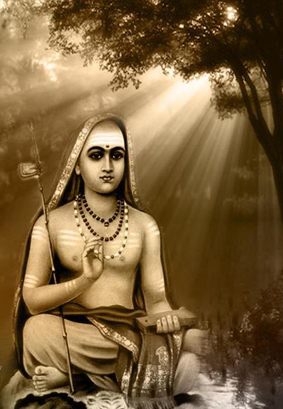
Does spiritual practice empower the ego?

Does sAdhana (spiritual practice) empower the ego?
An essay by Atman Nityananda

If you abandon sAdhana in order to avoid this sAdhana-ego you are left with nothing except egoism. Egoism plus sAdhana is better than egoism minus sAdhana.
~Swami Sivananda

Liberation is the dissolution or the death of the ego which is a field of energy crystallized in our bodies. Liberation has nothing to do with an enlightened ego. There cannot ever be an enlightened or liberated ego.

Liberation is neither for the ego nor for the consciousness which is already free. Liberation is for the mind. When the mind after intense spiritual practice (sAdhana) becomes free from all egoistic tendencies, rajas and tamas then liberation takes place for none and the mind celebrates its unity with the spirit or Consciousness.

But some neo-advaita or non-teachers as they call themselves like Tony Parsons claim that the spiritual practices empower the ego instead of dissolve it. They claim that is impossible the ego to be eliminated by sAdhana by the very fact that the sAdhana is done by the ego. They say that sAdhana and the dissolution of ego is a contradiction because the ego itself is engaged in sAdhana and this keeps the ego alive. Continue reading

Q. 383 – Alzheimers

Q: Does an enlightened one stay enlightened when he gets Altzheimer’s disease? You seem to be saying that enlightenment is knowledge, self knowledge. Can one loose that knowledge again?

A (Dennis): This is the sort of question that first requires very careful definition of terms. What do you mean by ‘enlightened’? Who is the ‘one’ you are asking about? Who gets Alzheimer’s? Who loses the knowledge?

Do these questions answer your question? Have you read my ‘chidAbhAsa’ and ‘manonAsha’ articles?

A short answer might be that body, mind, intellect and world are all mithyA. Consciousness is the only satyam. And Consciousness does not get Alzheimer’s.

I Am Awareness

An article by Eaden Shantay

shantay2

Experience is awareness cast through karma.

Every sensation, emotion and thought is the direct result of past karma (action). In each incarnation we bring forth parabdha karma – that portion of sanchita karma, our total karmic bank account, meant to be experienced, learned from and neutralized in this life.

Think of parabdha karma as images on a film strip, vasanas (impressions) in consciousness left from past action. The light of true self, awareness, then shines through these impressions, creating a three dimensional, five sensory experience called me and my life.

Like any good movie, it’s easy to become hypnotized by the drama and lose touch with what is real. In realizing we are not the projected story but the awareness which animates it, we release the life or death grip we have on moment to moment experience. This is the process of dis-identification or non-attachment the Buddha spoke of.

Imagine the sky with clouds moving through it. The sky is a metaphor for awareness and clouds, the objects of sensation, emotion and thought. In meditation we practice welcoming the clouds, blessing them and then bringing our attention back to the breath. In time, we even let go of the breath and dwell in the space between the clouds – awareness, a reflection of our true nature appearing in the mind. Continue reading

Reflections on Body-Mind and Liberation

shankaraThere has been much healthy debate recently on the Advaita Vision Blog about Liberation, who or what is a jnani or jivanmukta, and what it means to follow traditional Advaita. The theme of this post is that we cannot resolve such questions without first gaining a clear understanding of the body-mind and its role in the context of Liberation. What follows are some reflections inspired by a spirited discussion with Ramesam, with due credit to him for stimulating many of the thoughts below. Any errors or possible misunderstandings are entirely my fault. Or perhaps not, since “Words fall back from it.” Continue reading

Language and Teaching

I think we have probably had enough discussion on the ‘Experience versus Knowledge’ question. I cannot imagine many visitors wanting to read through 50+ comments on the topic! So here is an article that I have just had published in the Newsletter of Ramana Maharshi Foundation UK. It is on a subject closely related to the above question and indeed was touched upon in some of the comments…

Language and Teaching

Language is something we tend to take very much for granted. When someone says something to us, and providing we recognize the words, we think that we understand what it is that the speaker intends to communicate. And we respond appropriately. This is often not verbal – when it is, there is a subsequent opportunity to resolve any misunderstanding. Our response is usually to form an immediate mental opinion or judgement upon what has been said. And this is probably not merely a spoken or unspoken comment upon the particular topic expressed but also upon the person who made the statement. This all happens instantaneously and automatically. Thus it is that it can actually be worse for our comprehension if we already know something about the topic to begin with than if we are completely ignorant. What we take in will be significantly coloured by what we believe to be our prior knowledge (which may actually be ignorance). Continue reading

Q.381 – Knowledge, belief and experience

Note: This discussion follows on from the last question on ‘Finding a Teacher’ (apart from the introductory paragraphs).

Many seekers think that the essence of enlightenment is ‘experience’; that they need to actually experience something for themselves before they can be regarded as enlightened. In line with this, they denigrate the notion that a teacher can convey whatever it is that the seeker needs by simply talking to them, answering questions and so on. Even worse, they feel, is the idea that enlightenment can be gained by reading a book!

Maybe the term ‘Self-inquiry’ is largely to blame for this misconception. Seekers attached to this idea think that subjecting their own experiences (perceptions, ideas, theories etc) to close examination is somehow the key.

Whatever is the case, such seekers are seriously confused and need to distinguish carefully between ‘experience’, ‘belief’ and ‘knowledge’. Below I provide a question and answer discussion I had early last year with a reader on this general subject. But first I would like to give an example from my own experience, which (for me) provided a very clear distinction between these three. (And I refer to this example in the question and answer session.)

The experience occurred about 30 years ago. You will have to bear with me as it takes a little while (and two diagrams!) to explain. Continue reading

Q.379 – Practice, Enlightenment and Reincarnation

Q: My understanding is that the purpose of spiritual practice is to purify the intellect so that it ‘reflects’ Consciousness without distortion. This enables the mind to recognize the delusion caused by ahaMkAra. This would mean that ‘enlightenment’ is a function of the mind. Is this correct?

If this is so, it would seem to mean that any ‘benefits’ gained from enlightenment would only apply to this body-mind, in this life. Is this so?

Scriptures indicate that one may have to undergo many lives before gaining mokSha, and suggest that fruits of previous lives accumulate to enable this. But, if enlightenment is an event in this mind, how can previous lives be of any benefit? Is there something in the mind that is ‘carried over’ into future births?

A (Ramesam): The most fundamental aspect of Advaita teaching is that an individual (jIva) is non-different from the Supreme Self (brahman). It follows, therefore, from this that a seeker is already of the nature of ever pure, all-knowing and liberated entity. As Gaudapada explains in his kArikA on mANDUkya Upanishad, by Its own freedom, brahman takes the form of an individual (and the world) and there is neither a creation nor liberation, neither a seeker nor something to be sought. Continue reading

dUra

VenicedUra

Continuing the reposting of blogs from Advaita Academy, here is one from 2010. It is interesting to note that I have not further encountered this word since then! So it was a one-off. Nevertheless, it remains an interesting one and has a useful message.

I encountered a new Sanskrit word recently and its use and interpretation are quite enlightening. No doubt we are all familiar with those statements in the Upanishads which extol the extreme virtues of brahman. For example, in the Katha Upanishad, we have “the self is lesser than the least, greater than the greatest” (I.ii.20). And in the Isha Upanishad, we have “Unmoving, it moves faster than the mind” and “unmoving, it moves; is far away, yet near; within all, outside all” (verses 4 and 5). (These quotes are from ‘The Ten Principal Upanishads’ by Shree Purohit Swami and W. B. Yeats – a poetic rendering.) Then again, in the Kaivalya Upanishad (v.20), it is said “I am smaller than the smallest; I am the biggest, I am everything…Continue reading

Q. 377 – Desire and suffering

(Also discusses Buddhism versus Advaita; analysis versus experience; need for practice)

Q: Your work is both beautiful and rigorous, and I’ve appreciated your continuous efforts to continue the much-beloved tradition of Advaita Vedanta.

As I consider devoting myself to the path of Advaita Vedanta, I find that I keep coming up against a few constant, nagging protests:

First, it seems that the tradition and methodology (although I also assume that there is quite a lot of variety of how Vedanta is taught and realized) is overly academic and scholastic, at least as I view it from the information that I’ve gleaned during my research.  The unfolding of the teaching of Vedanta seems to leave the student engaging in a lot of analysis, rather than a deep exploration of how they genuinely experience the world, which lacks transformative power because it remains something objective.

Second, according to some of the sources that I’ve gleaned, it seems to place Vedanta on an extremely high pedestal, as something engaged in only following years of other preparatory practices.  But modern practice appears to demonstrate that such preparation, while helpful, is not necessary.  I cite websites like “Liberation Unleashed” and Scott Kiloby’s excellent work which show that directly exploring and inquiring into the truth of statements like, “All there is is pure awareness,” etc., can still be highly transformative outside of the context of a more robust regime of spiritual purification and development.

My fear is that if I follow the traditional route, I will end up entangled in these preparatory practices.  I’ll just be getting the appetizer for years before getting the meal, in other words, but, in my opinion, why wait?

Is this perception true (given that there will be a lot of diversity)?  Do most AchArya-s make their disciples engage in such practices for prolonged periods of time before discussing Vedanta?

I have heard you and many other teachers in the traditional Advaita lineage say things like, “Unless you have a very pure mind…” or “Unless you are highly developed…”  etc., the practice of Vedanta will be fruitless.  But, if you read the logs, for example, of the website “Liberation Unleashed,” you will find some very impure people – depressed, addicted, desperate, you know, the usual seeker lot!, who come out transformed after only a few days of directly looking into their experience.

I appreciate your thoughts on this and your generosity in helping so many confused seekers. Continue reading

Q. 375 – Conditions affecting next life

Q: I agree that Reincarnation, the next life, isn’t real. But it’s as real as this life…and, for most of us, this life seems pretty real, even if we know better.

And, as we all know, very, very few people are going to achieve Enlightenment (Liberation, Realization, Moksha) in this lifetime.

For the above 2 reasons, I suggest that Reincarnation is a reasonable thing to be concerned about and to ask a question about. That’s what this question is about. I’ll speak of Reincarnation as if it’s as real as this life seems.

 It’s been said that one’s next incarnation depends greatly on one’s thoughts and state in their last moments of this life. I hope that isn’t true, because no one can know what condition they’ll be in when they’re dying. I mean, we aren’t always in the best of condition when we die, are we.

 A person, at death, might be delirious, or heavily sedated at a hospital. What then? How does that affect that person’s next life?

 Has there been discussion, from theory, regarding how this life—and, in particular, a person’s condition in the last moments of this life–affect that person’s next life?

Responses from , Sitara, Venkat and Dennis Continue reading