
 Ever since I began the site at advaita.org.uk, I have been using my own photographs (principally digitally enhanced flower photos) to illustrate the pages. Photography has been one of my main hobbies since early childhood and I have thousands archived. I recently started to build a portfolio of the best of these at 500px and I will be updating this on a regular basis, adding those that are voted for by the 500px community and removing the low-scoring ones. Please feel free to visit there to browse when you want a break from the mental struggle with Advaita! I have retained the Advaita VIsion logo and also advertize my books there! The portfolio is called Advaita Vision Perspectives. There is a new menu item at the top right to ‘Photos‘.
Category Archives: Dennis
Brahma Sutras
 (Originally posted to Advaita Academy Oct. 2010)
Most readers of this site will certainly have heard of this text- the third branch, nyAya prasthAna, of the source for the teaching of advaita. (The other two branches of the so-called prasthAna traya are the Upanishads or shruti, and smRRiti, of which the most important is the bhagavadgItA.) But few have probably read it. You may have attempted to do so but been quickly put off by its seeming complexity. This is not surprising!
The basic text was written by vyAsa and otherwise known as bAdarAyaNa. And ‘text’ is not really the right word. It is actually written in short, numbered sutras whose meaning is often obscure, to say the least. The practice of the time required that writers of such works used as few words as possible – and vyAsa must have been one of the most proficient! The reader is expected to remember what has gone before and fill in the appropriate words as necessary. He is also expected to know the Upanishads and other works off by heart so that the relevant references do not have to be spelled out. Continue reading
Waking World is also Unreal
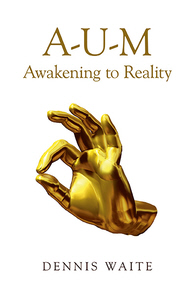 Dreams are a powerful metaphor in Advaita. The Yoga Vasishtha is perhaps the best known book to utilize them extensively but probably the earliest teacher to do so was Gaudapada in his kArikA-s on the mANDUkya upaniShad.
He effectively says that the waking state is unreal, like dreams, ‘because we experience it’. This is anvAya-vyatireka logic: we experience objects in dreams, and they turn out to be unreal; therefore the objects we experience in waking are also unreal.
This does not sound very convincing and there are various arguments that we can raise to object to the analogy. Gaudapada raises them for us, in case we can’t think of them all! Here is the third argument he puts forward. It is an extract from my forthcoming book, which will be published 25th September 2015.
Third objection to world being unreal
And this leads on to the third objection namely that, whereas the dream world is subjective, the waking world has objective reality. It is experienced as external to ourselves, whereas the dream takes place in our mind (K2.9 – 10). But this notion suffers from the same confusion as before. We only recognize that the dream world is ‘in our mind’ when we are awake; at the time of the dream, it is just as much ‘external’ as is the waking world when we are awake. We might as well say that the waking world is really non-existent since it disappears when we are in the dream or deep sleep states. At the time of the dream, I experience external objects and events in just the same manner. Their illogicality or even impossibility only becomes apparent on awakening. Continue reading
Panchadashi and Prarabdha
 (Another salVo in the ongoing battle over jIvanmukti, j~nAna phalam, pratibhandaka-s and prArabdha – see Knowledge, Action and Liberation and Knowledge, Action and Liberation – AV)
The following is an extract from Chapter 7 of Vidyaranya’s Panchadashi:
indra-jAlam idaM dvaitam achintya-rachanAtvataH
ityavismarato hAniH kA vA prArabdha-bhogataH
[7:174] Never forgetting that the world is unreal and its cause unascertainable, the wise man stands secure from harm in the midst of the enjoyment of his fructifying karma.
nirbandhas tattva-vidyAyA indra-jAlatva-saMsmRRitau
prArabdhasyAgraho bhoge jIvasya sukha-duHkhayoh
[7:175] The function of knowledge of the real is to promote (constant) remembrance of the fact that’ world is unreal; that of the fructifying karma is merely to provide the jIva with experience of pleasure and pain.
vidya-rabdhe viruddhyete na bhinna-viShayatvataH
jAnadbhir apyaindra-jAla-vinodo dRRishyate khalu
[7:176] The knowledge of the spiritual truth and the fructification of prArabdha karma refer to different objects and are not opposed to one another. The sight of a magical performance gives amusement to a spectator in spite of his knowledge of its unreality. Continue reading
Knowledge, Action and Liberation
 Most readers will be aware of the Brahmasutras – the third ‘leg’ of the prasthAna traya (the threefold set of scriptures that constitute the authority for Advaita – and some will even have read them! And you may also know that the first, famous sutra is athAto brahma jij~nAsA – Now, therefore, an enquiry into Brahman. It is the claim that Brahman forms the subject matter of Vedanta and has to be enquired into if we are to gain Self-knowledge.
The author of the Brahmasutras is said to be vyAsa, also known as bAdarAyaNa and the purport of the work is to summarize, in an extremely abbreviated form, the philosophy of vedAnta, showing how this naturally derives from the (last portion of) Vedas. (Of course, this does not mean a summary of Advaita. Others have written commentaries on the Brahmasutras and shown how it is commensurate with the philosophies of dvaita and vishiShTAdvaita.)
What fewer readers will know is that there is a similar (much longer) work, called the pUrva mImAMsA sUtra-s, written by the ‘father’ of pUrva mImAMsA philosophy, Jaimini. And, surely not coincidentally, the first sutra in this work is athAto dharma jij~nAsA – Now, therefore, an enquiry into dharma. This makes the claim that dharma forms the subject matter of the Vedas and has to be enquired into if we are to gain liberation from saMsAra. The word ‘dharma’ is often translated as ‘duty’ and the meaning of this word relates to what we ought to be doing with our lives. Their claim is that knowledge is useless, since it cannot produce any benefit. They utilize only the first part of the Vedas – the karma kANDa – believing that only actions can achieve anything and that, consequently, we must assiduously follow the injunctions, rituals and meditations prescribed there in order to attain liberation at some point in the future.
Traditional Path
- Once self-ignorance is admitted as the problem, then it follows necessarily that self-knowledge is required to remove it. In turn this implies the need for a teacher or material to impart that knowledge and consequently, effectively a path and a seeker etc. We do not have any sense organ for ‘self-knowledge’. All of the usual pramANa-s only provide information about the world of facts, observations and information (which includes our body and the subtle aspects of thoughts and emotions).
- The seeker might well ask why it is that a sampradAya teacher should be better or more worthy of listening to than the independent teacher. The answer is simple – authority (in the sense of proven to work) and training. Why should one pay more attention to the claims of one ‘ordinary person’ than another? If a totally unqualified teacher says ‘This is it’ and my own experience tells me that “no it isn’t”, who is right? Should I not give more credence to first-hand experience? On the other hand, if a teacher is able to say “this is what my teacher told me” and so on, back down a noble line of sages to the shruti itself, then that is worthy of attending to.It might be said that the traditional path is a well-worn one and we are therefore far less likely to stray, whereas the neo-advaitin path is, by its own admission, no path at all.
Enlightenment: The Path through the Jungle, Dennis Waite, O-Books. ISBN: 978-1-84694-118-4. Extract Link
Buy from Amazon US, Buy from Amazon UK
What is Brahman? (Part 4)
Leo Hartong also uses the metaphor of clouds, as thoughts, in the blue sky of ‘I am’ awareness:
“Ramana Maharshi recommended that one investigates by asking the question ‘ Who am I?’ When asked who you are, there might be a hesitation as to what to answer; but when asked if you exist, there is no such doubt. The answer is a resounding, ‘ Yes, of course I exist.’ When the answer to the first question is as clear as the answer to the second question, there is understanding.
“The realization is that both questions have in fact the same answer. That which is sure of its existence –the innermost certainty of I Am- is what you essentially are. In other words: I Am this knowing that knows that I Am. The Hindus say Tat Tvam Asi (Thou Art That). In the Old Testament, God says, ‘ I Am that I Am.’ This undeniable ‘ I Am’ is not you in the personal sense, but the universal Self. Ramana Maharshi called the fundamental oneness of ‘ I Am’ and the universal Self ‘ I-I.’ Continue reading
A Comparison of Bhagavad Gita Versions
 There are very many versions of the Bhagavad Gita in print, although you will have to look to Indian bookstores to obtain most of these. This can be very worthwhile. Not only are they a lot cheaper there but it is not necessarily the case that the best versions are those which are most popular and are therefore available through Amazon.
You really need to look at each of them yourself to decide which ones appeal most. I can make a few general observations but only you know what your priorities are. (It goes without saying, of course, that the Bhagavad Gita is a ‘must read’ for anyone seriously interested in Advaita!) If you want to see original Devanagari, you are restricted in choice. If you want Romanised transliteration, again not all will provide this.
If you want word-by-word translations, only a few give this (see Refs. 1 – 3 below). If you are interested in the Sanskrit – parts of speech and which verses contain which words, you want Ref. 16 (but this contains neither the text nor a commentary).
If you want the most comprehensive, understandable commentary and expense and time are no hindrance, then Ref. 15 is a no-brainer!
Finally, there is the all-Devanagari version with Shankara’s bhAshya (Ref. 18). This is a huge, hardback book, beautifully produced but, of course, totally useless unless you can read Sanskrit very well indeed. I have a spare copy of this and hereby offer to send it to anyone in the UK free of charge (or anyone elsewhere in the world if they pay the postage) in exchange for the following: you agree to be available to provide a literal translation of any (short) text by email from time to time if I need this for my writing. Email me if you are interested in this offer. Continue reading
What is Brahman? (Part 3)
The superficially contradictory ‘descriptions’ of Brahman as ‘neti, neti’ and ‘sarvaM khalvidaM brahma’ [all this is verily Brahman] are brought out in adjacent verses of the Atma bodha, attributed to Shankara (Swami Chinmayananda translation):
- Brahman is other than this, the universe. There exists nothing that is not Brahman. If any object other than Brahman appears to exist, it is unreal like the mirage.
- All that is perceived, or heard, is Brahman and nothing else. Attaining the knowledge of the Reality, one sees the Universe as the non-dual Brahman, Existence-Knowledge-Bliss-Absolute.
Here, it is first stated that the universe is not Brahman. But it is also said that any other appearance will be unreal, like a mirage. The mirage is a powerful metaphor because the water that appears is in reality only the sand upon which the appearance takes place. I.e. sand is the substratum of the water appearance, just as Brahman is the substratum of the world appearance. It is then stated that all appearances are, in fact, nothing other than Brahman. But this is realized, of course only upon enlightenment. Until then, the world remains very real. Similarly, to the seeker after water in the desert, the mirage is very real. Continue reading
What is Brahman? (Part 2)
Positive ‘definitions’ of Brahman are given by such expressions as satyam j~nAnam anantam brahma, in the Taittiriya Upanishad. The words are to be understood as svarUpa lakShaNa, i.e. a definition that differentiates what is described from all other objects. The example often given for svarUpa, which literally means ‘own form or nature’ is sweetness, as being the svarUpa of sugar. But the word ‘sweet’ does not actually convey the quality of sweetness; it only works if we have had the experience of tasting something that is sweet – then there is no problem at all. In the case of Brahman, however, we cannot have the experience of Brahman because it is not an object of experience. Our understanding of Brahman comes from the shruti.
In the expression, Brahman functions as the noun with satyam, j~nAnam and anantam functioning as adjectives. But, as already noted, Brahman cannot have any attributes so that we cannot really use adjectives at all. Therefore, instead of the noun-adjective relationship [visheShya-visheShaNa], this is what is called a lakShaNa-lakShya sambandha [relationship between an indirect pointer and the thing to be defined]. anantam means eternal, limitless; satyam incorporates the ideas of truth, reality and existence, and j~nAnam means knowledge. But a simple translation will not do – this is where the guru needs to come in to ‘unfold’ the explanation step by step. satyam, for example, has to convey the meaning of absolute existence; anantam, free from all limitations of time and space; never changing; j~nAnam, pure awareness, consciousness (neither knower, known object nor means of knowledge), and again unlimited. And so on! Continue reading