The Relevance of Kant’s Transcendental Idealism to Advaita Vedanta, Part I

This the first of a three-part series discussing the relevance of Kant’s philosophy to Advaita. Kant-CPR
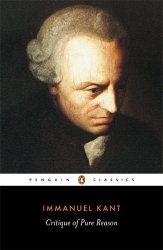
Immanuel Kant published the first edition of The Critique of Pure Reason in 1781, with an extensively rewritten second edition appearing in 1787. Between those editions he also published a shorter “easier” introduction to his philosophy, Prolegomena to Any Future Metaphysics (1783). With the later appearance of The Critique of Practical Reason (1788) and The Critique of Judgement (1790), Kant had articulated a complete system of philosophy of incredible depth and complexity, wholly original and unique in its solution to the age-old problems of reason, ethics, and logic. So great was the importance of this Prussian professor, we may justifiably think in terms of pre-Kantian and post-Kantian philosophy. Many have disagreed with his conclusions and offered refutations on one level or another, but all who have come after Kant have been required to address him. Continue reading

Vision Of Truth (sad darshanam Part 23)

न वक्ति देहोSहमिति प्रसुप्तौ

न कोSपि नाभूवमिति प्रवक्ति

यत्रोदिते सर्वमुदेति तस्य

धियाSहम: शोधय जन्म देशम् – २५

na vakti dehaH aham iti prasuptau

na kaH api na abhUvam pravakti

yatra udite sarvamudeti tasya

dhiyA ahamaH shodhaya janma desham – 25


na = does not; vakti = says; dehaH = body; aham iti = “I am”; prasuptau = in sleep

na = does not; kaH api = no one; na abhUvam = “I was not”; yatra udite

= upon the rise of which; sarvam udeti = everything rises; dhiyA janma

desham shodhaya = through the intellect discern the birthplace of ‘I’.

The body does not say, I am. No one says, I was not in deep sleep.

Through the intellect, discern the birthplace of I, upon the rise of which

everything rises.


The body does not claim, “I am”. It does not have the sentiency to say so. Also,the AtmA does not say, “ I am”, since such a statement is an action, and action  is a modification. AtmA is beyond the realm of change, hence, AtmA does not say, “I am”. Who then claims this? It is the ahankAra. This ahankAra is dormant in sleep.

On waking up, the ahankAra is manifest and it starts functioning. When it is dormant,the door to the exterior world is closed. On its activation, the gross and subtle worlds are known. This ahankAra alone makes claims of ‘I-ness’ and ‘mine-ness’. The oscillating ahankAra, changing all the time cannot be the absolute truth. The basis on which it exists, is the truth. This basis, is the AtmA. This alone is to be known. This is ‘be-ing’. Continue reading

The ego, the ‘soul’ and metaphysics – 6th and final part

EXPLANATION
.
It was made clear at the beginning of this essay that what we mean by the “ego” (the “personality”), it being no more than a delusion, a false image or projection, cannot be a subject, except in a dream -and is itself a “dream”. We described the fight of the “ego” in its efforts at reaffirmation as an “unholy war”. That it is obviously the soul, the person, who is the subject of the delusion, the “dream” ; his/her’s the “holy war”, the suffering and the required effort towards reawakening (is not life itself a dream? –it is so for “fallen man”). The soul’s, the person’s destiny – and this is conditional according to the monotheistic religions – is to finally be “reabsorbed”, united or reintegrated , and thus liberated. Liberated not from itself (its Self!) by itself , not even from life, but from a false image of itself and of life (“the world”) due to ignorance (avidya).

It is thus through ignorance, passion and attachment, that individual man (non-gender term) has “become” an “ego”, a “dreamer”, until, or unless, he wakes up. Existence itself is a ‘becoming’, not ‘being’, according to Plato and all traditional thinking. This subject is otherwise inexhaustible, and here we may remember the saying of Râbi’a quoted at the beginning, as well as the utterances of so many other sages and mystics. Continue reading

OM

om copy

Everyone (reading this blog!) has heard of the syllable ‘OM’. The Devanagari for this is the immediately recognizable ॐ but it is made up of three letters, a, u and m. Thus, it could actually be represented as औम् and the ITRANS, instead of being written OM, would be ‘aum’.

How OM can function as a symbol for brahman or the entirety of creation is elucidated by Gaudapada and described in my book ‘A-U-M: Awakening to Reality’. Here is the section that describes the Sanskrit aspects:

*****

The spoken word ‘OM’ is actually Sanskrit. The written ‘OM’ is its ‘Romanized’ representation (i.e. using the English alphabet). In its original language, it actually looks like this:

If you have ever been to India, this character will be very familiar and it also frequently appears on New Age items and jewelry. But this is in fact a special, shorthand representation and the word is actually formed from three separate letters. (Only this word, in the entire language, has a special symbol – this is an indication of how important it is considered to be.) Continue reading

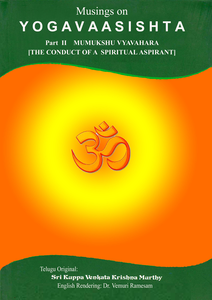
Serialization of Yogavasishta 3

yogavasishta2Professor Sri Kuppa Venkata Krishna Murthy, Chairman and Managing Trustee of I-SERVE, the Institute of Scientific Research on Vedas, has kindly given permission for Advaita Vision to serialize his 6-volume ‘Musings on Yogavasishta’. Written in Telugu, the work has been painstakingly translated by our Dr. Ramesam Vemuri and published by Avadhoota Datta Peetham.

Rather than reproducing successive extracts from the books each month, as has been done with our other two serializations, the books themselves will be made available for download in PDF format. Each part will be associated with a page at the main website, which will contain a Contents List for that volume. Links to all of the volumes will be provided on a general Contents Page.

The third part to be published is Part 2 (THE CONDUCT OF A SPIRITUAL ASPIRANT). (We began with Part 7 of the Series as it provides an overall summary of the Non-dual teaching and is a better introduction than simply jumping in at Part 1.)

Please go to the Contents Page to read the Announcement and general introduction from Ramesam. The page for this Third Volume, Part 2 (THE CONDUCT OF A SPIRITUAL ASPIRANT) also contains the download link for the PDF file (0.9MB).

Belief

P1040526mod

Belief can be a dangerous thing, as Galileo discovered to his dismay early in the 17th century, when he was denounced to the Inquisition because of his claim that the earth went around the sun and not vice versa. Unfortunately for him, the Catholic Church was committed to the opposite belief so he never stood a chance. Nowadays, of course, we know better and happily acknowledge that Galileo was correct, despite the fact that everyone still talks about sunrise and sunset!

(Although I did not have it in mind when I began this blog, I should mention here in case anyone is not already familiar with it, that this is a frequently encountered metaphor for the change that occurs upon self-realization. Just as we recognize the truth of heliocentricity, yet still talk as if the Sun revolved around the Earth, so the realized man still acts as though he lives in a dualistic world, even though he now knows that everything is Brahman.) Continue reading

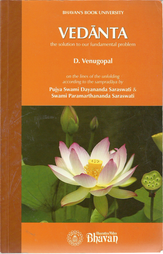
Vedanta the Solution – Part 26

venugopal_vedanta

VEDĀNTA the solution to our fundamental problem by D. Venugopal

Part 26 examines the nature of AtmA, utilising the ‘descriptions’ from the Brihadaranyaka, Kena and Mandukya Upanishads. How can we ‘know’ the Self, when it is not an object?

There is a complete Contents List, to which links are added as each new part appears.

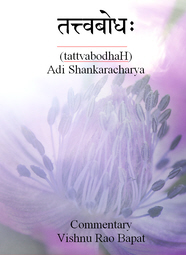
Tattvabodha – Part 11

OLYMPUS DIGITAL CAMERA

Part 11 of the commentary by Dr. VIshnu Bapat on Shankara’s Tattvabodha.This is a key work which introduces all of the key concepts of Advaita in a systematic manner.

The commentary is based upon those by several other authors, together with the audio lectures of Swami Paramarthananda. It includes word-by-word breakdown of the Sanskrit shloka-s so should be of interest to everyone, from complete beginners to advanced students.

Part 11 looks at the five organs of action and the nature of the causal body.

There is a hyperlinked Contents List, which is updated as each new part is published.

The Brahman Experience

Let’s discuss the possibility that Brahman is nityaptasvarupa, no exceptions. Let’s talk about what it means to truly live from a place where Brahman is all that is – our ideas, experiences, loves, violence. I’ll start with some of the comments made on a previous post, ‘Consciousness of Choice’, because let’s face it, Dennis made some great points!

Continue reading

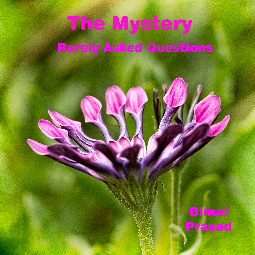
The Mystery – Part 1

bimal_coverA new, short series presenting the booklet by Bimal Prasad, in which he answers some ‘Rarely Asked Questions’ on Life. Primarily from the perspective of Advaita, questions addressed include the nature of happiness, consciousness, mind and ego. There is also practical guidance on meditation in the final chapter. Answers are relevant and succinct, so that many of the issues of interest to the seeker are covered.

See the Contents List or go straight to Part 1 of the series.

The complete (electronic form) booklet may also be purchased from Amazon.