VEDĀNTA the solution to our fundamental problem by D. Venugopal
Part 33 explains the nature of mAyA and its relation to brahman and avidyA.
There is a complete Contents List, to which links are added as each new part appears.

VEDĀNTA the solution to our fundamental problem by D. Venugopal
Part 33 explains the nature of mAyA and its relation to brahman and avidyA.
There is a complete Contents List, to which links are added as each new part appears.
Ignorance is a fundamental concept in Advaita and most people who call themselves Advaitins will believe that they understand what it is. After all, enlightenment is often equated to the gaining of Self-knowledge, which is equivalent to the removal of ignorance. Here is the definition of avidyA in John Grimes’ excellent ‘Concise Dictionary of Indian Philosophy’:
“It is the key concept in the Advaita Vedanta system. It serves as the cornerstone for Advaita Vedanta metaphysics, epistemology, and ethical disciplines; thus its role cannot be belittled. It is characterized by six marks: it is beginningless (anAdi); it is removed by right knowledge (j~nAna- nivartya); it is a positive entity of the nature of an existent (bhAva rUpa); it is indescribable (anirvachanIya); it has the two powers of concealment and projection which respectively represent the truth and suggest the false (AvaraNa and vikShepa); and its locus is either in the individual self (jIva) or in the Absolute (Brahman).”
And this is pretty much how most teachers and writers use the term. For example, in ‘Back to the Truth’, I said: “As long as the ignorance remains, there will be identification of one form or another and we will believe ourselves to be other than our true nature. The ignorance is said to be anAdi, without any beginning, and it will continue until it is removed by knowledge and enlightenment dawns.” This is backed up by shruti. The sarvopaniShad, for example, says (verse 1): “…this egoism is the bondage of the soul. The cessation of that egoism is mokSha, liberation. That which causes this egoism is avidyA, nescience.” Other, later scriptures echo this; e.g. the advaita bodha dIpaka: “Though the Self is Brahman, there is not the knowledge of the Self (being Brahman). That which obstructs the knowledge of the Self is Ignorance. Just as ignorance of the substratum, namely the rope, projects the illusion of the snake, so Ignorance of Brahman projects this world.” Continue reading
VEDĀNTA the solution to our fundamental problem by D. Venugopal
Part 32 concludes the ‘definition’ of brahman and then begins to look at brahman as the cause of the manifestation.
There is a complete Contents List, to which links are added as each new part appears.
Part 17 of the commentary by Dr. VIshnu Bapat on Shankara’s Tattvabodha.This is a key work which introduces all of the key concepts of Advaita in a systematic manner.
The commentary is based upon those by several other authors, together with the audio lectures of Swami Paramarthananda. It includes word-by-word breakdown of the Sanskrit shloka-s so should be of interest to everyone, from complete beginners to advanced students.
Part 17 begins the analysis of creation. The nature of mAyA is explained and the description of the five basic elements is begun.
There is a hyperlinked Contents List, which is updated as each new part is published.
INTRODUCTION
As S.K. Ramachandra Rao relates in his Introduction to Sw. Satchidanandendra’s book ‘Salient Features of Shankara’s Vedanta’ ( a translation of ‘Shankara-Vedanta-Prakriye’ in Kannada language), the Swami decided to find out for himself what the real tradition of Shankara and the latter’s contributions to it had been, since he had suspected for some time that the former had been misrepresented by later advaitins. This desire took form in the way of a monograph he wrote in Sanscrit in 1929 with the title of ‘Mulavidya -nirasa. ‘He applied himself diligently to repeated study of Shankara’s works (Bhashyas on the three Prasthanas) for several years to convince himself that the sub-commentaries (of Vacaspaty Misra and Padmapada) had not done justice to the great master… It was in the year 1920, a year after his wife passed away, that he felt called upon to take this as a mission in his life’. Continue reading
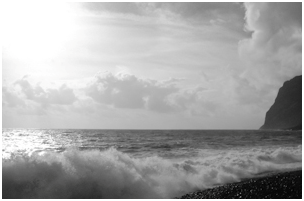
The ‘ocean-wave’ metaphor is a potentially powerful one but is often misunderstood. Here are a few quotes pulled off the Internet from a Google search:
“The waves emerge briefly as a separate entity; however, just as quickly merge back into the ocean of which it is a part. Us, as human beings, are very much like the waves of the ocean. We briefly surface and display a uniqueness that cannot be duplicated; however, in the end, we reunite with the Whole.”
“Actually our existence is just like an ocean. You are a wave of the ocean. You may be the most powerful, most thunderous, most beautiful and most inspiring wave of this ocean. But in the ultimate analysis you are just a wave. And the destiny of a wave is to merge again into the ocean. One day your little wave will also merge in the ocean of existence. Contemplate on this and understand the reality. We all are simple and ordinary in front of this huge cosmic play that is going on.”
“To explain this further, Babaji gave beautiful example of wave – the wave by itself has no identity, it has identity of wave only for a certain time. When it rises it is known as wave, but once it merges back into the ocean the wave no longer remains the wave, it becomes the ocean. We have the karmic illusion of different and separate identity. When we go in, there is no difference, we are particles of that One.” Continue reading
[One of our esteemed Readers, Shri V. Madhava, has been kind to send an off-line message to me a few days ago saying “I enjoy reading your writings and just finished reading the article “Living in the moment eternally Part 2”. Wondering if there is a Part 3 as there seems to be a broken link…” Reason enough, I guess, to continue on with my chatter — ramesam.]
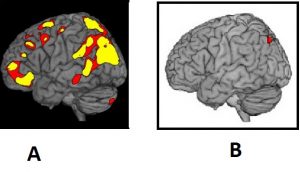 Let us recall that living in the Now is an important trait of a jIvanmukta. J. Krishnamurti wondered if we could have an experience but not record it in our brain as a memory so that all our experiencing will be ever in the Present, in the innocent Now, afresh and always anew from moment to moment. Continue reading
VEDĀNTA the solution to our fundamental problem by D. Venugopal
Part30 concludes the discussion on the ‘description’ of brahman as satyam j~nAnam anantam and then looks specifically at the meaning of ‘existence’ (sat) with reference to the body-mind-sense-complex.
There is a complete Contents List, to which links are added as each new part appears.
VEDĀNTA the solution to our fundamental problem by D. Venugopal
Part 29 concludes the discussion on adhyAsa – how we superimpose false attributes upon brahman – and begins the section on the nature of brahman itself.
There is a complete Contents List, to which links are added as each new part appears.
Q: Self-Realization is a very rare occurrence – the Gita states something like 1 in a billion, and there are very few authentic, fully realized beings known to us, such as Ramana Maharshi, Nisargadatta Maharaj and a few others, (as well as the great anonymous ones). Granted, the world has changed and everything is much faster than it was, but this cannot surely apply to self-realization. The Neo-Advaitins’ awakenings or enlightenments cannot possibly be synonymous with the self-realizations of the great sages such as Ramana and Nisargadatta?
Also, the hallmark of the great sages such as those mentioned above is that they have a transparent, translucent quality that emanates contentment and peace. The Neo-Advaitin teachers that I have observed do not emanate peace, instead, they come across with their body-mind personality traits/baggage as either ‘manic’, ‘neurotic’, ‘depressed’, ‘nihilistic’, etc. The talking, and so much talking at that, is coming from the mind, and not from “mauna”. It is more like a mixture of counseling, psychotherapy and psycho-babble rather than pragmatic Advaitin philosophy.
So my question is … has self-realization been dumbed down and redefined by the Neo-Advaitins, or do they not claim full self-realization, but only to be ‘awakened’ or ‘enlightened’? Tolle comes to mind and Mooji, too… the talking never stops.
Responses from Melanie, Martin, Ramesam, Charles, and Dennis Continue reading