
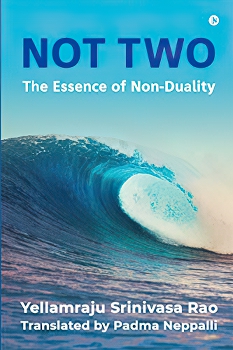
On the face of it, this is a well-written and readable book, ideally suited for a new seeker. E.g. the sections on ‘The Illusory Nature of the Separate Self’ and ‘Knowledge Dispels Ignorance’ are excellent.
Unfortunately, should any reader accept everything that is written at its face value, they will come away with some serious confusions. In what follows, I apologize in advance for some of what may seem to be harsh criticisms, but my own perception of these points is heightened as a result of spending the last year writing my own work on ‘confusions’ of precisely this sort.
The author uses the traditional teaching method of adhyāropa-apavāda but it is not made clear when what is being said is only provisional. Also, there are very few references to the source of what is being presented. (And one of those that is provided doesn’t exist!) There are many places where the author writes ‘as Shankara said’ but scarcely a single pointer to where he said it. There are numerous places where I, as an informed reader, need those references before I will even consider what is being said to be credible!
Continue reading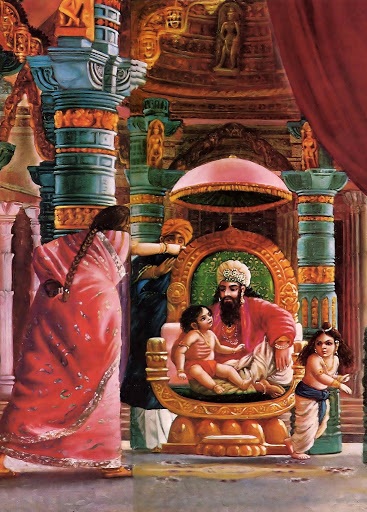 Dhruva was an adorable little boy. He saw his half-brother, Uttama, sitting and playing on the lap of their father, King Uttanapada. He too desired to climb on to the lap of Uttanapada. But his step-mother could hardly tolerate that. She gave a tight slap to him declaring that he was unfit to sit on the lap of the King as he was not born to her but to another queen. Crest-fallen and deeply hurt, the little kid, with his eyes full of tears, ran to his mother. His mother, a highly noble lady, consoled him and advised that he should achieve something so that people look at him with awe. The little Dhruva left the royal palace and went away to a distant forest. He met with a group of Sages in the forest and narrated to them his soulful story. They advised him to meditate on Vishnu. So, he embarked on a very austere and rigorous course of meditation. Regretting heavily the developments, the King and all his retinue, his mother, the queen and all his family implored that he should give up his askesis and return home. The King was even ready to abdicate the throne and promised to coronate him. But Dhruva was unrelenting. He did not succumb to the temptations and was uncompromising in his resolve. He pursued his meditation with greater vigor. He meditated on Vishnu, the Ultimate.
 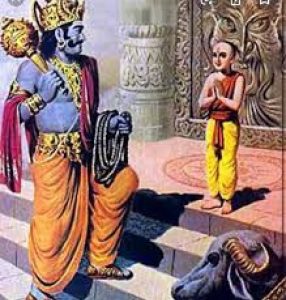 On the insistent questioning of the highly determined Naciketas, Lord Yama had no alternative but to reveal the secret code to ending the transient mortal world and realizing the “immortality” that one actually and already is. It is not some thing new that one acquires. It is prAptasya prAptiH (
 The Post on “