
6 Moksha
6-1 Preparation
6-1-1 Preparatory Knowledge
6-1-2 Preparatory Action
6-1-2-5 Asuri Sampati 16(6 to 21,23)
Human birth is because of karmic balance at the end of the previous birth. Karmic balance is due to Self-ignorance. It continues in the current birth because a person is attracted to a materialistic life of desire and wealth and does not make efforts for spiritual growth. Scriptures are meant to guide people to lead a dharmic life on way to moksha. It is not a sin to pursue desire and wealth within the bounds of dharma. With maturity, it is necessary to make a shift to spirituality.
Meaning of anubhava
The following forms the beginning of the chapter on ‘Experience (anubhava) and its relation to enlightenment’ from my book ‘Confusions in Advaita Vedanta: Knowledge, Experience and Enlightenment’. This is the first volume of a short series addressing common sources of confusion and explaing them using quotations from (principally) scriptures, Shankara, Gaudapada, and Sureshvara.
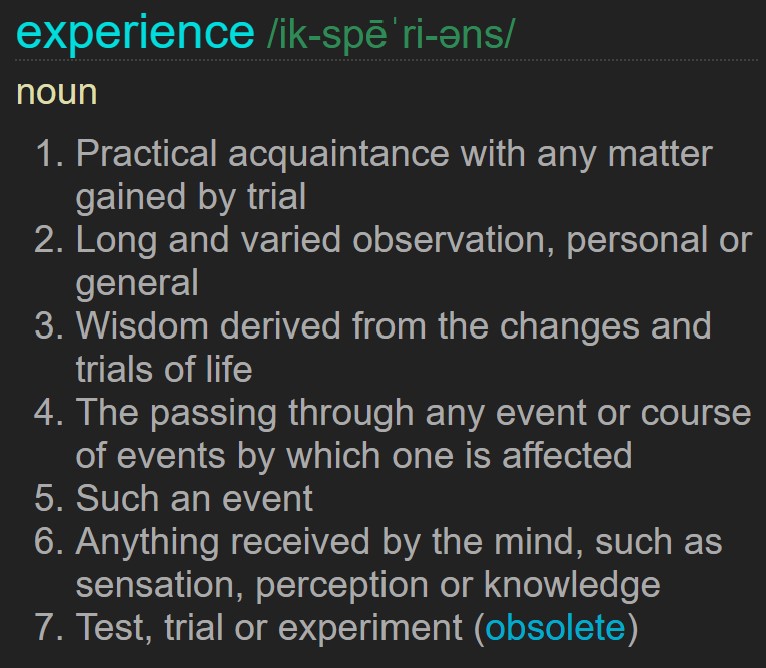
The Sanskrit term that is interpreted by many modern teachers as ‘experience’ is anubhava. And indeed ‘experience’ is one of the translations given by Monier-Williams, along with the expansion “knowledge gained from personal observation or experiment”. (Ref. 179) But words such as ‘understanding’ and ‘apprehension’ are also given and these are much closer to the intended meaning.
Continue readingExperiencing Brahman
Q.538 Duḥkha and Stress
Q: I am currently reading and enjoying ‘The Mind’s Own Physician’ in which Jon Kabat-Zinn mentions that some Buddhist scholars are beginning to translate duḥkha as ‘stress’ rather than ‘suffering’. This is personally significant as the original translation has probably caused me more confusion and difficulty than anything else.
‘Suffering’ seems a harsh appraisal of life, somewhat devoid of hope, rather negative and far from the entirety of my own experience. It suggests an improved situation ‘post enlightenment’ and fails to emphasize the positive benefits of enjoying what time we have – disturbingly at odds with Buddhist ethic and contrary to the non-dual teachings of Advaita.
There is also a danger that if the idea of suffering is repeated often enough it becomes an unhealthy and out of balance baseline perspective. Assertions that the modern era is more stressful than times past tend to go unchallenged.
Continue readingBhagavad Gita(Topic-wise)Part 10
6 Moksha
6-1 Preparation
6-1-1 Preparatory Knowledge
6-1-1-8: Yog-bhrasta Chapter 6 has discussed dhyana yoga-Vedantic meditation called nidhidhyasana- the last stage of jnana yoga- for the benefit of a sincere seeker. His goal is moksha, and he is not interested in wealth or punyas. Arjuna wants to know the fate of a seeker who is sincere but has not completed jnana yoga and is not liberated. He has not earned sufficient punyas to go to Swarga. Arjuna apprehends that such a seeker is lost like scattered clouds. Continue reading
Consciousness Works!
Q: Do you think that we will fully understand how consciousness works? (Quora)
A: Some of the responders here give a mechanistic or scientific answer based on biology, neurophysiology, or even the possibility of creating artificial consciousness! – no doubt led by the word ‘how’ in the question.
How consciousness works is a superfluous, out-of-the-blue question. It works and works perfectly well. As to what consciousness is, this is at once a common-sense matter and a metaphysical one being on a par with existence itself – what is existence? We don’t ask how existence works, do we?
Existence IS. Consciousness IS. Whether they are a mystery or not, you will have to investigate…. but not scientifically.
Equivalences in Advaita:
There are many equivalences that shruti and Shankara bhAShya there on teach us in order to make it easy for us to understand and appreciate the nuances of the Advaita doctrine. Crowning them all is, of course, the well-known equation Atman = brahman. The other equations being not so popular, we tend to forget them and draw some invalid inferences to claim that a sthitaprajna is gauNa compared to a jnAni; one can have dualist perception, though one is brahman and so on. Therefore, I present a few of the important equivalences we find in Advaita shruti and bhAShya and request the readers to add on to the list here.
i) Atman = brahman
[shruti and bhAShya support (SBS): Continue reading
“sadyomukti” (Instant Liberation) – 1/3:
What Shri Shanakara bhagavat pAda exhorts us in his commentary at the kaTha Upanishad, IMHO, is that we should try to “realize” the Self right in this life and not defer it to a later time because it involves a much more arduous effort to attain liberation with a stopover in some other loka (which involves continuing in the subtle body (or an AtivAhika sharIra)) after the gross body is dead. For example, Shankara writes:
तस्माच्छरीरविस्रंसनात्प्रागात्मावबोधाय यत्न आस्थेयः यस्मादिहैवात्मनो दर्शनमादर्शस्थस्येव मुखस्य स्पष्टमुपपद्यते, न लोकान्तरेषु ब्रह्मलोकादन्यत्र । स च दुष्प्रापः ॥ — 2.6.4, kaTha bhAShya Continue reading
Bhagavad Gita (Topic-wise) Part 9
6-1: Preparation
6-1-1: Preparatory Knowledge
6-1-1-4: Brahma-Loka, Krama-Mukti 8(16,23 to 28)
8(16) says that a seeker who knows Brahm reaches Brahm and is liberated in the current life. He is a Jivanmukta. After death, he merges with Brahm and is Videhamukta. His karmic balance is nil and there is no travel of the subtle body to any other loka and he does not return to human loka. Ignorant jivas, however pious and virtuous, after death, travel to other lokas including the highest Brahma-loka and after exhausting punyas there is a return to human or even lower loka as per karmic dictates.
Q.537 Need for a Guru
Q: The great masters, Ramana Maharshi and Nisargadatta Maharaj lay no stress on the need for a guru to reach realization. Nisargadatta states flatly in ‘I Am That’ p.149 that no individual guru is needed. He stresses ‘earnestness’, and that one is able with his determination and inner strength to reach the highest. The greatest example here of course is Ramakrishna.
The ambiguity is significant when one reads the Q and A’s of Atmananda Krishna Menon. He states that a guru is of crucial importance, as does Vivekananda. To have disagreement on such a vital point by such highly attained individuals is significant. No doubt a guru would be desirable at any stage on the path but, especially in the west, the likelihood of finding one is low. The adage that when one needs a guru one will appear doesn’t give much hope.
A: It is highly desirable to have a qualified, traditional guru. There do not seem to be many of these around today and it is unlikely that you happen to have one conveniently close by! Consequently, the best you can do is to read books that reliably present material in the traditional manner (unfolding scriptural texts and Shankara commentaries) and listen to recorded talks from similarly reliable sources.
Continue reading