
Sometimes I am a bird,
one of a flock,
building a nest, searching for food,
eating, drinking, mating and
caring for my young,
the experiencer of joy and sorrow. Continue reading
On Narada Bhakti Sutras – 3
We ended the Part – 2 with the questions, “Who exactly am “I”?; and “Is my “mind” the proper and the most efficient instrument for the job I am putting it to?”
Any good workman first examines the efficiency, sensitivity and efficacy of his tools, before using them, for, as experience shows, there could be an unaccounted “instrumental error” that can creep into the conclusions we draw. In a modern laboratory of scientific investigations, calibration of the error from various sources including the tools used is a standard practice.
So let us first find out what is mind, the only tool we have at our disposal, what is its nature, and what are its characteristics. We should be aware of the errors it may introduce and thereby bias the conclusions. Continue reading
Tattvabodha – Part 26
Part 26 of the commentary by Dr. VIshnu Bapat on Shankara’s Tattvabodha.This is a key work which introduces all of the key concepts of Advaita in a systematic manner.
The commentary is based upon those by several other authors, together with the audio lectures of Swami Paramarthananda. It includes word-by-word breakdown of the Sanskrit shloka-s so should be of interest to everyone, from complete beginners to advanced students.
Part 26 begins the description of the types of action and their fruit in the form of the three karmas.
There is a hyperlinked Contents List, which is updated as each new part is published.
On Narada Bhakti Sutras – 2
Towards the end of NBS Part – 1, we had seen that the very presence of another is a cause for fear — that is to say that the presence of an additional creature other than a ‘me’, in general, is a ‘challenge’ to my own existence. We then asked the question: “But suppose the second entity is a Savior, a Protector, a Godhead?”
That is a very comforting thought. It helps to calm the agitated, perturbed, worried mind. It feels soothing. Yes, comforting.
The idea of a Savior, a loving caring Godhead, gives me a confidence that there is someone out there to look after ‘me’, to take care of my interests, and to see that things work forever in ‘my’ favor.
And suppose, in that Savior, I pack all those qualities that I do not have — in order to make good for my shortcomings, my weaknesses, my frailties, my infirmities, then I will have a colossal strength at my back. I can rest without a worry. I can sleep peacefully. So let me think of a Super-human, omniscient, omnipotent, Lord as my Protector. Continue reading
Overview of Western Philosophy – Part 15
 (Read Part 14 of the series.)
Phenomenology and Existentialism
Phenomenology
This movement began in the late nineteenth century as a theory of knowledge that attempted to reinstate science and bring in the modern findings from psychology and sociology to supplant the subjectivity that had predominated until then with the German Idealists. In particularly the wish was to understand the nature of awareness, differentiating between mental and non-mental realms. Edmund Husserl, who was the teacher of Martin Heidegger (below), is generally credited with establishing the movement. It was acknowledged that we could not know that objects exist independent of our awareness of them but also that it cannot be denied that we are conscious of ‘things’. Phenomenology endeavoured to start from this point and attempt to analyse our experience without making any further assumptions. It subsequently merged into Existentialism.
Maurice Merleau-Ponty was particularly interested in perception and the nature of the perceiving entity and ‘object’ of perception. He disliked both the empiricist and idealist approaches and spent much of his time attacking all dualist concepts such as the mind-matter division of Descartes. There cannot be any totally objective perception of the world, he said, because our perceptual apparatus is itself part of the world. Whenever we see something, what we ‘see’ comes along with everything else that we already know and the perception itself is the sum total of all of this. We can never see a chair, for example, without the awareness of its purpose as something for sitting on. The origin of our belief in a separate world derives from our thinking of ‘ourselves’ as other than the body that we apparently inhabit. We are our bodies, he said, and the mind cannot be separated from them. Continue reading
On Narada Bhakti Sutras – 1
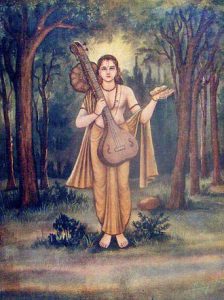 Mind is the only tool we have as human beings to investigate and inquire into what is, if anything is, beyond the physical world of objects which we know from our direct perception (pratyaksha pramANa) using the five sensory organs. We want to know “That” which supports this solid looking world and the animate and inanimate creatures populating it. The “driver” for such an enquiry could just be an inborn curiosity or a desire to attain unswerving freedom from unhappiness.
As a matter of fact, we are already accustomed to use our ‘mind,’ without being ever even aware of doing so, for ensuring ‘security,’ which we believe gives us happiness. We have been able to detect certain “patterns” in the world. One is that all things are always changing. As a measure of this change, we ‘invented’ time. So time dimension or factor in the world is known to us only through the mind. Continue reading
Presence
Question: Can you learn to be presence, or show someone how, or do you just have to wait for presence to arise?
Answer: ‘Presence’ is. It neither arises nor diminishes.
There is nothing one can do to ‘be’ presence, because one already is presence, but rather there are things which can be done in order to bring about the recognition of the presence one already is. Continue reading
adhyAsa (part 4)

Notes on Shankara’s examination of the nature of ‘Error’ in the introduction to the brahmasUtra.
Objections to the theory
Other systems of philosophy claim that, although the rope-snake error is acceptable, the superimposition of anything onto the Atman is not possible. The argument is that any superimposition requires four conditions to be satisfied:
- Perception. The object being covered must be directly perceivable, as is the rope in the rope-snake example. The Atman is not an object and cannot be perceived.
- Incompletely known. The object must be incompletely known, as one is ignorant of the fact that the rope is a rope. In the case of the Atman , however, the advaitin accepts that the Atman is self-evident and always conscious – how can there be ignorance with regard to something that is self-evident?
- Similarity. There must be some similarity between the actual object and its superimposition, just as a rope and snake have a basic similarity (one could not mistake the rope for an elephant, for example). But there is total dissimilarity between the Atman and anything else. E.g. Atma is the subject, anAtma is the object; Atma is conscious and all pervading, anAtma is inert and limited etc.
- Prior experience. In order to make the mistake, we must have had prior experience of that which is superimposed. We could not see a snake where the rope is unless we knew what a real snake was. Whilst this is possible in the case of the rope-snake, it is not possible in the Atma–anAtma case because we would have to have prior experience of a ‘real’ anAtma and it is part of the fundamental teaching of advaita that there is no such thing; there is only the Atman.
Accordingly, in the case of the Atma–anAtma , not one of these four conditions is satisfied. Therefore superimposition of anAtma onto Atma, the fundamental cause of our error according to Shankara, is not possible – so says the objector. Continue reading
Physics and Vedanta – 6/6
[An INTERVIEW BY Paula Marvelly – Sixteen searching Questions probing the Depths of Physics and Advaita Vedanta – Responses from Dr. Ramesam Vemuri – 2011]
Part 6: Effect of Meditation, jIvanmukta and Science as pramANa:
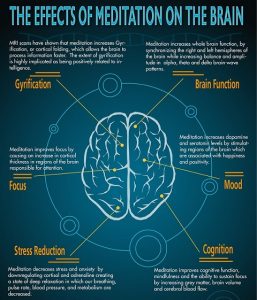 14. What are the benefits of meditation on the mind?
As we understand, mind is what the brain does. But as Neuroscience found out, the pulsing of the neurons as the brain acts has a feed forward and feed backward effect. The em field produced by the activity of the neurons affects the brain. Consequently, what we do mentally has an effect on the brain.
In fact, our scriptures hold that what we do mentally is much more forceful and effective than physical performance. Manasa Puja, or silent worship within our mind, is held far superior to pompous and ostentatious prayers. The mental worship in a way is meditation. Even in athletics and other sports, the candidates are asked to rehearse first mentally the subtleties of every fine move before they perform physically. I learnt a lot of my driving more by thinking before I got into a driver’s seat in a car. Continue reading
Q.408 Ramana’s ‘Who am I?’
Q: I would like to ask a question about the practice of Sri Ramana’s teachings and in particular the way of carrying out the self-enquiry ‘who am I?’
According to what I’ve seen so far regarding instructions, when a thought arises one enquires ‘to whom this thought has arisen’. If the answer to that is ‘to me’, the enquiry continues with ‘who am I?’
At this stage, the mind becomes silent. Are we supposed to remain in this silence until another thought arises or should we continue enquiring ‘who am I?’ every few seconds or so?
Would you be kind enough to clarify this for me.
A (Dennis): If you are committed to following those ideas that are frequently claimed as representing the essential teaching/method of Ramana, then I am not the best person of whom to ask these questions.
Ramana was not a traditional teacher; he was not trained in the methodology of any sampradAya. There is no doubt of his status as a j~nAnI and transcriptions of his talks show brilliant insights into many aspects. But I have to say that the ‘enquiry’ as you describe it is most unlikely to lead to Self-knowledge. I prefer to think that such practice can only lead eventually to the realization that one needs a teacher to provide the guidance via the proven succession of shravaNa, manana and nididhyAsana. It is primarily an intellectual process – the mind is both the problem and the solution. You have to hear the truth, expounded in a convincing manner; ask questions to clear doubts; then repeat in whatever manner is available. Silence will not tell you anything.
I also suggest you read my article on manonAsha.