The Enlightened Person

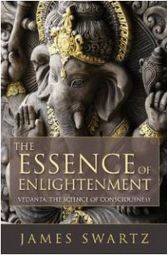
swartz_essenceHere is an extract from the final chapter of James Swartz’s new book ‘The Essence of Enlightenment’. I haven’t read it all myself yet, but dipping into it at random shows that it is every bit as good as his ‘How to Attain Enlightenment’. It has, for me, his hallmark style of forthright, clear, informative writing, adhering to traditional teaching derived from scriptures and as interpreted by modern sampradAya-s. He has no qualms about bluntly (even brutally) exposing mistaken views but leaves the reader feeling uplifted, and with a much clearer understanding of even the most difficult topic.

Life is a dream – The world is real

DIALOGUE in Quora

A. Of course, if everything is like a dream (mithyA), then the sages and their scriptures are a part of that dream. But that doesn’t necessarily mean that the teachings and the scriptures are not useful for awakening from the dream.

B. That is true, in my understanding. ‘Life is a Dream’ (Calderón de la Barca’s play), ‘All the world’s a stage’ (Shakespeare). As to Vedanta, here is what a sage (among so many others) has said: “Vedanta plays the role of the dream lion in this world. Vedantic knowledge itself is part of the illusory world. But then it dissolves the entire illusion of this world, revealing reality as it is.” Sw. Parthsarathy.

A. If no one dies, then no one is enlightened either, and yet we still talk as if people really do die and really do become enlightened.

B. True also. That modifier, ‘as if’, is crucial.

In the next para. you write: “…an individual who appears to exist while not really existing (AS AN INDIVIDUAL) has appeared to become enlightened while not really being enlightened (AS THE PURPORTED INDIVIDUAL).” I have taken the liberty of adding the capital letters, for advaitic sense. Further, while ‘everybody is enlightened’, as Neo advaitins claim, ‘no one is enlightened’, as the sage Gaudapada declared. Are these two seemingly contradictory statements true – and in what sense? *

A. I think the problem with brain damage is the possibility that a j~nAnI [sage] would lose most or all of the knowledge (including Self-knowledge) that he gained through his studies.

B. This is as seen from the vyavaharika (empirical) perspective, which cannot be denied (only understood). Jñani/s (sages) also experience thoughts and emotions. With them, these either quickly disappear, or are transmuted or resolved into consciousness; in fact, they are only consciousness, as mind is also a projection of consciousness.

Something more for pondering: “People forget the reality of the illusory world”. Huang Po.

(*) Gaudapada (Shankara, and the whole tradition of advaita Vedanta) deny multiplicity as being real. In essence ‘all is One’. The Neo-advaitin’s dictum (’everybody is enlightened’) is thus true and false at the same time.


More short Q and As

OLYMPUS DIGITAL CAMERAQ: I’ve read something in Advaita about making meaning out of meaningless events. Are there any events to which meaning can be given?

A: You need to be a bit more specific here. But you are in any case talking about the empirical level of experience, not absolute reality. Time (and hence ‘events’) is within the former; it is not absolutely real. Similarly, there are no separate ‘objects’ (or ‘people’) in reality. Whether or not an event is ‘meaningful’ is going to be a subjective opinion! If you want my subjective view, there are probably only two meaningful events: when you commit to Self-inquiry and when you realize the truth! Continue reading

Becoming, Being and the Brain

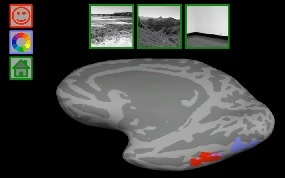
brain - nancyCan one day the brain science tell us “Who we truly are?”

And show the difference between ‘becoming’ and ‘Being’  in a brain scan?

Can a scan possibly differentiate a “Knower of Truth” vs an “Expert on Truth”?

Please watch this Talk (17:40 min) of Nancy Kanwisher, a Professor of Cognitive Neuroscience at MIT. Nancy’s Talk is supported by excellent graphics.

What is Brahman? (Part 3)

(Read Part 2)

The superficially contradictory ‘descriptions’ of Brahman as ‘neti, neti’ and ‘sarvaM khalvidaM brahma’ [all this is verily Brahman] are brought out in adjacent verses of the Atma bodha, attributed to Shankara (Swami Chinmayananda translation):


  1. Brahman is other than this, the universe. There exists nothing that is not Brahman. If any object other than Brahman appears to exist, it is unreal like the mirage.
  2. All that is perceived, or heard, is Brahman and nothing else. Attaining the knowledge of the Reality, one sees the Universe as the non-dual Brahman, Existence-Knowledge-Bliss-Absolute.

Here, it is first stated that the universe is not Brahman. But it is also said that any other appearance will be unreal, like a mirage. The mirage is a powerful metaphor because the water that appears is in reality only the sand upon which the appearance takes place. I.e. sand is the substratum of the water appearance, just as Brahman is the substratum of the world appearance. It is then stated that all appearances are, in fact, nothing other than Brahman. But this is realized, of course only upon enlightenment. Until then, the world remains very real. Similarly, to the seeker after water in the desert, the mirage is very real. Continue reading

Nathan Gill

Quote

gillNathan Gill (1960 – 2014)

Enlightenment:

As Consciousness You are already awake and aware. In the play of life when there is exclusive focus as the individual, Your true nature is forgotten and there is complete involvement in searching for enlightenment or awakening. But You already are aware, already completely awake; it’s simply that this is veiled by appearances, the story of ‘me’ as an individual.

Whenever Your true nature is remembered the spell is broken. The pursuit of enlightenment is clearly seen as nothing more than the cosmic lIlA. Awakeness is already the case under all circumstances, regardless of contrary appearances in the play.

Transmission:

The guru and the disciple appear as images in the cosmic lIlA – the play of life. Maybe the storyline in the play is that through grace the disciple receives the blessing of the guru, and for as long as there is entrancement with the story of ‘me’ this can be an enthralling drama. In actuality though there is no transmission of anything from one to another because there simply isn’t anyone.

Practice:

No one becomes enlightened because in actuality there isn’t anyone. Only within the story in the play of life does striving to transcend individuality appear to have validity.

There is no individual that could become enlightened; no one that needs to attain or realize anything. The drama of striving to achieve enlightenment through various practices is limited to the play of appearances. What practice is needed to simply be?

All quotations from private Emails, reproduced in Back to the Truth: 5000 Years of Advaita (Paperback), Dennis Waite, O Books, Feb 2007, ISBN-10: 1905047614. Buy from Amazon.com or Amazon.co.uk

akhaNDAkAra vRRitti – The End of Suffering

653350_web_R_K_B_by_Sabine Menge_pixelio.deThere is a very evolved state of realization that can easily be mistaken for the final realization brought about by akhaNDAkAra vRRitti. I do not mean the often mentioned state of samAdhi that also tends to be mistaken for enlightenment. What I am talking about is less spectacular than samAdhi. In my experience with Western students and friends, there is one moment in which an almost complete recognition of the true nature of oneness takes place. From that moment onwards, the general outlook of the person will change: suffering is going to diminish considerably and the person knows what it is that is actually sought by people asking the question “Who am I?”. He/she recognizes what is talked of in the scriptures as Truth. Continue reading

akhaNDAkAra vRRitti – Tension

Quote

In some characters there is perhaps a sudden recognition of the true nature as oneness, and then – maybe, but not invariably – there might be a blissfullness associated with that, a kind of exaggerated relief at the release of tension. More commonly, because the seeing through of the ‘someone’ in the play has been gradual, there has been a gradual release of the tension associated with being a ‘someone’. And so there isn’t much tension hanging around anyway – therefore there isn’t necessarily any kind of great blissful release.

Already AwakeNathan Gill, Non-Duality Press, 2004, ISBN: 0954779223. Buy from Amazon US, Buy from Amazon UK. Read Extract.

Topic of the Month – akhaNDAkAra vRRitti

OLYMPUS DIGITAL CAMERAThe topic for May is akhaNDAkAra vRRitti.

This is the mental ‘occurrence’ which supposedly causes enlightenment. It is the vRRitti (thought modification) in the form of (AkAra) the formless or undivided (akhaNDa). (Personally, I no longer favor this view and will endeavor to find some quotations which show that it is not quite like this for most people!)

Please submit your quotes, short extracts or personal blogs on this topic!

How Vedanta Works

OLYMPUS DIGITAL CAMERAHow words work in Vedanta
(based on essays from Sw. Dayananda and Ramji)

by Tan

Vedanta is a means of self knowledge through words called shabda pramANa.

It is able to give you direct knowledge of your eternal nature through words. In spiritual circles this will be generally criticized with the argument that the eternal self, enlightenment, the absolute, Brahman, the Tao or whatever you want to call it, is beyond words and indescribable. Therefore the conclusion is that it is impossible to get direct knowledge and know your “real” self through words. Continue reading