Serialization of Yogavasishta 4

yogavasishta3

Professor Sri Kuppa Venkata Krishna Murthy, Chairman and Managing Trustee of I-SERVE, the Institute of Scientific Research on Vedas, has kindly given permission for Advaita Vision to serialize his 6-volume ‘Musings on Yogavasishta’. Written in Telugu, the work has been painstakingly translated by our Dr. Ramesam Vemuri and published by Avadhoota Datta Peetham.

Rather than reproducing successive extracts from the books each month, as has been done with our other two serializations, the books themselves will be made available for download in PDF format. Each part will be associated with a page at the main website, which will contain a Contents List for that volume. Links to all of the volumes will be provided on a general Contents Page.

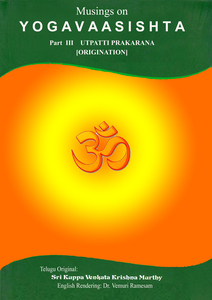
The fourth part to be published is Part 3 (ORIGINATION). (We began with Part 7 of the Series as it provides an overall summary of the Non-dual teaching and is a better introduction than simply jumping in at Part 1.) As Ramesam puts it: “The main thrust of the teaching by Sage Vasishta is that the visible world has no real origination. He establishes that the space-time-causation of the phenomenal world is illusory and arises out of pure mentation.” A timely coincidence with Charles’ series on Kant, where he notes that “Kant’s position, therefore, translated to Advaita terms, is that space and time are only valid in the context of transactional (vyAvahArika) reality, and therefore not truly Real (pAramArthika).”

Please go to the Contents Page to read the Announcement and general introduction from Ramesam. The page for this Third Volume, Part 3 (ORIGINATION) also contains the download link for the PDF file (0.9MB).

The Relevance of Kant’s Transcendental Idealism to Advaita Vedanta, Part I

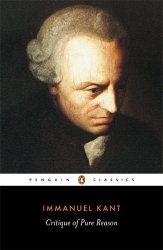
This the first of a three-part series discussing the relevance of Kant’s philosophy to Advaita. Kant-CPR

Immanuel Kant published the first edition of The Critique of Pure Reason in 1781, with an extensively rewritten second edition appearing in 1787. Between those editions he also published a shorter “easier” introduction to his philosophy, Prolegomena to Any Future Metaphysics (1783). With the later appearance of The Critique of Practical Reason (1788) and The Critique of Judgement (1790), Kant had articulated a complete system of philosophy of incredible depth and complexity, wholly original and unique in its solution to the age-old problems of reason, ethics, and logic. So great was the importance of this Prussian professor, we may justifiably think in terms of pre-Kantian and post-Kantian philosophy. Many have disagreed with his conclusions and offered refutations on one level or another, but all who have come after Kant have been required to address him. Continue reading

‘ego’, self, and metaphysics – Part lV

In the Buddhist perspective, the ego or self as ordinarily considered in Western traditions (i.e., as soul or person), is a non-self, actually a non-entity (anatta). Hence the suffering, which stems from an experience -ultimately illusory- of separation and vulnerability.

Here we have to consider two things. First, according to Mahayana Buddhism, Adi-Buddha, equivalent to Dharmakaya – the highest metaphysical, or divine, level – represents that unique Being or Divine ‘State’, pervading all manifestation as Buddha-nature; and second, the notion of the Self (Atman, derived from the Hindu Vedanta) is not only compatible with that view, but also with that of the Spirit in Christianity and in Islam.

As to the soul (metaphysics and theology), though intrinsically perfect or whole in itself (one could add: in ‘primordial man’ –the purusha or Hiranyagarbha of Hinduism)- it experiences imperfection, self-limitation, anxiety and doubt in its state of (aparent) separation -the ‘fallen state’. Being, not just potentially, a ‘focal point of the Universe’, yet it becomes, through ignorance and self-will, the subject of illusions, attachments, and passions which lead to that predicament. Its condition is thus ambivalent; it can orient itself upwards (or towards the centre) – to ‘holiness’ and integration – or downwards, pulled by its ‘lower nature’ (nafs in its lower stages, according to Sufism). The end result will be either self-denial, or self-assertion; self-giving, or ego-centeredness. Inevitably, this latter tendency, based on ignorance, can only lead to an unwanted result: dispersal, disintegration, and suffering. Alas!, on the whole, if not in principle, psychiatry is not interested in this distinction or dichotomy; but let not anything else be said about this at this point.

From the viewpoint of advaita vedanta, all of what is described in this paragraph – and what follows – pertains to the empirical, relative (ontological and epistemological) level: mithya (or vyavahara), in other words. Continue reading

Q.379 – Practice, Enlightenment and Reincarnation

Q: My understanding is that the purpose of spiritual practice is to purify the intellect so that it ‘reflects’ Consciousness without distortion. This enables the mind to recognize the delusion caused by ahaMkAra. This would mean that ‘enlightenment’ is a function of the mind. Is this correct?

If this is so, it would seem to mean that any ‘benefits’ gained from enlightenment would only apply to this body-mind, in this life. Is this so?

Scriptures indicate that one may have to undergo many lives before gaining mokSha, and suggest that fruits of previous lives accumulate to enable this. But, if enlightenment is an event in this mind, how can previous lives be of any benefit? Is there something in the mind that is ‘carried over’ into future births?

A (Ramesam): The most fundamental aspect of Advaita teaching is that an individual (jIva) is non-different from the Supreme Self (brahman). It follows, therefore, from this that a seeker is already of the nature of ever pure, all-knowing and liberated entity. As Gaudapada explains in his kArikA on mANDUkya Upanishad, by Its own freedom, brahman takes the form of an individual (and the world) and there is neither a creation nor liberation, neither a seeker nor something to be sought. Continue reading

Q. 373 – Ego, soul and mithyAtva

Q: For the last few years I have been trying to develop a manuscript detailing a working model which marriages the teachings of Advaita Vedanta with contemporary research on NDE or “Near Death Experience” and similar fields of inquiry. There are several questions I have, but for now I will only bother you with one: Is it possible the Atman does possess a “spiritual ego”?

 Clearly the culprit for the ignorance of our real self as the Self is the wrongful identification with the body-mind. Shankara explains the identification with the kosha-s perpetuates the illusion, which is nothing more than a superimposition of the kosha(s) on brahman helped by mAyA.

 The way I see it, our greatest enemy is the ego, the human ego. This ego comes from the mind and is maintained alive by desires. But I have many reasons to suspect there is also a “spiritual ego” present in the Atman, which similarly perpetuates the ignorance of the wrongful identification by the so-called discarnate “spirit soul”.

 The metaphor I have used is this: there is an actor in the “spiritual world” (the Atman) which wrongfully identifies with a spiritual ego preventing it from realizing brahman. This actor goes through an induced amnesia, after agreeing to play the role of a character in the Grand Stage of the world. This is the incarnation stage. The human ego is the combination of the spiritual ego – which carries the saMskAra-s and the vAsanA-s – plus particular influences on the personality traits caused by internal factors such as the brain/mind of the new body, as well as external factors such as family, society, education, etc. This is the embodied Atman as the jIva. Continue reading

Q. 372 – Superimposition and Memory

Q: What is the relationship between memory and superimposition (adhyAsa)? In the metaphor of rope and snake, we say that we fail to see the snake clearly, because of inadequate light – there is partial knowledge and partial ignorance. When we superimpose a snake on the rope, we are drawing on fear and memory. We must have seen a snake (or image of one in a film or book) before in order to be able to mistake the rope for one. Similarly, we mistake brahman for the body and the world etc.

 But what about a baby or someone who has no memory as a result of brain damage? Is there still superimposition in this case?

Responses from Ted, Venkat, Ramesam, Martin, Sitara and Dennis

A (Ted): We have to bear in mind that the example of a rope being mistaken for a snake is an analogy, and as is the case with any analogy, the example is imperfect. In the example, the snake image is based on a previous experience of the mistaken perceiver.

 In terms of mistaking the body-mind-sense complex as well as the innumerable other objects that constitute the manifest universe for Brahman, however, we are dealing with something a little bit different. Whereas in order to mistake the rope for a snake, one must have previously seen a snake, the projection of the apparent reality (i.e., the manifest universe in both its subtle and gross aspects) is not based on experiential memory, but rather results from the mind’s ability to recognize the “cosmic blueprints” that abide in dormant form in the Macrocosmic Causal Body, which is personified as Isvara, and are made manifest through the conditioning that maya upadhi, the limiting adjunct of causal matter, puts upon Brahman. That is, the mind is an instrument that is designed or a mechanism that is “programmed” to recognize these forms and, thus, is able to discern their apparent existence within the cosmic soup of pure potentiality (i.e., the unmanifest realm or “mind of God,” if you will) from the data it receives via the perceptive instruments/organs. Continue reading

chin mudrA

small_A-U-MHere is the second extract from my forthcoming book on the Mandukya Upanishad and Gaudapada’s kArikA-s. It explains the symbolism associated with the cover image. This explanation occurs near the end of the book, since it utilizes concepts with which the reader might be unfamiliar (until he or she has read the book). But since readers of this site should certainly be familiar with the terms, there is no harm in presenting it here!

chin mudrA

Now that we have almost concluded the unfolding of the kArikA-s, we can return to that cover image! The ‘hand-sign’ is not actually mentioned in the Mandukya Upanishad, nor by Gaudapada, though it is highly relevant. As I mentioned in the introduction, it is a gesture associated with the Sage who is said to be the first teacher of Vedanta – Dakshinamurti. As such, he was the head of the teaching sampradAya and did not himself have a teacher – i.e. he was already fully enlightened. He is also identified with the God Shiva. It is called chin mudrA or j~nAna mudrA (more usually chin), where chin means Consciousness and mudrA means sign.

It is often said that Dakshinamurti taught through silence. Of course, this would not make any sense. Silence can be interpreted in innumerable ways, few of which are likely to convey useful knowledge! But, once we have the knowledge, a symbol can convey a world of information, reminding us through memory of what we have previously learned. Witness the vast amount of knowledge which is now conveyed to you through the word OM.

The hand position shown on the cover of this book is another symbol of this sort. And it is highly relevant to the same knowledge.

Here is the symbolism:

  • The thumb represents paramAtman. There is some reasoning behind this. The scriptures speak of paramAtman as residing in the space in the heart (hRRidaya). By this, we were expected to understand ‘mind’, since it used to be thought that the mind was contained in the physical organ of the heart. Since the heart is about the size of a fist, it was reasonable to think that the space inside was about the size of a thumb.
  • The forefinger represents the individual or jIva. It could also be thought of as the ego or sense of myself. It is common in many cultures to use the forefinger to point out personal opinions and also to threaten or criticize others whose views differ from ‘mine’.
  • The second finger represents the gross body, sthUla sharIra or waker.
  • The third finger represents the subtle body, sUkShma sharIra or dreamer.
  • The fourth finger represents the causal body, kAraNa sharIra or deep-sleeper.
  • The first finger is normally held in association with the other three, indicating our identification with the body and mind.
  • All four fingers depend upon the thumb for their strength and ability to do practically anything. It is this feature which distinguishes us from other animals and gave humanity its great advantage in manipulating objects.
  • When the index finger is moved to touch the tip of the thumb, it separates from the other three, indicating realization that I am not in fact these bodies at all. In forming an unbroken circle with the thumb, it is recognizing that jIvAtman and paramAtman are one, unaffected by the three mithyA states of consciousness.

I now have a firm publication date for the book, incidentally – it is September 25th. It is now available for pre-order. It is quite expensive, but then it also quite thick (431 pages).

The paperback details are: ISBN 978-1-78279-996-2 UK: £20.99 US: $36.95
and the EBook: ISBN 978-1-78279-997-9 UK: £12.99 US: $21.99

Buy from Amazon US; Buy from Amazon UK

The first extract from the book may be read here.

Waking World is also Unreal

small_A-U-MDreams are a powerful metaphor in Advaita. The Yoga Vasishtha is perhaps the best known book to utilize them extensively but probably the earliest teacher to do so was Gaudapada in his kArikA-s on the mANDUkya upaniShad.

He effectively says that the waking state is unreal, like dreams, ‘because we experience it’. This is anvAya-vyatireka logic: we experience objects in dreams, and they turn out to be unreal; therefore the objects we experience in waking are also unreal.

This does not sound very convincing and there are various arguments that we can raise to object to the analogy. Gaudapada raises them for us, in case we can’t think of them all! Here is the third argument he puts forward. It is an extract from my forthcoming book, which will be published 25th September 2015.

Third objection to world being unreal

And this leads on to the third objection namely that, whereas the dream world is subjective, the waking world has objective reality. It is experienced as external to ourselves, whereas the dream takes place in our mind (K2.9 – 10). But this notion suffers from the same confusion as before. We only recognize that the dream world is ‘in our mind’ when we are awake; at the time of the dream, it is just as much ‘external’ as is the waking world when we are awake. We might as well say that the waking world is really non-existent since it disappears when we are in the dream or deep sleep states. At the time of the dream, I experience external objects and events in just the same manner. Their illogicality or even impossibility only becomes apparent on awakening. Continue reading

Q. 363 – Divine Grace

Q: Over the past eight years I have developed a personal relationship with a God of my understanding – or should I say with a God of my non understanding and I know that the term God is loaded and perhaps not word enough. I love God and naturally want to be with God.

 I have some experience of Hinduism and spent time studying Buddhism, I even spent time living at a Buddhist center while going about my ordinary business of work, life and family. I couldn’t continue with Buddhism even though they were wonderful people because in my heart I knew it was not the right path for me and I felt conflicted. I returned to my love of Hindu practices because it felt more right for me and over the past two years I have tried to find my way. I have deepened my understanding through reading books, internet teachings on you tube and meditation. 

 More recently I have ventured upon Advaita Vedanta and it feels right for me. However, I have no teacher and no one to ask when I have questions.  Sometimes it all gets a bit too non dual for me and I feel disconnected from the love part with all the philosophy and intellectual explanations.  I experienced the grace of God eight years ago when I was in a desperate plight and Divine Grace is an absolute for me. What I want to know is how does Grace happen, is it Brahman or Divine consciousnesses. Thank you for any time and consideration you might give to answer my question. Continue reading

What is Brahman? (Part 4)

(Read Part 3)

Leo Hartong also uses the metaphor of clouds, as thoughts, in the blue sky of ‘I am’ awareness:

“Ramana Maharshi recommended that one investigates by asking the question ‘ Who am I?’ When asked who you are, there might be a hesitation as to what to answer; but when asked if you exist, there is no such doubt. The answer is a resounding, ‘ Yes, of course I exist.’ When the answer to the first question is as clear as the answer to the second question, there is understanding.

“The realization is that both questions have in fact the same answer. That which is sure of its existence –the innermost certainty of I Am- is what you essentially are. In other words: I Am this knowing that knows that I Am. The Hindus say Tat Tvam Asi (Thou Art That). In the Old Testament, God says, ‘ I Am that I Am.’ This undeniable ‘ I Am’ is not you in the personal sense, but the universal Self. Ramana Maharshi called the fundamental oneness of ‘ I Am’ and the universal Self ‘ I-I.’ Continue reading