Īśvara (the Lord), prayer and worship 1/2

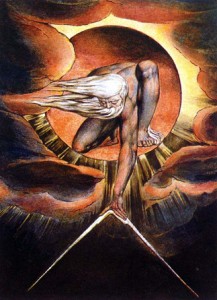
http://earthstation1.simplenet.comOne of the more difficult ideas for some Western seekers to accept is God, the Lord. The usual picture is of a highly judgmental white-bearded figure, sitting in heaven, dispensing punishments and rewards. God, in this picture, is all-controlling, all-powerful and thus I am small and insignificant and a mere pawn in his game. This sort of idea of the Lord is also prevalent in the East. For the godless, prayer and worship obviously have no place, and for the theists, prayer and worship are ultimately to secure a place in heaven or worldly comforts and pleasures. In one of her talks to her London students, Swāminī Ātmaprakāśānanda put all of this into perspective so that anyone with an open mind could get a wider, more liberating vision of these important and vital matters. This part deconstructs the concept of Lord…

What is this world? The world is nothing but a world of objects – different objects, perceptible through different senses. You can reduce the whole universe into five types of objects, perceptible through the five different senses. Every object becomes as good as non-existent if it is not perceived by the appropriate sense organ.

Despite its size, the universe would be as good as non-existent if you didn’t perceive it. The universe has the status of being existent only when it is perceived by you. The Gītā says: “They say the sense powers are superior (to sense objects); the mind is superior to the sense organs; the intellect is superior to the mind. Whereas the one who is superior to the intellect is He (ātmā).” (BhG 3.42) Continue reading
Reality of the World – Q.336

Q: I understand the advaita vedanta teaching – that we are what is perceiving, the consciousness in which the world, including our body-minds, appear.  And that it is mAyA that makes us think we are a separate self.  I can see this as one logical explanation of our experience.  As many teachers say, there is nothing in our experience that can prove to us that there is a “real” world out there, since everything has to arise in consciousness.

 It seems to me that an alternative, plausible explanation of our experience, is that there is a world which this body-mind experiences.  However, even in this model, it is clear to  me that there is no separation – that everything is inter-dependent, and that we are simply conditioned beings, programmed by our genetics and environment, and under the illusion that we are somehow separate from the world. But the truth is that we are just chemicals / molecules / energy quanta, the essence of which is the same in all things.  As Krishnamurti used to say, you are the world and the world is you.  This also seems to be more in line with the Buddhist emptiness / dependent origination explanations.

 So the question is, do you find one model of reality more “provable” / plausible above the other? I presume you will say the advaita model, but why not the above alternative model I sketched out?  I know that both end up at similar conclusions – that the ego is illusory and there is no separation, but it would be interesting to know if one is “truer” than the other. Continue reading

Gita for day-to-day living.

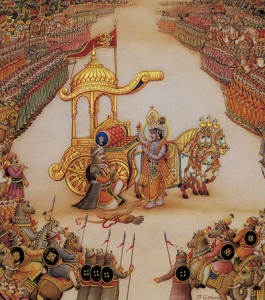
BGKrishnaArjuna-1If one sets aside its key teaching of knowledge of Reality (Brahma vidya) and viewed the Gītā primarily as a manual for right living in preparation for a life committed to self-enquiry (yoga śāstra), we discover how immensely practical it is. What might seem esoteric when clothed in mystical symbolism or religious language turns out to be common sense when stripped to its essence. Below the dialogue from some distant battlefield is viewed as a form of inner dialogue that involves the aspect of oneself that is battling for self-mastery (Arjuna) and that aspect of oneself that is one’s own true nature (Kṛṣṇa). The other players in this battle are aspects of human nature that either obstruct our efforts to be happy or support them.* With this in mind… Continue reading

Vision Of Truth (sad darshanam – Part 6)

sarUpa budhirjagatIshvare cha

sarUpa dhIrAtmani yAvadasti

arUpa Atma yadi kaH prapashyet

sA dRRiShtirekA anavahirhi pUrNA


sarUpa budhiH = the notion they  have a form; jagatIshvare cha = in the world

and Ishvara; sarUpa dhIH = notion that Truth has a form; Atmani = in one self;

yAvat = as long as; asti = is there; arUpa Atma = if self iswithout form; yadi = if

(one has knowledge); kaH = who;  prapashyet = sees; sA dRRiShtiH = that

vision; ekA  = alone; anavadhiH  = infinite; hi = indeed; pUrNA = full


As long as, in oneself one has the notion of being with form, i.e. as long as one is identified to the body mind, so long, the world and Ishvara also will be considered to be with form.  If the self is without form, who sees? That vision, indeed is infinite and full.


It is the identification with the body which gives rise to different notions about oneself and the world. If one considers oneself limited to the body and mind then, naturally, the world and Ishvara are separate from him. Being separate, they are then limited and hence with form. So, a person having the wrong notion of oneself being the body will see a world which is limited.
Continue reading

Traditional Teaching and Deep Sleep – II. Dreams

[The topic of Dreams is something I have not originally planned to include here in this series which was primarily designed to address the issue of Upanishadic support for considering deep sleep itself as Liberation (moksha).]

Part I      Part – II            Part – III

Please allow me here to take a short digression to discuss dreams because of a few questions raised by our esteemed readers.

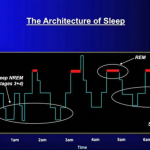
Secrets of Sleeping Brain - Architecture of Sleep - Prof. M Walker, 2009

Fig. 1. Sleep Hypnogram (After M. Walker, 2009) – Click on the figure for enlarged view.

First of all, I would like to correct the misconception that some of us have that the moment we hit the pillow and get lost in sleep, we just flow through one continuous phase of dreaming, then deep sleep and, lo  behold, we get up refreshed in the morning. So, to this extent, the sequence of Awake state (A), Dream state (U), and  Deep sleep (M) corresponding to AUM as presented by Mandukya  Upanishad is awfully way out. ***  The Upanishad says that these three states arise in an everlasting turIya which is compared to the ‘silence’ at the end of AUM. ***  Several experimental studies carried out over a period of more than half a century demonstrate that the architecture of our sleep pattern is vastly different as experienced by us every night. A typical hypnogram (the nightly sleep cycle) we go through each night is shown in Fig. 1. (Please click on the figure for an enlarged view).

Continue reading

upadesha sAhasrI part 7

upadesha7

Part 7 of the serialization of the  presentation (compiled by R. B. Athreya from the lectures given by Swami Paramarthananda) of upadesha sAhasrI. This is the prakaraNa grantha which is agreed by most experts to have been written by Shankara himself and is an elaborate unfoldment of the essence of Advaita.

Subscribers to Advaita Vision are also offered special rates on the journal and on books published by Tattvaloka. See the full introduction and part 1 of the new series.

Reincarnation – Q.335

Q: As you know, all spiritual traditions in Tibet, many in India and even the early Christians took reincarnation for granted.

 In Advaita however the idea is blatantly refused. Balsekar says, since there is no ego and the idea of an individual person is an illusion, what or who is there to be reincarnated?

Does this mean that the other traditions are wrong or is it a question of understanding, meaning that the people who argue differently do so from a different level of understanding / consciousness? Continue reading

Pramāṇam – Means of Knowledge – Part 1

pramaanamPramāṇam the word means, “means of knowledge”. Pratyakṣam is direct knowledge – indriya viṣaya sannikarṣa jñānam – the knowledge gained when objects come into contact with the five sense organs, viz., sight, hearing smell, taste and touch. The sequence in which the senses are listed is meaningful and relevant, as it goes from gross to subtle. Eyes can see hundreds of meters; ears can hear within tens of meters; nose can smell upto a few meters; taste and touch have to be immediate and intimate.

In knowing, the means and the knowledge, there is no option –one has no choice over what one sees, the moment one open’s one’s eyes.

Continue reading

Different Teachings – Q.334

Q: How do you explain two enlightened people (in the advaitic sense) that have different teachings?  For instance, I think someone like Greg Goode and Swami Dayananda would disagree on many things despite both arguably being enlightened. For example let’s take Greg’s essay on idealism (http://www.advaita.org.uk/discourses/teachers/idealism_greg.htm).  

 I don’t think Swami Dayananda-ji will agree with the core position that an object doesn’t exist unless perceived.   In fact I have asked Swami Tadatmananda this question (in the form of ‘does a rock exist before someone sees it?’) and he answered in the traditional sense saying that it does.   From your point of view does this still fall under the umbrella of differences in teaching style?    I also believe we could get a debate between the two on the topic of Ishvara and freewill. Continue reading