Wave and Ocean

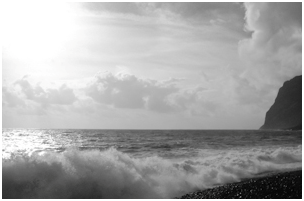
The ‘ocean-wave’ metaphor is a potentially powerful one but is often misunderstood. Here are a few quotes pulled off the Internet from a Google search:

 “The waves emerge briefly as a separate entity; however, just as quickly merge back into the ocean of which it is a part. Us, as human beings, are very much like the waves of the ocean. We briefly surface and display a uniqueness that cannot be duplicated; however, in the end, we reunite with the Whole.”

 “Actually our existence is just like an ocean. You are a wave of the ocean. You may be the most powerful, most thunderous, most beautiful and most inspiring wave of this ocean. But in the ultimate analysis you are just a wave. And the destiny of a wave is to merge again into the ocean. One day your little wave will also merge in the ocean of existence. Contemplate on this and understand the reality. We all are simple and ordinary in front of this huge cosmic play that is going on.”

 “To explain this further, Babaji gave beautiful example of wave – the wave by itself has no identity, it has identity of wave only for a certain time.  When it rises it is known as wave, but once it merges back into the ocean the wave no longer remains the wave, it becomes the ocean.  We have the karmic illusion of different and separate identity.  When we go in, there is no difference, we are particles of that One.” Continue reading
Homage to Pujya Swamiji

swamiday

Homage to Pujya Swamiji

D.Venugopal

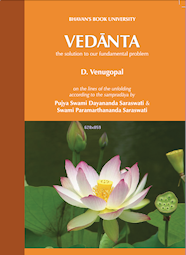
Pujya Swamiji’s uniqueness has already been the subject matter of a book by that name, published in October 2008 and released by Pujya Swamiji himself. However, certain very significant details of his life and teaching need to be highlighted.


I

Right from his childhood, Pujya Swamiji was distinctively different from others. He was fearless by nature. He did things that others never dared to do, like catching any snake by its tail. During those days, owing to the anti-Brahmin movement, the school boys used to rag the Brahmin boys, who were conspicuous with their tufts. Pujya Swamiji also had a tuft. He once caught off guard a tough ragger and punched him so hard that he fell into a ditch. Also, for fear of being ragged, the Brahmin boys would not opt for Sanskrit as the second language. Unmindful of the repercussions, Pujya Swamiji chose Sanskrit. He did not also take lying down the ridiculing of religious practices by his class mates but countered them by thinking out the plausible reasons for those practices. They could never outwit him in the arguments that ensued. Continue reading

ekajIvavAda, jnAni, jnAna niShTha, jIvanmukta

eka jIva vAda – Part – VI

Several times in the past we have had detailed discussions in these columns on the question whether a jnAni needed to continue the observation of some or other ‘practices’ after gaining jnAna (Self-Knowledge).  We had also seen that there is a divergence of opinion on ‘ekajIva vAda’ both in the theoretics of the doctrine and also its relevance  as a ‘prakriya‘ (a process system) for an earnest seeker.

At one of the popular traditionally oriented Advaita fora, I found a very significant Post that simultaneously touches on both the issues of (i) The ‘need’ of practices in the post-jnAna phase and (ii) ekajIva vAda as a prakriya. Without further ado, I reproduce below the authentic words of the Poster:  Continue reading

Tattvabodha – Part 16

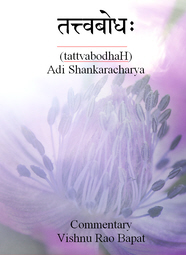
Part 16 of the commentary by Dr. VIshnu Bapat on Shankara’s Tattvabodha.This is a key work which introduces all of the key concepts of Advaita in a systematic manner.

The commentary is based upon those by several other authors, together with the audio lectures of Swami Paramarthananda. It includes word-by-word breakdown of the Sanskrit shloka-s so should be of interest to everyone, from complete beginners to advanced students.

Part 16 looks at the ‘definition’ of Atman as sat-chit-ananda – existence-consciousness-bliss and concludes the section on Atma vichAra.

There is a hyperlinked Contents List, which is updated as each new part is published.

The Mystery – Part 6

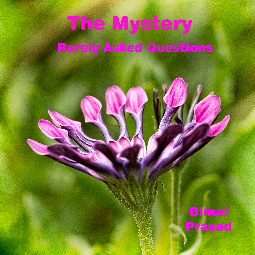
Continuing this new, short series presenting the booklet by Bimal Prasad, in which he answers some ‘Rarely Asked Questions’ on Life. Primarily from the perspective of Advaita, questions addressed include the nature of happiness, consciousness, mind and ego. There is also practical guidance on meditation in the final chapter. Answers are relevant and succinct, so that many of the issues of interest to the seeker are covered.

This sixth part looks at the relationship between Consciousness, witness and ego, at the nature of the Self and reality, and asks what we mean by Self-knowledge. See the Contents List or go straight to Part 6 of the series.

The complete (electronic form) booklet may also be purchased from Amazon.

Overview of Western Philosophy – Part 5

(Read Part 4 of the series.)

Plotinus and Neo-Platonism

During the second century AD, Plotinus attempted to revise Plato’s concepts relating to the nature of reality in order to incorporate the objections that Aristotle had raised. Most people lived at a level below that at which the intellect was able to comprehend the ‘Forms’ that Plato had spoken of, the eternal and unchanging basis for the worldly approximations of concepts such as beauty, justice and so on. The highest of the Forms was the ‘Good’. From it, the entire universe emanated, becoming increasingly less ‘good’ as it spread outwards but nevertheless still being ‘one thing’. The origin, God if you like, first becomes mind (intellect) and then soul. All things, including ourselves, are souls. The purpose of man was to return to the original state by examining the world and following the good back to its source. It was concepts such as this that greatly influenced Christianity, though the philosophers themselves rejected it because of such notions as salvation through grace. The ideas also had a resurgence during the Renaissance, when the writings of Plotinus were translated into Latin. Continue reading

Living in the Moment Eternally — 3

[One of our esteemed Readers, Shri V. Madhava, has been kind to send an off-line message to me a few days ago saying “I enjoy reading your writings and just finished reading the article “Living in the moment eternally Part 2”.  Wondering if there is a Part 3 as there seems to be a broken link…” Reason enough, I guess, to continue on with my chatter — ramesam.]

Part 1                   Part 2 

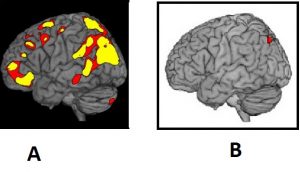
Brain Activity - Past or Future vs Present Let us recall that living in the Now is an important trait of a jIvanmukta. J. Krishnamurti wondered if we could have an experience but not record it in our brain as a memory so that all our experiencing will be ever in the Present, in the innocent Now, afresh and always anew from moment to moment. Continue reading

Advaita In Plenitude Only?

predator-prey Man seeks refuge in philosophy usually when things are not working for him/her in the world. When s/he is desperate and exhausts all the means at his/her command, he searches for succor elsewhere, anywhere. Mind becomes palpably uncertain, agitated, and anxious in those times. The misery and sorrow that spring from having to helplessly watch the unsatiated hunger of their children, the endless destitution, disease and penury of their own, the daily grind of laboring in hot Sun for a pittance of a wage, the constant stress from the hawkish creditors who compound their struggles, make the parents desperately want someone who could tell them the purpose of their life and provide at least a ray of hope. Continue reading

Q. 388 – Proof of Methodology

Q: I read an article of yours in which you said that traditional Advaita is a “proven methodology.” You also say that it is impossible to tell if another person is enlightened. But if you can’t tell if someone is enlightened as a result of practicing Advaita, how can you say that Advaita is a “proven methodology”? What constitutes “proof”?

Responses from Martin and Dennis

A (Martin): There are two parts to the question: 1) what constitutes proof in the context of Advaita Vedanta; 2) What does the questioner mean by enlightenment.

1) Is a proof here the proficiency in discussing/remembering/debating on topics of this tradition shown by one who has followed it for x number of years?

Answer: That can hardly be a proof. Whether parrot-like or not, ability in this regard may show, at best, a degree of intellectual understanding in the areas discussed as well as, possibly, a good memory and lexical ability. A real proof would consist in bringing about a complete change in outlook on life, meaning an inner transformation in the way the person sees the world and reacts to it. Does he/she see themselves as a doer? This may not be evident to anyone other the one undergoing the change. Continue reading