Consciousness and neuro-science

Discussion from Quora

(Different from above) Prof. Donald Hoffman – The Case Against Reality .

A professor of cognitive science argues that the world is nothing like the one we experience through our senses.

Evolution has shaped us with perceptions that allow us to survive. They guide adaptive behaviors. But part of that involves hiding from us the stuff we don’t need to know. And that’s pretty much all of reality, whatever reality might be.

Snakes and trains, like the particles of physics, have no objective, observer-independent features

Gefter: I suspect they’re reacting to things like Roger Penrose and Stuart Hameroff’s model, where you still have a physical brain, it’s still sitting in space, but supposedly it’s performing some quantum feat. In contrast, you’re saying, “Look, quantum mechanics is telling us that we have to question the very notions of ‘physical things’ sitting in ‘space.’” Continue reading

If we do not experience from within a body, then where oh where do we feel-think-do from?

whirlpool

Image by valemngilda

Think of a whirlpool. There seems to be a definable shape that we can point to and know as a whirlpool, and yet there is nothing separate or fixed about its whirlpool-ness. All the water that constructs the thing we have labelled “whirlpool” is in flow, never the same water in any moment, and yet it appears to hold its shape/from so convincingly that we believe we can point to the moment our whirlpool began, measure it’s lifetime, and record the moment it ceases to be.

But what is it that convinces us that the whirlpool is separate and of its own causal relatedness to “other” forms we have labelled in the single field of All That Is?

For as much as we focus on the ways to practice into a consciousness immune to mithyA, we have the experiences we have as All That Is in constant flow, unfixed and inseparable, no matter how we might label that experience.

It seems prudent to mention at this point that we are prone to use the word experience to separate so-called “personal identity” from “other-ness”, so the concept of experience encompassing all that we have labelled inner, outer, before, present, and so on, is an unnatural leap… until one comprehends the arbitrary lines we have drawn (even in language being the means of defining ideas that can be fixed in objective transfer of meaning), and recognise these too as whirlpools in the ocean of All That Is.

13186929-Background-with-physical-formulas--Stock-Vector-physics-scientific-equation

Image by Andrey Alyukhin

Of course, the analogy can only go so far. According to the assumptions of our current cosmology, to know-observe a whirlpool is to be separate from it, and to literally form a whirlpool the ocean must exist within an atmosphere. But in our present physics of a causal universe, we have no means of explaining an alternative conceptual reality with words. Even the term “reality” inspires our perceptual bias dividing existence as dimensional from that which cannot be known/named/defined.

Which also means that while it seems that we can be taught the Vedantic mokSha; that there are those who trust innately, and perceive (for want of a better word) the whirlpool in its ocean state. Those who seek to trust, and devote themselves to practices which might reveal an ocean in all things. And those who examine trust through chemical, experimental, and philosophical means in order to demystify that which defies explanation (which will ultimately allow us to speak of that which language is yet to adequately express)… we do not experience (learn/live/know) from within a body because the “body”, the “self”, and experience as a point of separation, are all whirlpools within an ocean of All That Is.

“There is no dissolution, no origination, none in bondage, none possessed of the means of liberation, none desirous of liberation, and none liberated.” Gaudapada (K2.32)


Knowledge and Enlightenment

Over the past few months, we have had several posts following which there were discussions in which some participants attempted to argue that knowledge was not the direct cause of enlightenment. Alternative suggestions have been that enlightenment comes with nirvikalpa samAdhi or that one has to pursue some course of action, such as asking ‘Who am I?’.

I argued that neither of these were the case; that ONLY Self-knowledge could give enltightenment. This is primarily because ignorance is the cause of saMsAra and knowledge, not action, is opposed to ignorance. And I said that I would endeavor to find quotations from scripture or from Shankara to support this contention (since some participants were not prepared to accept arguments from such as Swami Dayananda).

Below, I have compiled a brief list of some of those quotations and hope these should be adequate to convice readers that the above is the stance of traditional Advaita and it is supported by clear, reasoned argument. Continue reading

Three Q&As in Quora

Three Q/As from QUORA (on brain, philosophy, QM, NDE, consciousness)

1. How does the brain understand philosophy?

M. The brain… understanding philosophy? My reply to this is similar to the one I gave recently to another question and which was based on Socrates’ answer to an observation that someone was making. The man saw a pool of water being stirred by a stick held by a man and said that the stick was stirring the water. To which Socrates replied: ‘Is it the stick, or the man moving the stick?’ (Which one is the real agent – the material, or the instrumental cause, in Aristotelian terms?).

Equally, is it the brain, or the mind which ‘moves’ the brain which moves the stick which stirs the water?

Is it the brain, or the mind which (using the brain as an instrument) understands philosophy? Actually, it is consciousness (as a substrate) using the mind using the brain… Consciousness itself does not do anything Continue reading

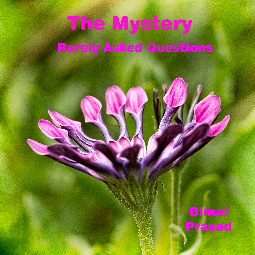
The Mystery – Part 3

Continuing this new, short series presenting the booklet by Bimal Prasad, in which he answers some ‘Rarely Asked Questions’ on Life. Primarily from the perspective of Advaita, questions addressed include the nature of happiness, consciousness, mind and ego. There is also practical guidance on meditation in the final chapter. Answers are relevant and succinct, so that many of the issues of interest to the seeker are covered.

This third part is entitled ‘Pointers to Consciousness’ and answers questions about the nature of existence, reality, truth and consciousness. See the Contents List or go straight to Part 3 of the series.

The complete (electronic form) booklet may also be purchased from Amazon.

Q.384 – Dark night of the soul

Q: Please help me.I had a temporary glimpse of reality around 15 months ago by following 8 fold path. I tried to penetrate the question of suffering and learned that everything wants to come into Equilibrium (a known chemistry fact) due to which my thought trains stopped and I got an instant realization of something called reality. After that, I experienced I am a silent witness and not mind, body, ego, etc.

This faded away after some time and now I am in mental anguish and turmoil. I don’t know what is happening in my mind but it is disturbed or in what people call the “Dark night of soul”. Every joy is lost now; I get angry easily and have feelings of despair from something. Maybe it is because I didn’t discipline my mind with ethics before starting this practice for enlightenment. Please save me now. Whatever is going on in my head, save me from it. I don’t know how to complete surrender unto reality and may be this is due to the hold of ego. Please help!

A (Dennis): The teaching tradition of Advaita is all about Self-knowledge. You listen to the teaching from a qualified teacher (ideally) or read about it and discuss it (less good). You ask questions about it to resolve your doubts. Eventually, you realize that what is being said is true and that is that. In theory!

The problem is that you need a clear, self-controlled mind and some trust in the teacher, the ability to discriminate and so on. These ‘skills’ are not really a part of Advaita – they are mostly lifted from Patanjali’s Yoga system. If you have no mental discipline along these lines, you are never going to be able to assimilate the teaching. You need at least a medium level of attainment. With that you can take on board the knowledge and then continue your practices until you reap all the other benefits (peace of mind, fearlessness and so on).

From what you say, I would advise that you forget about Self-knowledge for a while and concentrate on acquiring the mental skills. Meditation is invaluable. And, if you have no religious-type outlook (praying to a god and so on), then the practices of karma yoga are the other main route – doing what is in front of you because it needs doing, ignoring desires and not expecting any results. And so on!

I do not know anything about Buddhist methods so cannot really comment. I would forget about ‘dark nights’. The main thing to remember, even if you don’t yet believe it, is that the world is not absolutely real. Your body, mind and everything else have empirical reality only, depending ultimately on Consciousness, which is the only reality. And you are That.

Time Does Not Exist

Truth will set you free: Time Does Not Exist by Hans Meijer

Why time does not exist

When we ask ourselves why we think time exists, most of us would say: because we see everything changing, always. And so it is: everything in and around us is constantly changing, from beginning until the end.

The question however is: is the reason for this perpetual change to be found outside the changing subject (caused by a phenomena called time) or is all change coming from inside the changing subject itself?

I don’t think that it is hard to see that the latter is correct. That which makes things change (the cycle of life) to a flower, a human being or an animal is set by the characteristics of that particular life’s form and not by an outer cause such as time. What we call ‘time’ is just a method for measuring the ‘perpetual change’.

Because of our need to measure this perpetual change we decided to divide the ‘cyclic changes’ such as seasons and day and night, into months, twenty-four hours, minutes etc. These well-known changes are caused by the ever-moving planetary positions within our solar system and not because there exists such a thing as ‘time’.

So, there are no minutes, but we decided that after counting 60 (seconds) we say that a minute has passed. Based on minutes we calculate hours, days, months, years, centuries etc.

In this way we can count the number of heartbeats per minute, years from birth to death and we even can calculate the number of years from the Big Bang until today.

But we also say: ‘it seems as if time has stood still (in that old village), nothing has changed`.

Actually there is only NOW – in which all that is manifested appeared, changes and disappears. Continue reading

The Relevance of Kant’s Transcendental Idealism to Advaita Vedanta, Part I

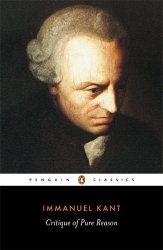
This the first of a three-part series discussing the relevance of Kant’s philosophy to Advaita. Kant-CPR

Immanuel Kant published the first edition of The Critique of Pure Reason in 1781, with an extensively rewritten second edition appearing in 1787. Between those editions he also published a shorter “easier” introduction to his philosophy, Prolegomena to Any Future Metaphysics (1783). With the later appearance of The Critique of Practical Reason (1788) and The Critique of Judgement (1790), Kant had articulated a complete system of philosophy of incredible depth and complexity, wholly original and unique in its solution to the age-old problems of reason, ethics, and logic. So great was the importance of this Prussian professor, we may justifiably think in terms of pre-Kantian and post-Kantian philosophy. Many have disagreed with his conclusions and offered refutations on one level or another, but all who have come after Kant have been required to address him. Continue reading

The ego, the ‘soul’ and metaphysics – 6th and final part

EXPLANATION
.
It was made clear at the beginning of this essay that what we mean by the “ego” (the “personality”), it being no more than a delusion, a false image or projection, cannot be a subject, except in a dream -and is itself a “dream”. We described the fight of the “ego” in its efforts at reaffirmation as an “unholy war”. That it is obviously the soul, the person, who is the subject of the delusion, the “dream” ; his/her’s the “holy war”, the suffering and the required effort towards reawakening (is not life itself a dream? –it is so for “fallen man”). The soul’s, the person’s destiny – and this is conditional according to the monotheistic religions – is to finally be “reabsorbed”, united or reintegrated , and thus liberated. Liberated not from itself (its Self!) by itself , not even from life, but from a false image of itself and of life (“the world”) due to ignorance (avidya).

It is thus through ignorance, passion and attachment, that individual man (non-gender term) has “become” an “ego”, a “dreamer”, until, or unless, he wakes up. Existence itself is a ‘becoming’, not ‘being’, according to Plato and all traditional thinking. This subject is otherwise inexhaustible, and here we may remember the saying of Râbi’a quoted at the beginning, as well as the utterances of so many other sages and mystics. Continue reading

The aim of Advaita VIsion

about2

If you click on ‘About’ in the menu bar at the top of the page, you will be taken to the page that lists the aims of this blog and the associated website at www.advaita.org.uk. This page was written by Peter Bonnici (with assistance from Ramesam), with whom I initiated Advaita Vision around 4 years ago. (As most readers will know, Peter is unfortunately no longer with us.) Despite its ease of accessibility, one wonders how many visitors actually read it. Certainly it would seem that some have never done so. Accordingly, I reproduce it below, since its content is so important.

*****************

This site provides a platform for all who are attracted to the vision of non-duality and like to share their views and their approaches.

Here’s why Advaita Vision will be an open platform for all committed to self-enquiry:

  1. People are at different points on their spiritual journeys.

Therefore different expressions of the fundamental principle of advaita are needed to meet their specific different needs. Continue reading